

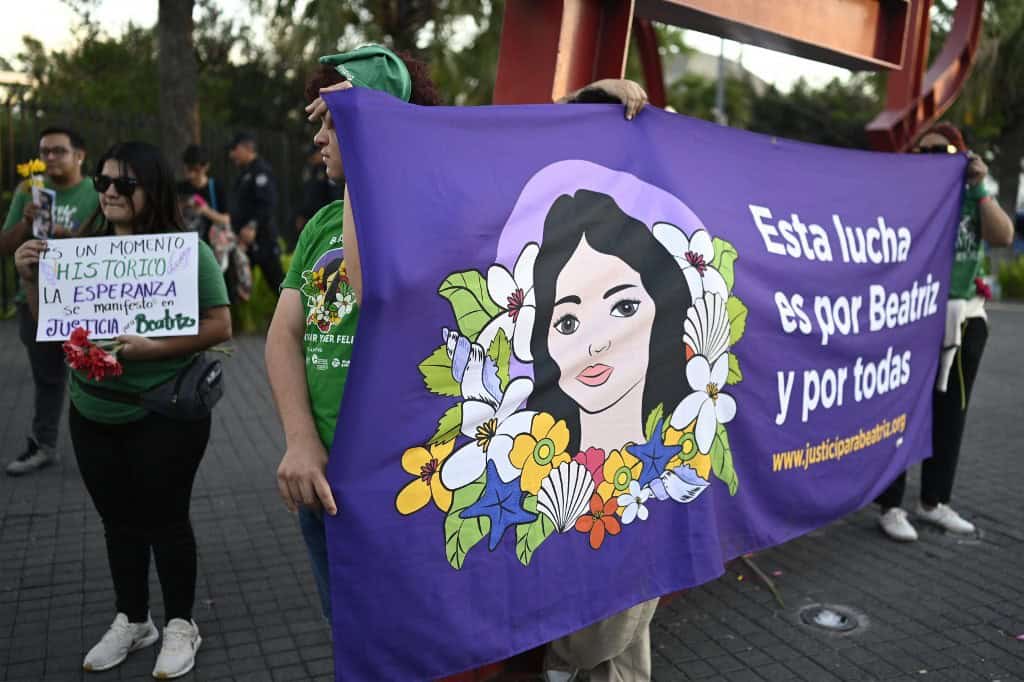
An El Salvador abortion rights group closed its legal operations after two decades of defending women jailed for pregnancy terminations, citing a hostile environment under President Nayib Bukele’s government. The Citizens’ Group for the Decriminalization of Abortion announced its dissolution today in San Salvador. The organization will shift to a regional activism model while maintaining work inside the country.
The closure highlights a broader clampdown on nongovernmental organizations in El Salvador, where new laws have forced several groups into exile or shutdown. Similar measures in neighboring Nicaragua and elsewhere in Central America have drawn international criticism for stifling dissent.
The group secured the release of about 80 women convicted under El Salvador’s strict abortion laws. It also campaigned for legal reforms and pushed for global rebukes of the government’s policies. El Salvador bans abortion in all cases, with penalties ranging from two to eight years in prison. Courts sometimes reclassify cases as aggravated homicide, leading to sentences up to 50 years.
The announcement follows the 2025 passage of a foreign agents law by El Salvador’s Congress, dominated by Bukele’s allies. The measure slaps a 30% tax on foreign donations to NGOs and requires registration as foreign agents. Rights defenders argue the law aims to muzzle criticism of Bukele’s administration, which faces accusations of abuses during its anti-gang campaign. The policy mirrors ones in Russia and Nicaragua that have curtailed independent voices.
Cristosal, a prominent human rights organization, suspended operations in El Salvador in July 2025 after the arrest of a key staffer and escalating threats. It now operates from Guatemala and Honduras. Other humanitarian groups have followed suit, relocating abroad to avoid the new restrictions. At least five NGOs have closed since the law took effect.
Despite the challenges, the Citizens’ Group pledged to continue advocacy with a regional focus. It plans to build alliances across Central America to press for reproductive rights. The group’s work gained international attention through cases like Beatriz, a 22-year-old woman denied an abortion in 2013 despite life-threatening risks and a nonviable fetus.
In December 2024, the Inter-American Court of Human Rights condemned El Salvador for violating Beatriz’s rights to health and personal integrity. The ruling called for clearer protocols in high-risk pregnancies. Beatriz’s case exposed the human cost of El Salvador’s abortion ban, enacted in 1998 without exceptions for rape, incest or maternal health. Women facing obstetric emergencies have been prosecuted for homicide.
Activists say such convictions disproportionately affect poor, rural women with limited access to healthcare. Between 1999 and 2019, authorities prosecuted at least 181 women for abortion-related offenses. The foreign agents law took effect in June 2025 after rapid approval in May. It creates a registry under the Interior Ministry, with fines up to $250,000 for noncompliance.
NGOs must label materials as foreign-funded and submit detailed financial reports. Critics call it a tool for surveillance and selective enforcement. Bukele’s government defends the law as a transparency measure to prevent foreign interference. Revenue from the tax will fund public works, officials claim.
International bodies have voiced concerns. The UN human rights office warned in May of last year that the law could unduly restrict freedoms of association and expression. The Organization of American States has urged El Salvador to align regulations with human rights standards. Similar calls came from the European Union and US officials.
El Salvador’s civic space has shrunk since Bukele took office in 2019. His Nuevas Ideas party controls Congress and the judiciary after controversial reforms. The anti-gang state of emergency, ongoing since 2022, has led to over 80,000 arrests but also reports of arbitrary detentions and torture.
Rights groups link the NGO crackdown to efforts to silence scrutiny of these policies. Journalists and activists report harassment, including defamation campaigns. The Citizens’ Group’s closure is the latest in a wave. In September 2025, the Association of Journalists of El Salvador shut its offices, citing the law’s burdens.
Environmental and anti-corruption organizations have also scaled back. Some now coordinate from Costa Rica or Mexico. What comes next remains unclear. The group aims to relaunch as La Movimienta Regional por el Derecho al Aborto y las Maternidades Elegidas.
It will focus on cross-border campaigns and legal challenges. Supporters hope the Inter-American Court’s Beatriz ruling spurs domestic reforms. El Salvador has yet to respond fully to the decision. The court ordered comprehensive health care for Beatriz’s family and training for medical staff.
Government timelines for compliance are pending. Activists plan to monitor implementation closely. The shutdown underscores regional trends. In Central America, authoritarian shifts have prompted NGO exiles and reduced aid flows. For El Salvador, the loss of groups like the Citizens’ Group could weaken support for vulnerable women. Thousands face pregnancy risks without legal options.
Yet advocates remain resolute. “We won’t stop,” a group statement read. “Our fight transcends borders.”





