

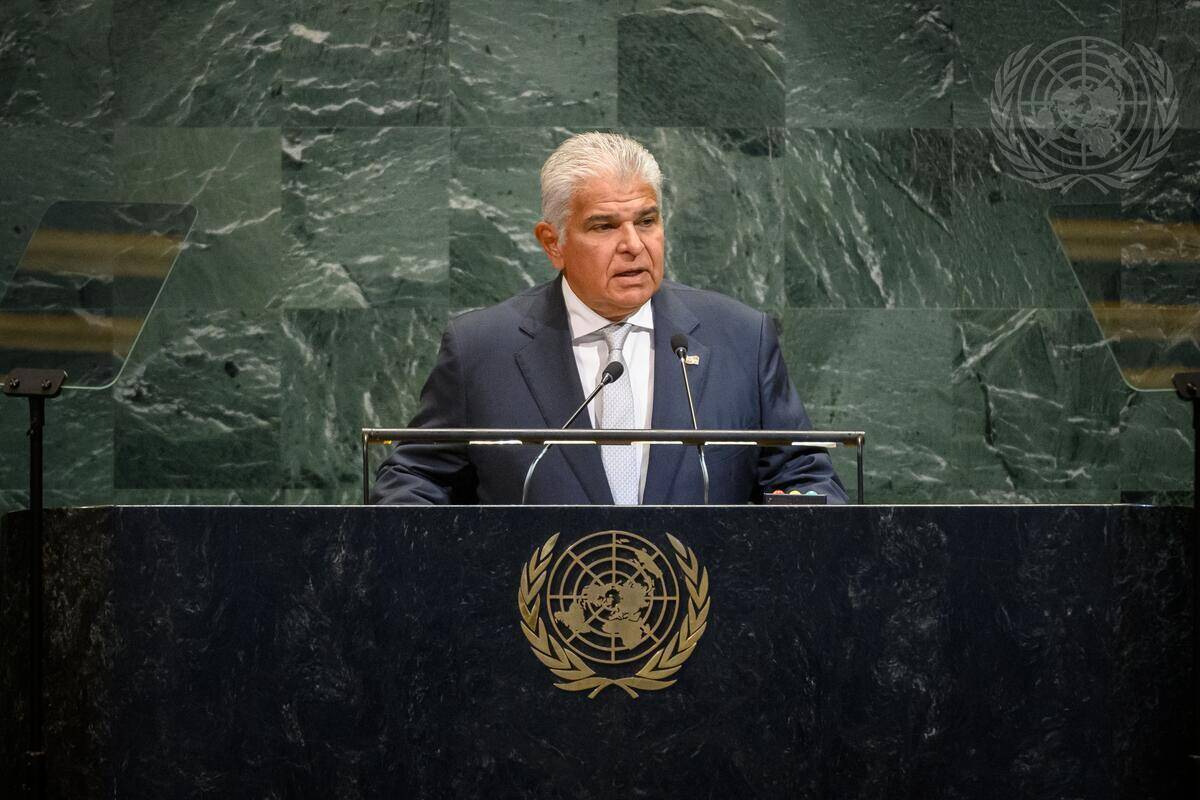
Panama’s President José Raúl Mulino took the stage at the United Nations General Assembly this week, standing firm on his country’s control over the Panama Canal. In a speech that cut through ongoing frictions between major powers, Mulino made it clear that the waterway stays neutral and under Panamanian hands, no matter the pressure from outside.
The address came during the 80th session of the General Assembly in New York, where leaders from around the world gathered to tackle global issues. Mulino, who took office earlier this year, used his time to push back against recent comments from former U.S. President Donald Trump, who has suggested the U.S. should reclaim the canal. Mulino shot that down directly, stating the canal “is and will remain Panamanian.” He pointed out that Panama has managed the canal since the U.S. handed it over in 1999, and it serves as a key link for international trade, handling about 6% of global shipping.
Tensions have simmered for months, especially with the U.S. and China eyeing the canal’s strategic role. China has ramped up its presence in Panama through investments and trade deals, while the U.S. has voiced concerns about influence in the region.
Back in August, U.S. and Chinese officials sparred at a U.N. Security Council meeting over the canal’s future, with Panama’s leader stressing its neutral status even then. Mulino built on that in his latest speech, calling neutrality the smartest way to keep the canal safe and open to all nations. He described it as a “global public good” that Panama commits to protecting, free from any single country’s dominance.
Beyond the canal, Mulino touched on the migration challenges at the Darién Gap, the dense jungle border between Panama and Colombia that’s become a hotspot for people heading north. He called for more international help to manage the flow, noting how it strains Panama’s resources and security. Thousands cross there each month, facing dangers from the terrain and criminal groups, and Mulino urged other countries to step up with support rather than leaving Panama to handle it alone.
For those living or traveling in Central America, this matters. The canal isn’t just a shortcut between oceans—it’s a lifeline for trade that keeps costs down for goods moving through the region. Any shift in control or added tensions could ripple out, affecting shipping routes, prices, and even tourism. Costa Ricans, with our own ports and export economy tied to global markets, watch these developments closely. Stable neighbors mean smoother business and safer travel.
Mulino’s words also highlight Panama’s push for independence after decades of foreign involvement. The canal treaties from the 1970s set the stage for neutrality, ensuring no military use by any power and equal access for all ships. Panama has invested heavily in upgrades, like the expanded locks that handle bigger vessels, boosting capacity despite droughts that sometimes limit traffic.
In his speech, Mulino didn’t mince words about global cooperation. He said Panama will keep the canal running smoothly as long as the world respects its sovereignty. This comes at a time when superpowers are jostling for leverage in Latin America, from infrastructure projects to trade pacts. China’s Belt and Road Initiative has funded ports and roads in Panama, raising eyebrows in Washington. Yet Mulino framed his message as one of balance, inviting investment while drawing lines on control.
Reactions have poured in since the speech. Some see it as a bold stand for small nations in a big-power game, while others worry it could escalate disputes. Trump, campaigning for another term, has kept up his rhetoric, claiming high fees and Chinese influence justify U.S. action. But Mulino’s response reinforces Panama’s legal hold under international agreements.
As the assembly wraps up, Mulino’s address is a reminder of how local issues tie into worldwide dynamics. Panama’s commitment to neutrality aims to keep things steady, but with elections looming in the U.S. and ongoing U.S.-China rivalry, the canal remains a flashpoint worth tracking.





