
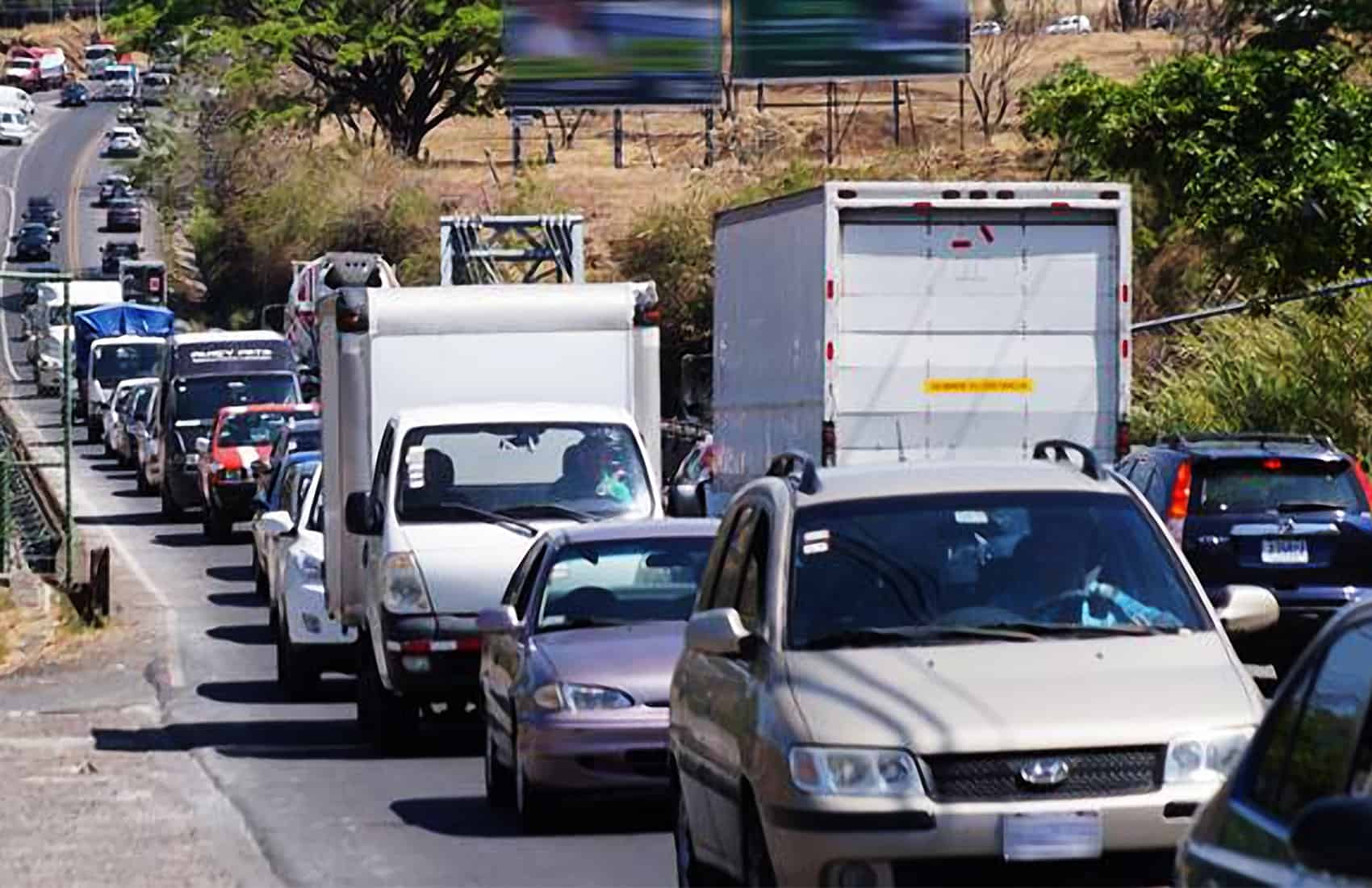
Costa Rica faces severe road congestion issues. With outdated infrastructure, inadequate road safety education, few public transportation options, and political disinterest, it’s challenging for thousands of Costa Ricans to leave their homes. According to the International Monetary Fund (IMF), Costa Rica has some of the slowest traffic in the world. It ranks as the third highest in vehicle density in Latin America (231 cars per 1,000 residents), behind only Mexico (278 per 1,000) and Argentina (316 per 1,000).
Approximately one million cars move through Costa Rican streets daily, a number that continues to grow. Bus use is declining, and more motorcycles are appearing, which worsens traffic congestion and increases road accidents. While road infrastructure projects are underway, they are insufficient. Some projects have taken up to 60 years to complete, which is clearly unsustainable for Costa Rica’s traffic demands.
Costa Rica is small, and distances are relatively short, yet traveling between Alajuela and San José can take up to two hours each way, depending on traffic conditions. In December, these issues peak. Areas like Escazú, near shopping centers, experience severe traffic jams, costing people countless hours in cars.
Spending hours in traffic exacerbates health issues, from sleep disorders to depression and anxiety. The helpless feeling caused by road congestion also raises the risk of cardiovascular diseases. It has also been linked to less productivity in the work place, affecting the overall performance of employees.
This traffic also creates environmental problems; pollution is closely linked to health problems in Costa Rica, such as asthma, allergic rhinitis, and noise-related issues. For tourism and economic growth, public transportation in Costa Rica is essential. Millions of visitors have few options other than car rentals, ride-hailing apps, or taxis.
To reduce Costa Rica’s traffic chaos, the country must implement an integrated public transport system with buses and a train network, offering efficient travel options. Many avoid public transportation due to perceptions that it’s uncomfortable, unsafe, and poorly maintained. With current traffic challenges and a lack of remote work policies, people are stuck in traffic, impacting their quality of life. The government must recognize the urgency of a national train project as a necessity