

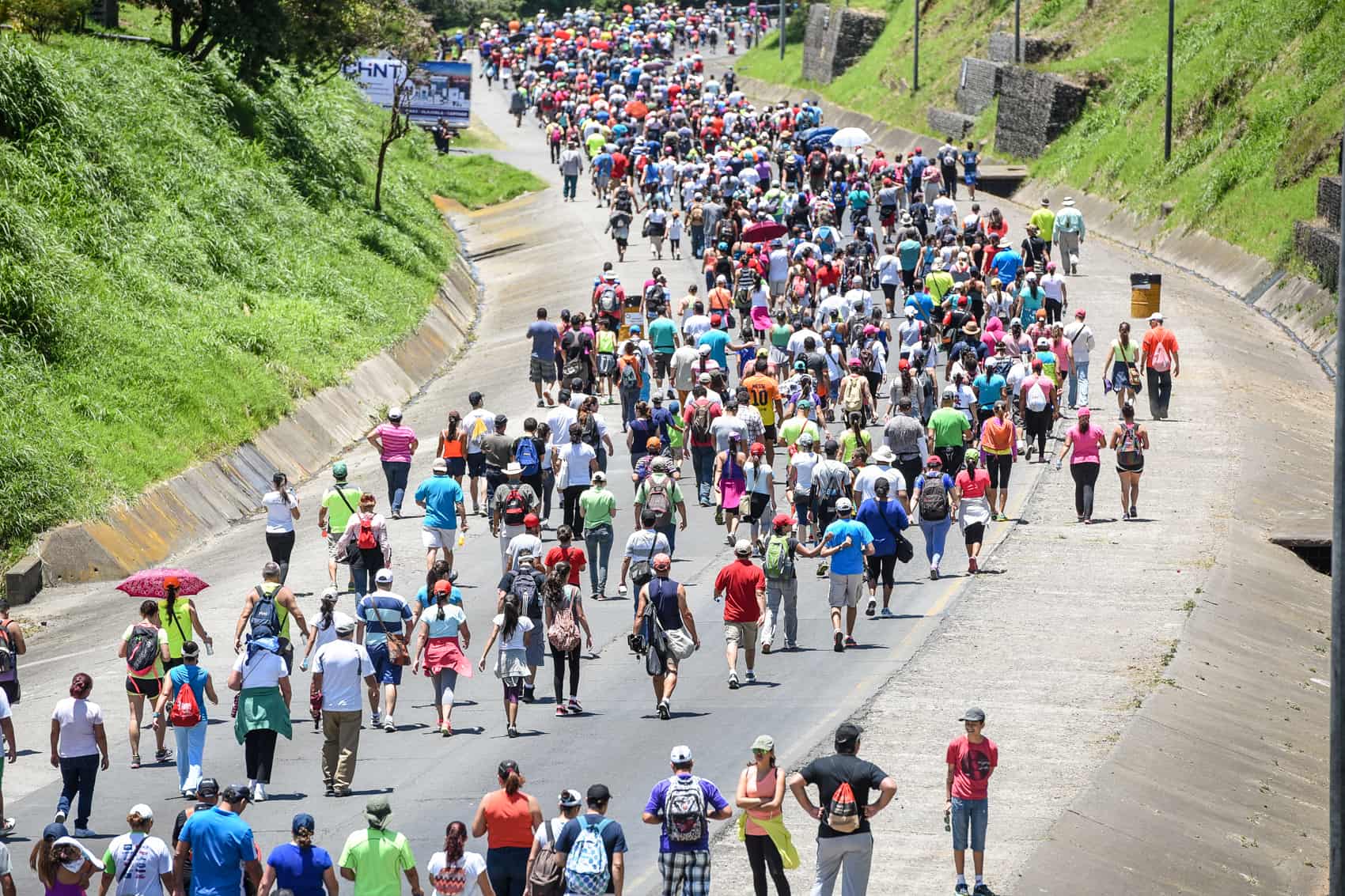
Costa Rica’s Romería closed without a single reported death, ending a nine-day emergency operation in which the Costa Rican Red Cross treated 1,772 people along the roads into Cartago and moved 34 of them to hospitals. The count covers July 25 through August 2, the feast day of the Virgen de los Ángeles, and it climbed steadily through the final Sunday.
At midday the Red Cross reported 1,681 people treated — 1,477 medical cases, 164 trauma injuries and three burns — with 31 transfers to medical centers, of which 20 were classified urgent, six critical and five stable. The 1,772 figure released Sunday evening is the most recent tally and remains provisional until the institution issues its close-out report.
Milena Bogantes, regional operational sub-coordinator for the Red Cross, reviewed the pattern of cases as the operation wound down. Before the walking began, the organization had said the emergencies it sees most often on this route are heat-related illness and blood pressure episodes, and it had asked pilgrims to hydrate, wear broken-in shoes and reflective clothing, and carry any prescription medication with them. In the earliest cuts of the operation, most patients were over 40, with the single largest group aged 61 and up.
The scale of the response is hard to overstate. The Red Cross fielded more than 850 responders and over 145 emergency vehicles across eight aid stations strung between San Pedro, on the eastern edge of San José, and the Basílica de Nuestra Señora de los Ángeles. The busiest posts were at the basilica itself, at Ochomogo and at La Galera, with smaller volumes recorded at El Cristo, Conventillos and San Pedro.
Raúl Rivera Bonilla, director general of the Fuerza Pública, said officers seized small quantities of drugs and weapons over the course of the operation. Around 500 officers were assigned to the corridor from La Sabana to Cartago during the heaviest days, working alongside roughly 150 Traffic Police officers, municipal police units and a network of surveillance cameras along the route. Authorities have not announced charges arising from the seizures, and the Fuerza Pública said it would keep its deployment in place through Monday.
Mario Redondo, the mayor of Cartago, said municipal crews recovered 13 dogs found abandoned along the pilgrimage route and took them to the city’s animal care center, where they will receive veterinary attention and, where appropriate, be neutered. Redondo put the total municipal and interinstitutional deployment at roughly 3,000 people across police forces, the Red Cross and sanitation crews, and said they collected more than 34 metric tons (37 short tons) of solid waste.
The pilgrimage itself is a walk of about 22 kilometers (14 miles) from central San José to Cartago, though many people set out from far greater distances and walk for days. Church estimates put participation across the period at close to two million, and this year’s program carried additional weight as the centenary of the Virgin’s pontifical coronation, granted by Pope Pius XI in April 1926. The 2025 operation, by comparison, ended with 2,196 people treated, 47 transferred to medical centers and no deaths.
The observance is not quite finished. The traditional Pasada takes place Monday at 9 a.m., when the image of the Virgin is carried from the basilica to the Catedral Nuestra Señora del Carmen through streets covered in flower and sawdust carpets, accompanied by bands, mascaradas, oxcarts and boyeros. Roads through central Cartago close for the procession, and nine schools along the route switched to at-home learning for the day, returning to classrooms Tuesday. Anyone driving through the Cartago canton center Monday morning should expect closures and delays until the procession finishes and traffic is restored.
Since Costa Rica has just over five million people, moving a crowd on that scale along public highways for nine days and finishing with no fatalities is the number the institutions involved will point to. The operation has been refined over decades of repetition, and the outcome reflects that: the traffic plan staged months in advance, aid posts placed where the walking gets hardest, and thousands of volunteers standing on the shoulder of a highway at three in the morning handing out water.





