

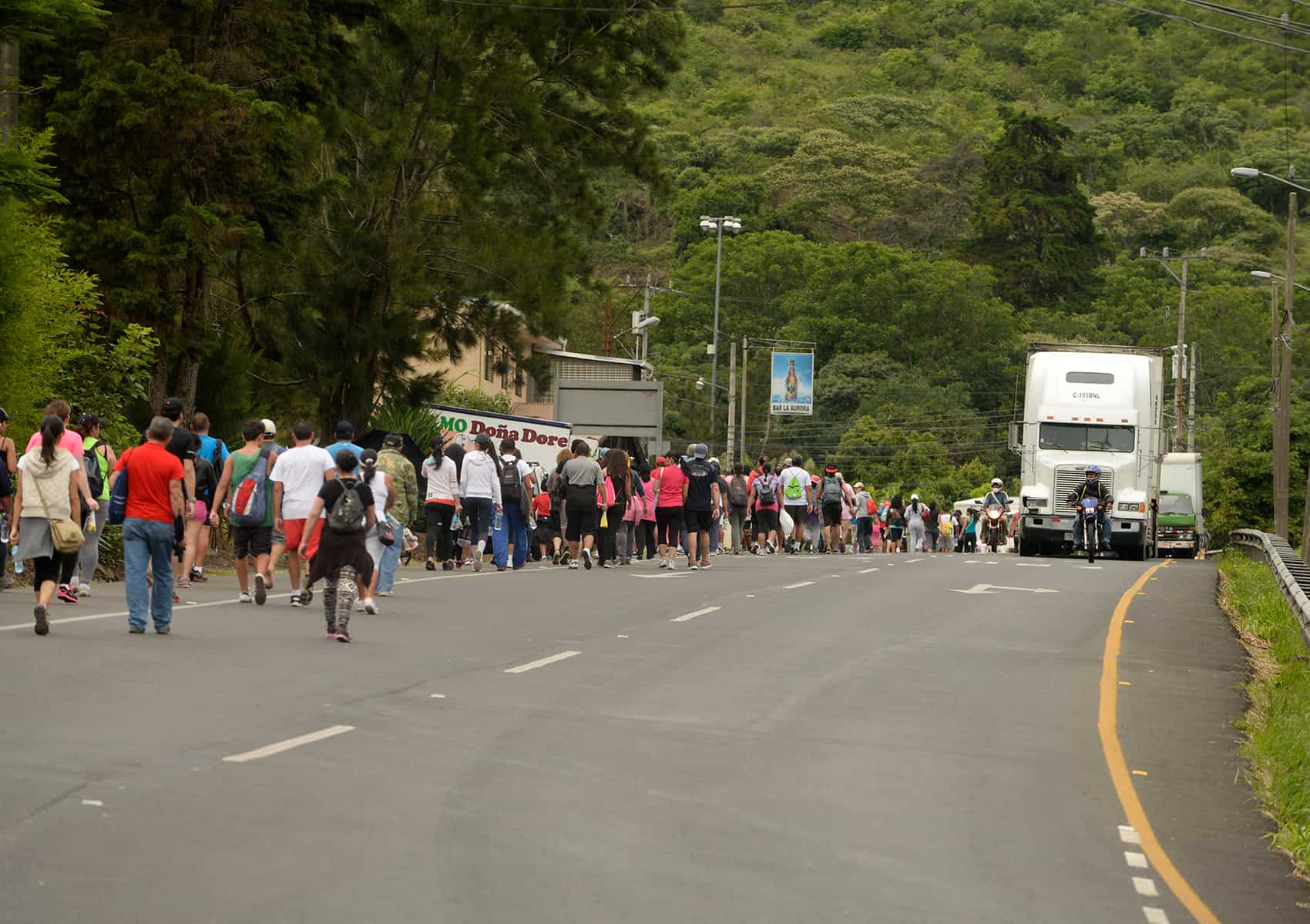
Costa Rica’s traffic plan for the 2026 Romería continues this morning as growing numbers of pilgrims walked toward the Basílica de Nuestra Señora de los Ángeles in Cartago. The operation began at 6 a.m. Saturday, July 25, as hundreds of people used the Guanacaste Day holiday to complete the pilgrimage before the much larger crowds expected next weekend.
Traffic Police officers are monitoring roads from San José to Cartago, as well as routes used by pilgrims traveling from Guanacaste, Limón, the Northern Zone and southern Costa Rica. About 150 traffic officers are expected to participate during the operation. Emergency crews were already assisting walkers during the opening day. The Costa Rican Red Cross treated 72 people Saturday and transported one patient to a medical center.
The Red Cross has assigned approximately 840 personnel and more than 145 emergency vehicles to the Romería operation. Authorities expect the number of walkers and medical consultations to increase throughout the week, with the heaviest movement beginning July 31 and continuing through August 2.
Pilgrims walking on roads without sidewalks should face oncoming traffic so they can see approaching vehicles. Walkers should remain in single file where space is limited and wear light-colored or reflective clothing, particularly during the early morning, evening or in areas with poor visibility.
Authorities are also urging pilgrims to avoid headphones and limit phone use while walking. Looking at a screen or listening to loud audio can prevent people from noticing vehicles, police instructions or hazards along the road. Extra caution is needed on routes with sharp curves, fog, rain or limited lighting. Those walking from distant communities may encounter dangerous conditions around the Cerro de la Muerte, Zurquí, Monte del Aguacate, Vara Blanca, Zarcero and other mountainous areas.
Pilgrims should carry water, protect themselves from the sun, wear comfortable shoes and avoid pushing beyond their physical limits. Anyone who feels dizzy, unusually weak, short of breath or develops chest pain should stop walking and seek assistance from an emergency post.
Authorities have also asked people not to bring dogs or other pets. Long distances, hot pavement, crowded roads and limited access to water can place animals at risk. Drivers should expect pedestrians along road shoulders even before the main pilgrimage weekend. Motorists are being asked to reduce speed, avoid passing in unsafe areas and watch for walkers near intersections, curves and sections where sidewalks are unavailable.
Between the antigua Galera and Taras, pilgrims traveling from the San José area are encouraged to use Route 251, commonly known as the old road to Cartago. Police consider it safer for pedestrians than walking along the main Florencio del Castillo highway. Drivers trying to avoid congestion on the Florencio del Castillo highway may use Route 218 through San José, Ipís, Vista del Mar and Rancho Redondo. That route can accommodate different types of vehicles.
Route 212 through Patarrá, Coris and the La Lima industrial area is another alternative, but it is recommended only for light vehicles. The largest planned road closure is expected on Saturday, August 1. At approximately 4 p.m., authorities may close a four-kilometer (2.5-mile) section between the Fuente de la Hispanidad in San Pedro and the antigua Galera.
The exact starting time will depend on the number of pilgrims. Police may introduce the closure earlier or apply temporary restrictions before August 1 if pedestrian traffic becomes heavy enough to make the road unsafe. A vehicle-free security perimeter of approximately three blocks is also planned around the basilica in Cartago. Residents who live inside the restricted area will be allowed to enter when necessary.
Municipalities along the main route have activated more than 400 surveillance cameras to monitor the movement of pilgrims and help emergency teams respond to incidents. The wider operation also includes police patrols, drones, canine units, hydration stations, medical assistance and waste collection.
The surveillance operation will continue after pilgrims reach Cartago. Authorities are also preparing for the “reverse Romería,” when large numbers of people travel back toward San José and other communities. Residents and visitors who are not participating should expect increasing congestion as August 2 approaches. Anyone traveling through Cartago, Tres Ríos, Curridabat or eastern San José should allow additional time and be prepared for sudden traffic controls.
The traditional pilgrimage will reach its peak during the afternoon and evening of August 1, when hundreds of thousands of people walk toward Cartago ahead of the August 2 feast of the Virgin of the Angels.





