

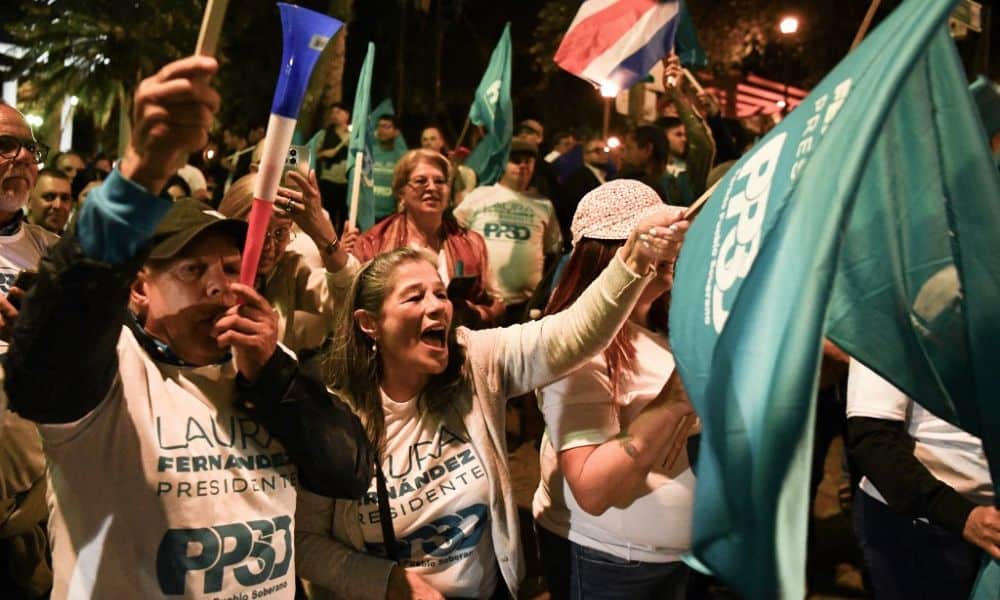
Laura Fernández, the conservative candidate backed by the ruling party, holds a commanding lead in the race for Costa Rica’s presidency, with recent polls showing her support at levels that could secure a first-round victory on February 1. Surveys from the University of Costa Rica and OPol Consultores, both released on Wednesday, place Fernández ahead with 40% to 43.2% of voter intentions.
This puts her at or above the 40% threshold needed to win outright and skip a runoff. Álvaro Ramos, the social democrat in second place, trails far behind with 6.6% to 8% support. Fernández, a 39-year-old political scientist and former minister under President Rodrigo Chaves, has built her campaign on a firm stance against the surge in violence tied to drug trafficking.
She draws inspiration from El Salvador’s President Nayib Bukele and his aggressive measures against gangs. Her message resonates in a country where the homicide rate reached nearly 17 per 100,000 people in 2025, a sharp rise from previous years when Costa Rica stood out for its relative safety.
Compared to a December poll by the University of Costa Rica, Fernández gained 10 points, while undecided voters dropped from 45% to 32%. This shift highlights growing momentum for her as the election nears. The ruling Sovereign People’s Party aims not only for the presidency but also for a stronger hold in Congress to push constitutional changes, focusing on the judiciary. Fernández and Chaves argue that current systems hinder efforts to combat organized crime.
Opponents, however, warn that these reforms could erode the separation of powers. Costa Rica, home to 5.2 million people, has long served as a stable democracy in Central America, and critics fear moves that might steer it toward more centralized control.
The University of Costa Rica poll drew from 1,132 phone interviews conducted January 12 to 15, with a 95% confidence level. OPol Consultores surveyed 3,075 people from January 16 to 19, reporting the same confidence interval. Both reflect a fragmented opposition, with no other candidate breaking into double digits.
Fernández’s rise ties closely to Chaves’ influence. As his former chief of staff and planning minister, she positions herself as the continuer of his policies, which include economic measures and security crackdowns. Chaves, barred from immediate reelection, remains popular, bolstering her campaign.
Ramos, from the National Liberation Party, focuses on social democratic priorities like jobs and public services but struggles to close the gap. Other contenders, including Claudia Dobles and Ariel Robles, poll even lower, splitting the anti-government vote. Voters face pressing issues beyond security. Economic strains, including inflation and unemployment, weigh on decisions. The next leader will inherit a Congress likely divided, making alliances key to any agenda.
As campaigns wrap up, Fernández calls for sustained effort, urging supporters to turn out. The opposition pushes for unity to force a second round on April 5, where dynamics could shift. Costa Ricans head to the polls in less than two weeks, deciding if Fernández’s vision prevails or if challengers mount a late surge.





