
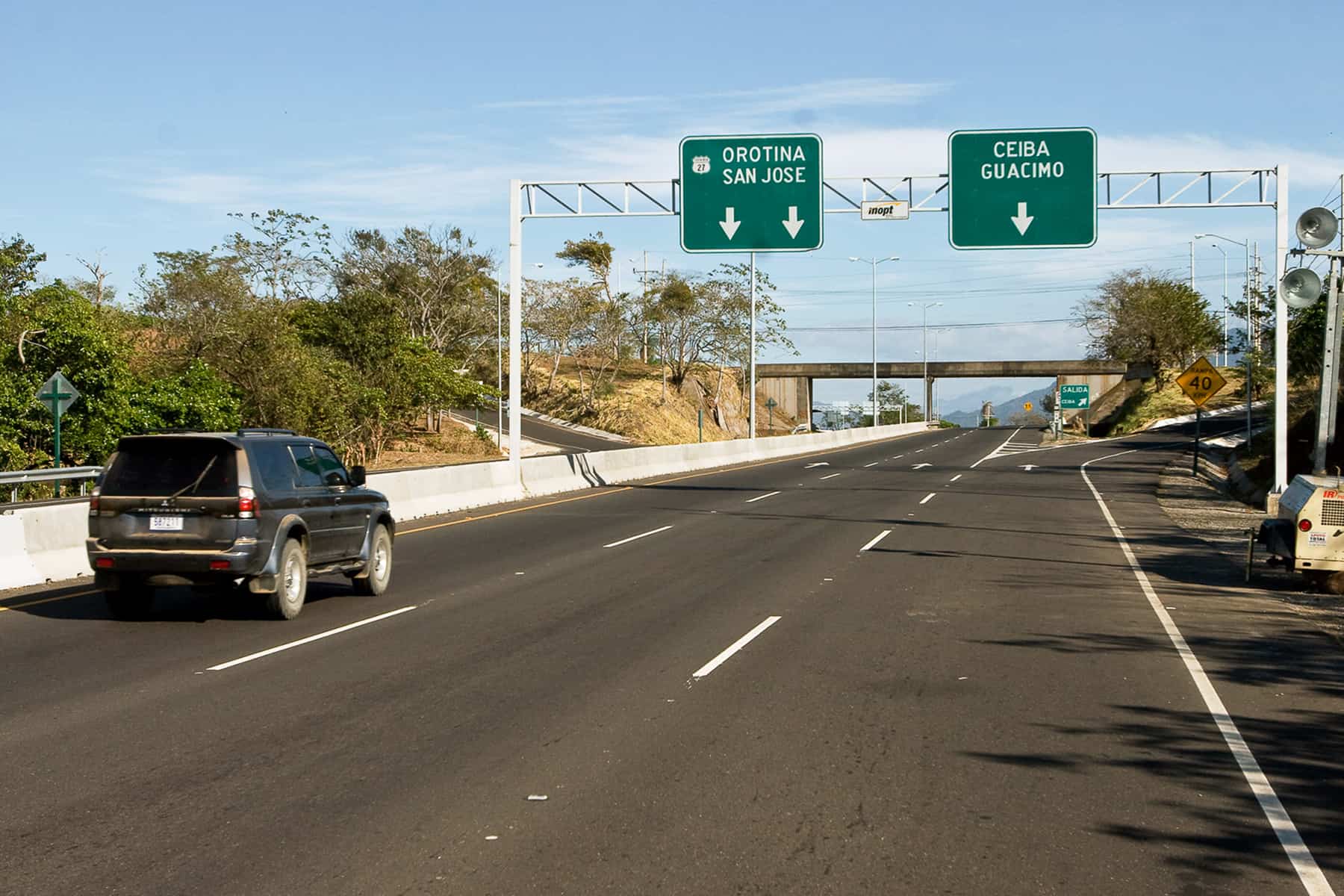
Here are Costa Rica’s driving and business measures related to the coronavirus pandemic for August 2021. To review Costa Rica’s Covid-19 measures for September 2021, click here.
Travel and borders
Costa Rica is welcoming tourists who arrive via flights (commercial or private) or boats (yachts or sailboats). Cruises carrying vaccinated passengers and crew can make ports of call in Costa Rica as of September. The land borders are also open to tourists, residents and citizens.
A negative coronavirus test is not required for entry to Costa Rica. Minors and vaccinated tourists can enter Costa Rica without insurance as of August 1. Unvaccinated or partially vaccinated adults must purchase health insurance covering the duration of their stay in Costa Rica.
There are no quarantine requirements in place for anyone who enters the country who is not exhibiting symptoms of Covid-19.
For more information, including details regarding the insurance requirements, visit the Costa Rica Tourism Board’s official site.
Driving restrictions

Until August 31, there are daytime restrictions on weekdays and weekends:
- Monday: Vehicles with plates ending in 1 and 2 cannot circulate.
- Tuesday: Vehicles with plates ending in 3 and 4 cannot circulate.
- Wednesday: Vehicles with plates ending in 5 and 6 cannot circulate.
- Thursday: Vehicles with plates ending in 7 and 8 cannot circulate.
- Friday: Vehicles with plates ending in 9 and 0 cannot circulate.
- Weekend:
- Odd plates cannot circulate on Saturday the 14th.
- Even plates cannot circulate on Sunday the 15th.
- Even plates cannot circulate on Saturday the 21st.
- Odd plates cannot circulate on Sunday the 22nd.
- Odd plates cannot circulate on Saturday the 28th.
- Even plates cannot circulate on Sunday the 29th.
There is also a nighttime driving ban from 10 p.m. until 5 a.m.
The typical list of exceptions — which includes rental vehicles, people driving to/from a hotel reservation, people driving to/from the airport and people driving to/from work or school — continues to apply. The official list of exceptions can be found here.
Costa Rica’s weekend daytime driving restrictions will be dropped in September.
Tourism activities
All outdoor tourism activities are permitted. All national parks can be open (now up to 100% capacity), and beaches can remain open daily from 5 a.m. to 8 p.m.
Guests are required to wear masks in some outdoors situations, so come prepared. (e.g. You need to wear a mask when purchasing your ticket to a national park, but you can remove the mask when you’re hiking.)
Businesses and activities
The vast majority of businesses can operate (with some capacity restrictions) from 5 a.m. until 10 p.m. This includes restaurants, bars, religious gatherings, movie theaters and farmer’s markets.
Activities that are not permitted include: concerts, fairs, nightclubs and large religious processions. The full list of establishments and activities that are not allowed is here. Limited attendance at some sporting events will be permitted starting in September.
Covid-19 testing requirements
Costa Rica does not require a negative coronavirus test to enter or exit the country. However, many foreign countries (e.g. the United States, Canada) do require a negative test if flying into or transiting through those nations.
More than 100 private labs across Costa Rica offer PCR and/or antigen coronavirus tests. Click here for a list. Note that antigen tests are accepted by the U.S. but are not valid for entry to some countries.
Both Costa Rica airports offer Covid-19 tests. Click here for more info.
Anyone in Costa Rica who is asymptomatic can purchase an antigen test at a private lab. Prices vary but typically start at about $50.
Samples for PCR and antigen tests in Costa Rica are collected via nasal swabs.
Mask wearing and other measures
Masks are required in all indoor settings except when eating, while alone, or in a private residence. You can be denied entry into an establishment if you are not wearing a mask.
Many businesses require hand washing and/or have implemented temperature checks.
In general, individuals should make reasonable efforts to maintain physical distancing of at least 2 meters from others when in public.
All of these measures apply to vaccinated and unvaccinated people.
The official site for coronavirus measures in Costa Rica is: https://presidencia.go.cr/alertas.
How to get a vaccine
Costa Rica is vaccinating citizens and residents. The vaccine priority is as follows:
- First group: Staff and residents at retirement or nursing homes. First responders, including health personnel.
- Second group: Costa Rica’s older population, defined here as those ages 58 and up. According to the Presidency, this group is required to demonstrate residency with a cédula or DIMEX.
- Third group: People from 12-58 with risk factors, including hypertension, diabetes, heart disease, respiratory illness, kidney disease and obesity, among others.
- Fourth group: Teachers and other staff within the Education Ministry (MEP) or private schools. Imprisoned people and judicial staff. Workers for the 911 service.
- Fifth group: People ages 20-57 without any of the aforementioned risk factors. Then, all remaining adults and children ages 12 and older.
Vaccines are administered at EBAIS, which are the public-health clinics that comprise part of Costa Rica’s national healthcare system. Each EBAIS manages a list of people who live in their jurisdiction. This list is used to identify priority individuals and to schedule their vaccine appointments.
If you are in one of the priority groups, contact your local EBAIS to schedule an appointment.
Citizens and residents ages 20 and older can also receive a shot — no appointment needed — at mass vaccination sites across Costa Rica. Click here for official information from the CCSS.