

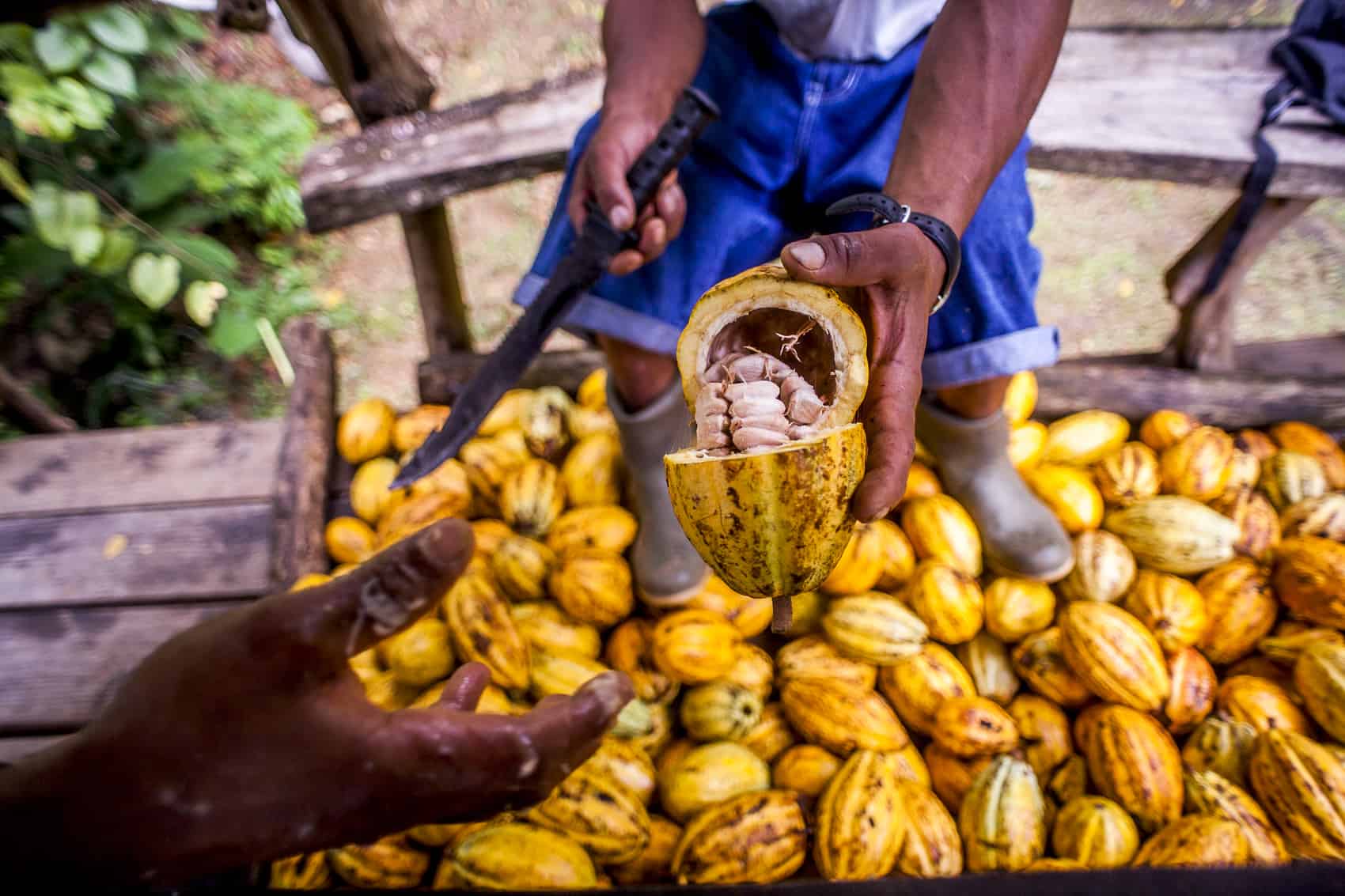
Cacao, Theobro-ma cacao, or chocolate was first cultivated in the ancient tropical rain forests by indigenous people of Mesoamerica. They esteemed the dried and toasted seeds for making rich sauces to accompany their meals.
Cacao was so popular among the indigenous communities that it was used as a form of currency for trading. Later, this bitter-tasting powder was mixed with sugar, and chocolate became the rage in Europe.
Today, chocolate is still the rage. Scientists say it is because the alkaline crystals called theobromine in cacao act as a mood elevator. In fact, theobroma means “food of the gods” in Latin.
Costa Rica’s cacao harvest is beginning, and you will now find cacao pods for sale in local markets. You can try making your own natural chocolate treats for the any holiday season, and use some of the seeds for planting.
Gardeners in Costa Rica’s coastal and intermediate regions have found homegrown cacao to be a special treat for the family. So here are some helpful tips on growing cacao in your backyard tropical fruit orchard.
Seedpods
Once you have acquired your seedpods, open them with a machete. Each seed is encased in a white fruit pulp that has a delicious flavor somewhat similar to mamón chino, the lychee-like fruit known as rambutan. After feasting on this fresh fruit treat, you can proceed to dry the seeds for several days before toasting. Be sure not to chew on the seeds, which may damage them and prevent them from germinating.
Save the biggest seeds for planting and soak the rest in water for several days to process them for making chocolate. After they ferment a bit, they are ready to dry in the sun. Later, peel off the outer skins and toast them in a skillet until they turn dark brown. Next, grind them in a corn grinder, and bingo – you have a rich dark chocolate you can mix with honey, nuts, raisins or dried coconut to make delicious treats.
Planting
As for the seeds for planting, acquire some plastic nursery bags or old recycled containers with holes in the bottom. Fill them with average soil, preferably mixed with aged compost for good fertility. Plant one seed in each container about 2 to 3 centimeters deep. Keep the containers outside so the rain will keep the soil moist to germinate the seeds, or keep them in the greenhouse and water regularly. Cacao seeds sprout in about one week and begin to form new leaves rapidly. When your chocolate trees are about 30 to 40 cm tall, transplant them from their containers to permanent sites.
Cacao trees do well in the shade of larger trees, particularly madero negro (Gliricidia sepium), also known as madre de cacao, or mother of cacao. Cacao trees can produce their first harvest in three to five years, depending on soil fertility and care. Annual applications of organic compost around the base of the tree and periodic foliar spraying with seaweed extract will increase growth and production. It is also beneficial to prune the top growth of the tree to create a low-growing, compact tree.
Fungal Disease
Cacao trees suffer from a fungal disease known as monilia, which attacks the young seedpods. This can be controlled by spraying the tree once a month with citrus seed oil extract during flowering and production of the seedpods. This product, known as Kilol, is available in most agricultural supply stores and is a totally harmless fungicide that helps control many garden plant diseases.
This article first appeared in 2010. For information on how you can obtain cacao seeds, visit us at The New Dawn Educational Center





