
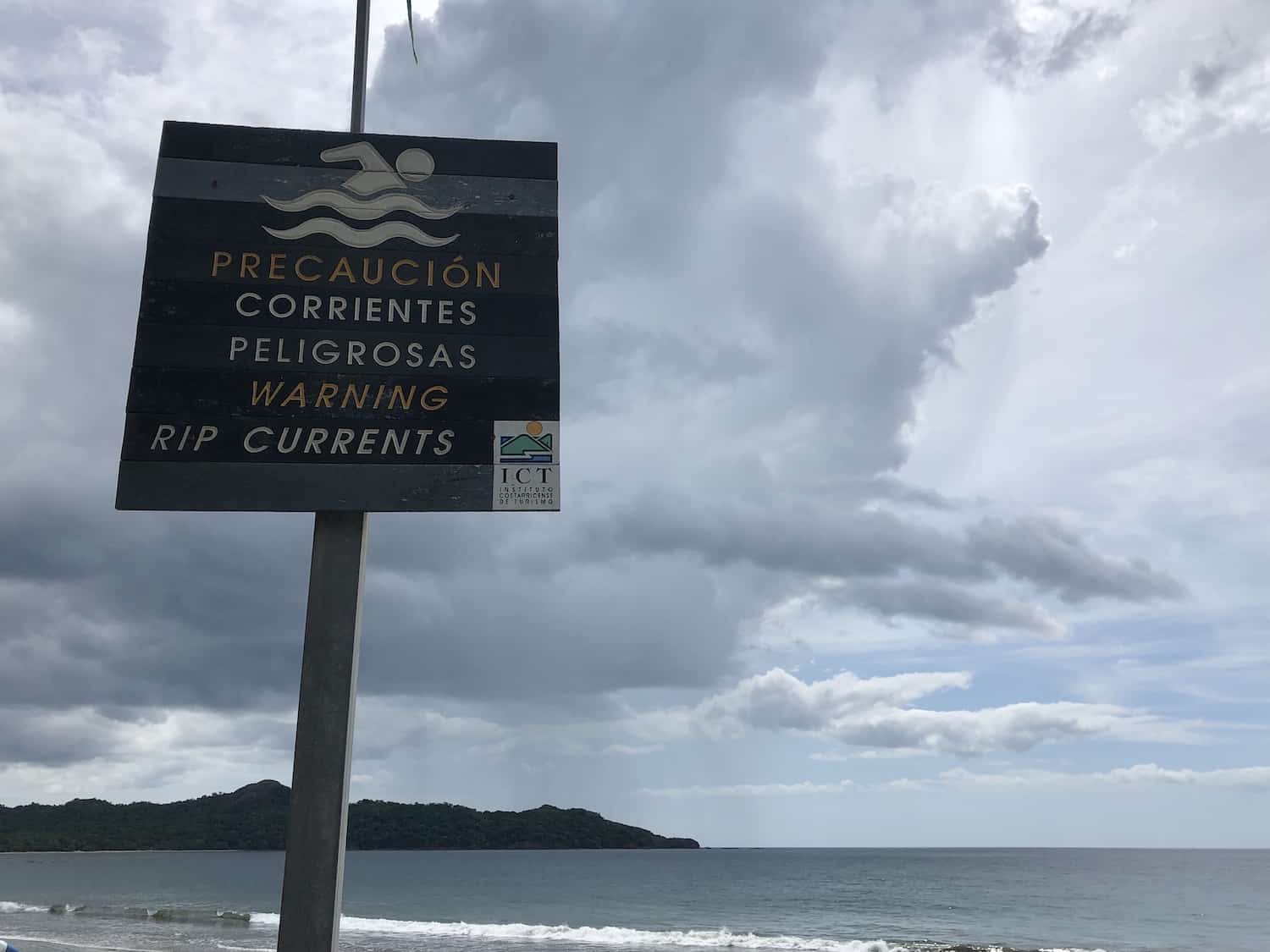
The Costa Rican Red Cross says 96 people died in aquatic accidents in 2020. In a year characterized by travel restrictions, the figure was down 25 deaths compared to 2019.
The Red Cross and Tourism Board also implemented or expanded lifeguard staffing at several of Costa Rica’s popular beaches, including Manzanillo, Ventanas, Cocles, Tamarindo, Bahía Ballena and Manuel Antonio.
While some of the country’s most-visited destinations have lifeguards, the majority of Costa Rica’s beaches do not.
In light of this, the Red Cross and ICT issue recommendations for beachgoers:
- If there are no lifeguards on the beach, be attentive to the behavior of the sea and refrain from entering if unsure.
- Always follow the recommendations of local lifeguards.
- Swim in front of or near the lifeguard post.
- Never leave children alone.
- Never swim alone.
- Adults should refrain from entering deeper than waist-level.
- Kids should only enter up to knee-level.
- Never enter the sea under the influence of alcohol or drugs
What is a rip current?
They are eddies that form along the beach, with a section, heading out to sea, with a level of danger capable of dragging even an expert swimmer.
How are they produced?
- These channels are produced by the continuous crash of the waves on the shore, which little by little creates a return path for the water.
- Once the waves reach the beach, that amount of water must return, and they flow through these channels, creating strong rip currents.
Basic characteristics of rip currents:
- They originate in the sectors of the beach where there are no waves breaking.
- They can be dark in color because they can carry sand or other sediment.
- They can also be seen as a spot of white foamy water or garbage.
- These surface currents have a lower temperature than the water that surrounds them.
- The currents do not sink you, they are superficial! The bather sinks when tired and is overcome by gravity.
If you encounter a rip current, don’t panic. Stay afloat, and try to signal for help. Rather than swimming against the current, swim parallel to the shore until you exit the current. Then, you can swim back toward shore.