

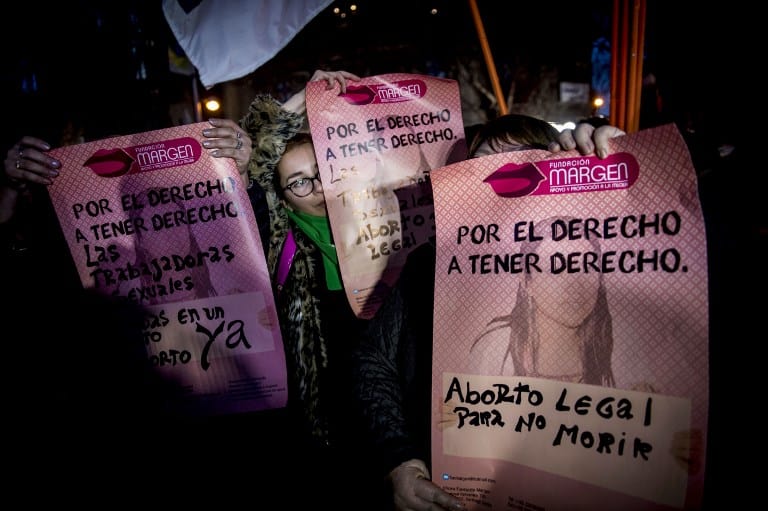
To legalize or not to legalize, that is the question on the lips of many legislators in Latin America since Argentina opted not to decriminalize abortion following a senate vote.
It did at least open the way for greater debate on a subject viewed so differently across the region in which abortion is entirely legal in Cuba and Uruguay, but where women can even be jailed for a miscarriage in El Salvador.
Attitudes are changing in some traditionally conservative societies, though, as Guatemala debates contradictory proposals that would either loosen or toughen laws; Brazil’s Supreme Court considers a plan to decriminalize abortion in the first 12 weeks; and Chilean legislators debate a bill that would universally allow abortion in the first 14 weeks.
Here, four women tell AFP about their abortion experiences.
Cuba: ‘A right but not a game’
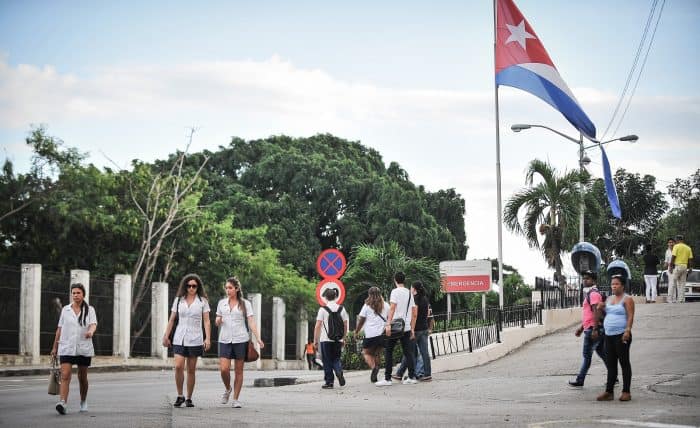
Josefa is 46 and lives in Havana. Cuba was the region’s pioneer, legalizing abortion in the first eight weeks in 1965.
“I got pregnant at 23. I had my first child and supposedly I couldn’t have any more. When I fell pregnant again it was a surprise: I was studying and decided to abort.”
She had three abortions over a decade but later had a second child, who is now 12.
“In Cuba it’s my right to choose when I want to have a child. It’s not a contraceptive method.
“I didn’t have the financial means and I wasn’t ready to have another child. I preferred to abort at an early stage of pregnancy.
“We have this right in Cuba but I don’t deny that lots of people use it indiscriminately as a contraceptive, and that can provoke very serious health problems.
“I had a friend who had so many [abortions] that she could no longer have children, and now she regrets that.
“We have the right to choose but we must also realize that it’s not a game.”
El Salvador: ‘Law discriminates against women’
Elsi Rosales, 27, lives and works in the countryside, and carries the scars of a traumatic stillbirth. Since 1998, El Salvador’s laws in this area have been unforgiving with abortion for any reason and even miscarriages punishable by up to 40 years in prison.
“I was 38 weeks pregnant. I have a three-year-old son who was born by C-section, I didn’t know what labor pains were.”
It happened as Rosales worked in the fields carrying firewood.
“I felt pain in my lower back, I didn’t know what was happening but felt like I needed to use the bathroom.”
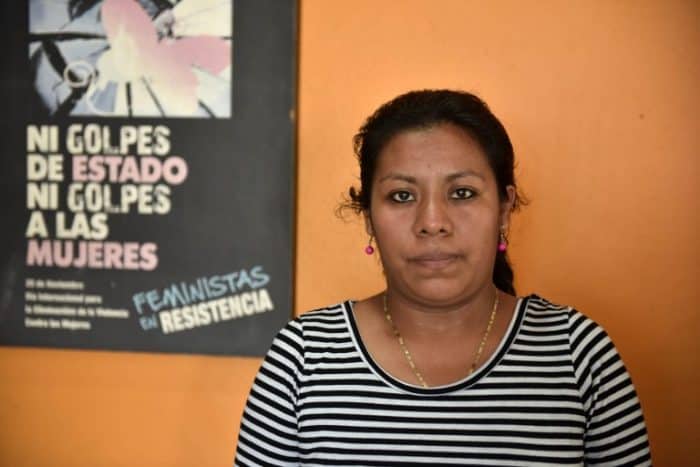
It was there that her stillbirth happened.
“At that point, I lost consciousness. I was taken to hospital with a hemorrhage. The doctor treating me asked what happened and was the one who denounced me.”
She spent 10 months in jail but now wants to fight for abortion reform.
“I’m going to join the fight so that the women in jail feel they’re not alone. This justice system discriminates against us for the sole reason that we’re women.”
Mexico: ‘No guilt’
Since 2007, abortion has been legal in the capital Mexico City up until 12 weeks. In the rest of the 31 states, it’s allowed in cases of rape or a threat to the mother’s life. But in Guanajuato, it’s outlawed and carries a maximum sentence of 30 years.
Art promoter Monse Castera, 32, has had three legal abortions, the first in France when she was 21.
“It was… very professional, the one in which I felt most secure.”
The next two were after it was legalized in Mexico City.
“They weren’t experiences that left me feeling guilty or with emotional pain. Abortion is not something we should feel ashamed about. It should be avoided but what should most be avoided is having unwanted children.
“It fills me with infinite sadness that in 2018 a woman cannot make decisions about her own body. If men could get pregnant this discussion wouldn’t even be on the table. No law should tell you what you can or can’t do with your body.”
Uruguay: ‘Example to other countries’
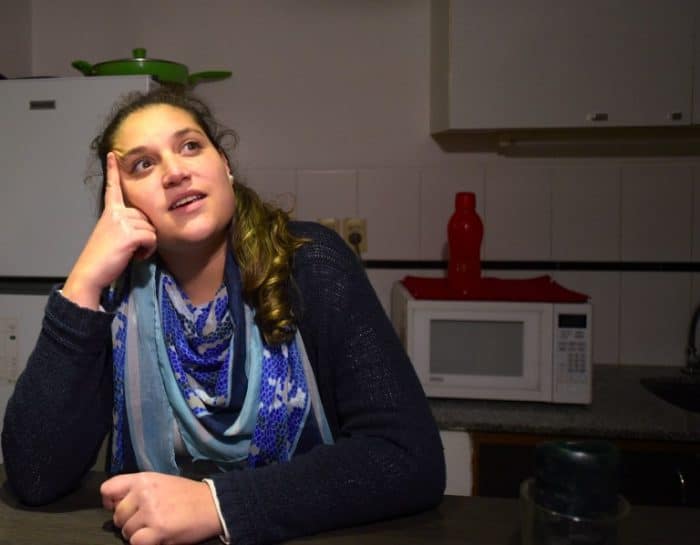
Office worker Mariana Rodriguez, 27, had an abortion in a public hospital in Uruguay, where it has been legal since 2013.
“It was never in my thoughts to become a mother. I don’t feel psychologically prepared, nor do I have maternal instincts.”
A torn condom and a morning-after pill that didn’t work sent her down the abortion path.
“The process was great, I felt well supported and never judged.
“No-one tried to persuade me. The psychologist just asked me if I was sure and I gave my explanation.
“I was lucky that I didn’t have to listen [to talk of homemade methods] using parsley and a knitting needle. I’m thankful for the law in Uruguay, it’s applied in a perfect way and should be an example to other countries.
“For me, it’s a very personal debate: how each individual views the fetus, embryo, baby, the concept of motherhood, the stereotype that women are born to be mothers… But it has to be law, there’s no discussion there.”





