

No menu items!

COSTA RICA'S LEADING ENGLISH LANGUAGE NEWSPAPER

HomeTopicsCrimeExplainer: What do Costa Rican authorities do with 4.1 tons of seized...

Explainer: What do Costa Rican authorities do with 4.1 tons of seized cocaine?

Congratulations, you’ve seized a record-breaking 4.1 metric tons of cocaine, more than any other seizure in Costa Rican history. Now what do you do with it?

Police arrested 11 Costa Rican fishermen in three separate operations in the country’s Southern Zone Tuesday evening and early Wednesday morning, with assistance from the U.S. Coast Guard and Drug Enforcement Agency. TV Channel 7 News reported that the confiscated drugs and suspects came ashore Thursday.

The seizure looks good on paper, but it ends up a white elephant (or maybe a white pony) after the fact.

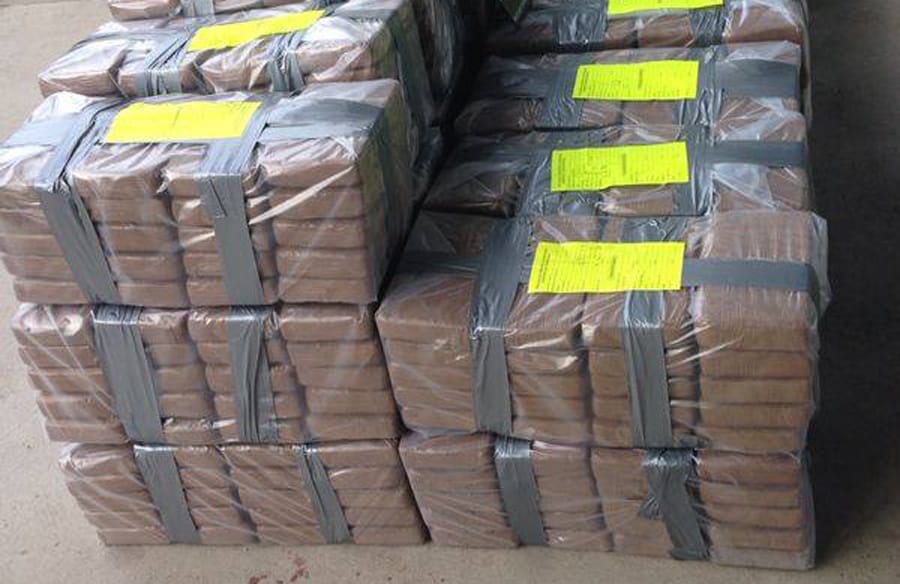
Carlos Hidalgo, press spokesman for the Public Security Ministry, explained to The Tico Times that after the initial arrests a judge from the Drug Control Police needs to be present during field tests to verify the substances seized. This process involves weighing the confiscated drugs and repackaging them for transport.

The Prosecutor’s Office then requests a certain amount of the narcotics as evidence for trial.

Hidalgo said that any confiscated narcotics not required for trial are then set to be destroyed. If the operation is a joint effort with the United States, like these were, the U.S. Coast Guard could bring the drugs to the United States for destruction there.

“There is a strict chain of custody of seized drugs until they are taken to any of the several labs in the U.S., where there are incinerators to destroy the drugs. Once the process is finished, a notification of destruction is issued and included in the case file,” the U.S. Embassy in San José replied to The Tico Times in an email.

Any cocaine seized that remains in Costa Rica after the trial is taken to a Public Security Ministry facility in Heredia, north of the capital, where it is also incinerated.


Trending Now

Costa Rica Reports First Chikungunya Case in Nine Years

Health authorities in Costa Rica reported the first chikungunya case in nine years. The patient, a 24-year-old man from Esparza in Puntarenas province, tested...

Alex de Minaur Into Australian Open Quarterfinals with Dominant Win

Local favorite Alex de Minaur advanced to the quarterfinals of the Australian Open, after a commanding performance against Kazakhstan's Alexander Bublik. The sixth-seeded Australian...

Costa Rica Stays Central America’s Priciest Vacation Destination

Costa Rica holds its position as the most expensive destination in Central America for travelers, with average daily costs per person reaching $138. This...

Cerundolo Upsets Rublev to Reach Australian Open Fourth Round

Argentine Francisco Cerundolo delivered a strong performance to knock out Russian Andrey Rublev in the third round of the Australian Open on Friday, getting...

Costa Rican Journalists Face Rising Hate Speech, Study Warns of Hostile Shift

Journalists in Costa Rica face a tougher environment than in past years, with nearly half reporting derogatory or hateful speech aimed at them. A...

Canatur and FECOP Urge Coastal Costa Ricans to Vote in New Turnout Drive

Canatur and the Costa Rican Federation of Sport Fishing, FECOP, have launched a joint campaign aimed at boosting voter turnout in Costa Rica’s coastal...
Costa Rica Coffee Maker Chorreador
Costa Rica Travel Insurance
Costa Rica Travel

Latest News from Costa Rica


