

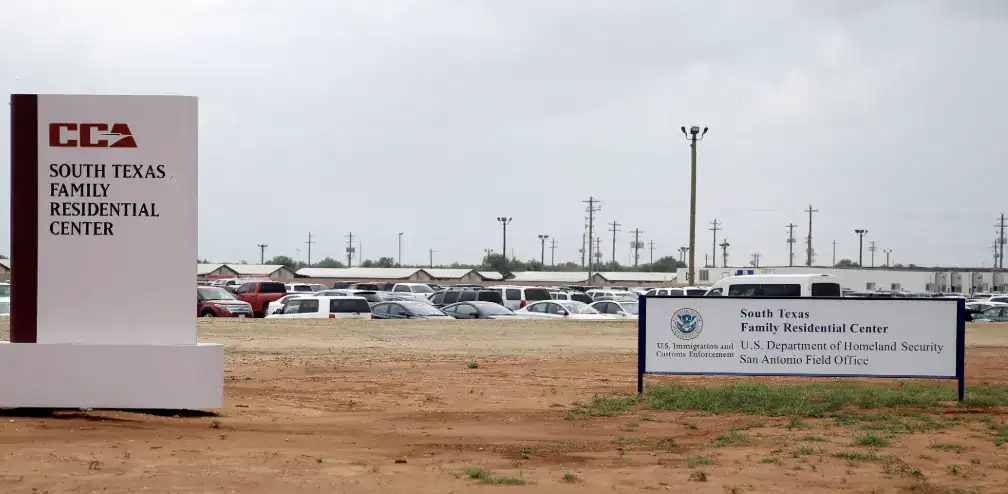
Two Costa Rican children, a 9-year-old and an 11-year-old, were picked up by U.S. immigration agents late at night near New Orleans at the end of July and driven about 900 kilometers (560 miles) to a family detention center in South Texas, according to U.S. government records made public by a university research project.
The information comes from the Deportation Data Project, run by researchers at the University of California, Berkeley, and the University of California, Los Angeles. The project obtains arrest and detention records from U.S. agencies and publishes them online. According to those records, Immigration and Customs Enforcement (ICE) took the 11-year-old into custody at 10:34 p.m. on Friday, July 31, in Kenner, a suburb of New Orleans, Louisiana. The 9-year-old was picked up in the same city.
The records list the younger child’s arrest at 4:46 a.m. on Aug. 1, but they also show that child being booked in at 11:46 p.m. the night before, so the exact time is unclear. Both children were first taken to a temporary ICE holding room in St. Rose, Louisiana. At 10:26 a.m. on Aug. 1, they were put on the road to the South Texas Family Residential Center in Dilley. They arrived at 10:38 p.m., about 12 hours later.
The children are not named in the records, and the records do not say whether a parent or guardian was with them. The Dilley center is built to hold families together. As of Aug. 5, the latest date in the data, both cases were still open. ICE classified the children as inadmissible, a legal label for people U.S. authorities say were not lawfully admitted to the United States, and their cases were waiting to go before an immigration judge.
The records also list both children under ICE’s Alternatives to Detention program, which usually lets people stay out of custody while their cases move forward, often with check-ins or electronic monitoring. The data does not explain why children being held at Dilley carry that label.
Across all ages in the records, most detention stays with that label ended with the person deported or leaving the United States voluntarily. A smaller share ended with a release. The Dilley center can hold about 2,400 people and has faced lawsuits and repeated complaints. A joint report by Human Rights First and RAICES, a Texas legal aid group, accused the facility of denying people a fair legal process and holding them in inhumane conditions.
Families held there say they have been kept far longer than 20 days, the limit for children set by a long-standing U.S. court agreement known as the Flores settlement. Lawyers and advocates have also reported insects, spoiled or moldy food, and staff taking away children’s drawings that showed sadness.
Records released by the office of U.S. Sen. Dick Durbin, an Illinois Democrat, describe delays in medical care, along with emergency calls for young children and babies having seizures or trouble breathing. ICE denies that conditions are poor. The agency says Dilley is a family center designed to keep families safe, with medical checkups, baby supplies, classrooms and play areas.
The two children are among 41 Costa Rican minors picked up by ICE between October 2022 and Aug. 5, 2026, according to the same records. Twenty-four were girls and 17 were boys, ranging from babies to 16-year-olds, and 33 were younger than 12. Of those 41, five left the United States for Costa Rica and five were released inside the country. The two children sent to Dilley were the only ones recorded as being held in detention.
The other 29 had no record of being detained or leaving the United States, and most of them still had an open immigration case. Across all nationalities, the records show 31,481 arrests involving people under 18 in the same period. That figure counts arrests rather than individual children, because the same child can be arrested more than once. Nearly four in 10 of those cases, 38.5%, involved children estimated to be between 4 and 9 years old.
Here at home, the case adds to mounting questions about how Costa Ricans are treated in U.S. immigration custody. In September, the Foreign Ministry said 77 Costa Ricans were being held by ICE and estimated that around 250 had been detained between January and September this year.
Those figures came shortly after a Costa Rican social media influencer was released from ICE custody in Florida. Costa Rica’s Ombudsman’s Office has since asked the Foreign Ministry to explain how it checks on detention conditions for Costa Ricans held by ICE, how it makes sure they can reach Costa Rican consular staff, and how it identifies people who need extra protection, such as children who depend on an adult.
The request came after the death of a second Costa Rican in ICE detention, and as Costa Rica takes on a growing role in the U.S. deportation program. The records only run through early August and are updated from time to time. Because the data counts arrests rather than people, the published figures cannot show where the two children are today, or what happened to most of the 41 Costa Rican minors.





