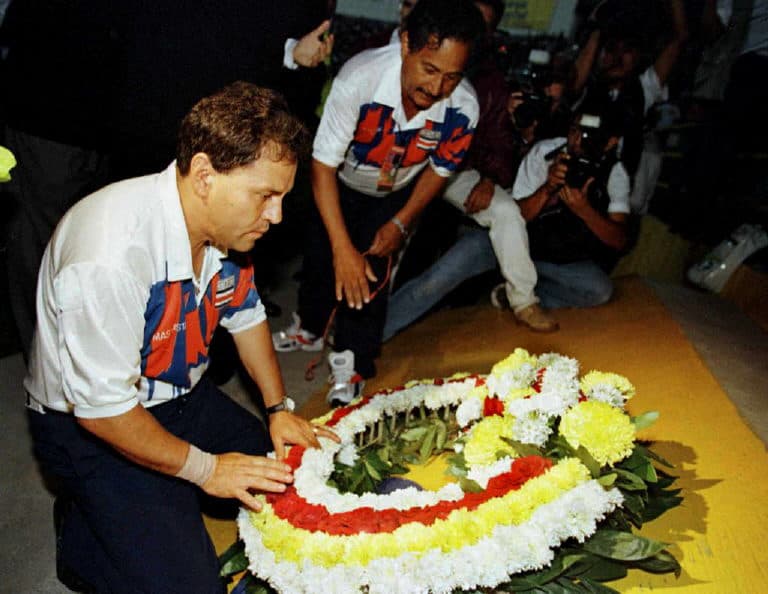
This month marks the 30th anniversary of the worst soccer tragedy in Central American history. The setting was Estadio Mateo Flores in Guatemala City. The event was a World Cup qualifying match between Costa Rica and Guatemala. A mass of ticket holders pushed toward the south entrance of the stadium, and a stampede ensued, with fans crushed against the security fencing and trampled underfoot.
The final toll was 84 dead and hundreds injured. Blame was divided between inadequate security, limited entrance gates, alcohol (it was a night game and many fans had partied for hours prior) and the sale of counterfeit tickets for the general admission seating at the south end, which pushed the numbers to well over capacity.
I had cleared time on my work schedule to be able to watch the match in the cantina in my barrio. Earlier that year I watched Claudia Poll win the gold medal in the 1996 Summer Olympics in the same boisterous cantina, and looked forward to enjoying the pivotal soccer match surrounded by the same festive pro-Tico crowd.
I walked in about fifteen minutes before kickoff to a cantina full of patrons staring silently at the tragedy unfolding on the bar tv. The playing field had been converted into an open air morgue. Athletes and coaches from both teams assisted in moving the dead and injured. The surreal site of weeping uniformed players embracing only meters away from the row of dead bodies was televised for the world to see.
Many in the packed stadium were unaware of what was happening. It was not until the arrival of ambulances and the appearance of the first dead bodies stretched out along the sideline of the pitch that the grim reality sunk in. Men, women, children, many dressed in the blue and white of the National team were set down one-by-one. As the body count increased, Alvaro Arzu, the President of Guatemala who was in attendance, came down from a box seat and emotionally announced the cancellation of the match and a three day mourning period.
In the aftermath, Guatemala was prohibited from hosting any international matches for two years. Curiously, Costa Rica also took action in its own stadiums, reducing ticket sales in what some saw as a knee-jerk overreaction, as the largest stadium in the country at that time– Saprissa Stadium– seated only about half the number of Estadio Mateo Flores, and had much more adequate provisions for admitting and seating spectators. Erring on the side of prevention was criticized by many as Costa Rica had never experienced a fan disaster remotely similar, but the football federation chose to take a financial hit over the minimal risk of seating the stadium to capacity.
In the cantina, conversation was muted; The shock was as great to us watching on a television 1,200 kilometers away as to those in the stadium. Most everyone closed out their tabs earlier than planned and returned to our homes, the memory of what we had watched never to be forgotten.
CR unusual overly cautious response to limit ticket sales did not address the reason behind the Guat disaster, instead a knee jerk reaction that only cost the fedefut much needed funds