

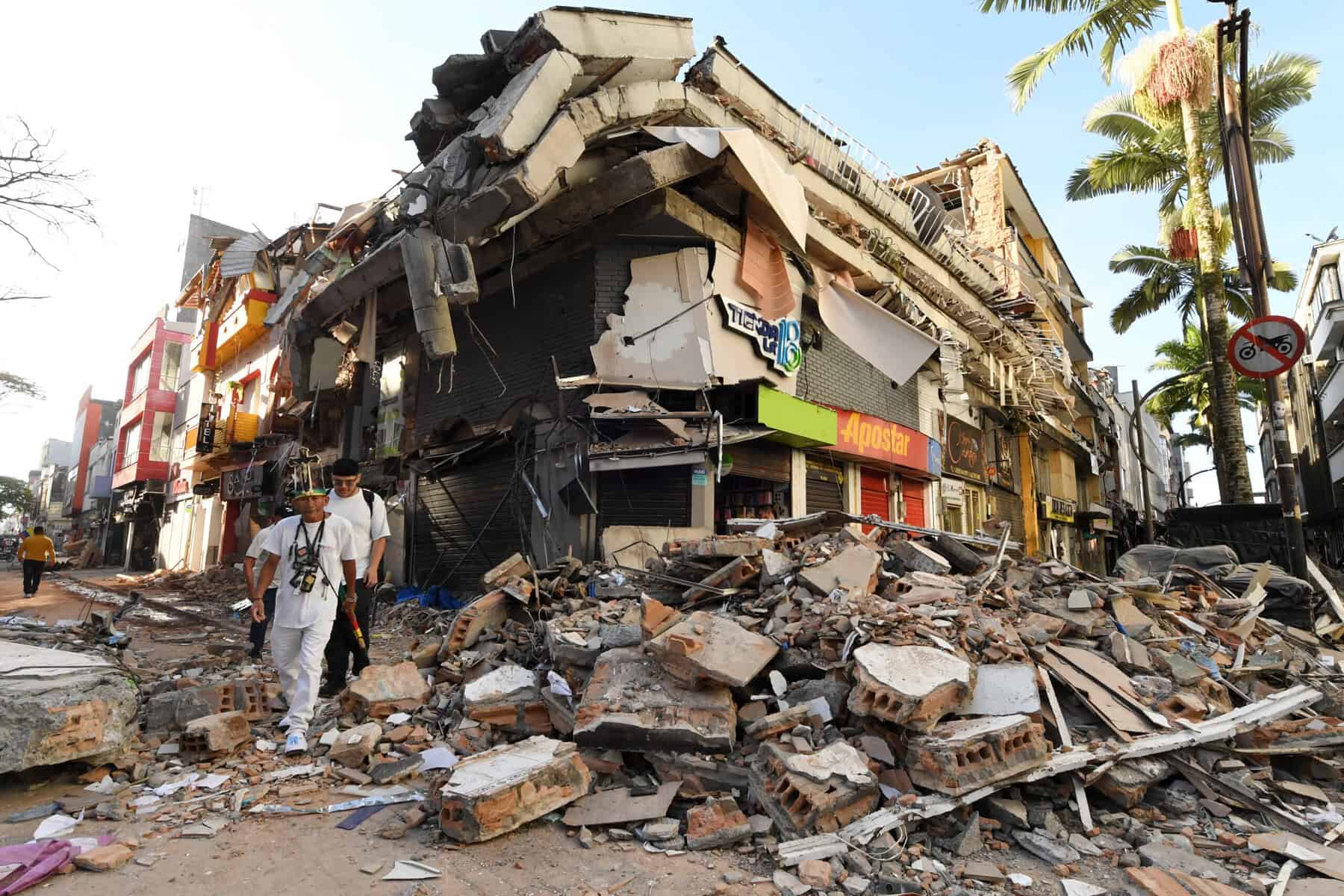
The death toll from the powerful earthquake that struck western Colombia yesterday has climbed above 200 as rescue crews continue searching collapsed buildings and authorities warn that the full scale of the disaster is still emerging. Local authorities put the death toll at around 224 by this morning, while the most recent consolidated national count remained lower as officials worked to reconcile figures from damaged communities where communications have been disrupted.
The magnitude 7.4 earthquake struck at 7:34 a.m. yesterday, with its epicenter near San José del Palmar in the department of Chocó. The quake was felt across much of Colombia and into neighboring countries. It was one of the strongest earthquakes to strike Colombia in decades.
Rescue teams worked through the night in Cali, Pereira and other badly affected cities, using heavy machinery, rescue equipment and, in some cases, their hands to remove concrete and twisted metal from collapsed buildings. Families remained gathered near damaged apartment blocks Tuesday waiting for news of relatives believed to be trapped beneath the rubble.
Nearly 5,000 homes have been damaged, while dozens of buildings have collapsed and hundreds of residences have been destroyed. Cali and Pereira are among the hardest-hit cities. In Cali, sections of residential buildings collapsed and severe damage was reported at a hospital, where portions of upper floors gave way.
Hundreds of patients had to be treated or relocated outside as emergency crews searched damaged parts of the facility. Residents in some neighborhoods spent Monday night outdoors because their homes were destroyed or considered unsafe. Pereira has also suffered extensive destruction, with parts of residential neighborhoods reduced to piles of concrete and exposed rooms.
Residents and volunteers joined professional rescue teams in the search for survivors, forming human chains to remove debris from collapsed buildings. Chocó, the department where the earthquake originated, poses a different challenge. Remote communities, difficult terrain and disruptions to telephone, electricity and transportation networks have slowed assessments near the epicenter.
Authorities have warned that casualty numbers could continue rising as emergency crews reach communities that have been difficult to contact. The earthquake also caused widespread damage to Colombia’s transportation network. Six airports remained closed Tuesday because of damage or safety concerns in Quibdó, Pereira, Manizales, Armenia, Cartago and Buenaventura.
Dozens of roads were also affected, complicating the movement of rescue teams, medical personnel and humanitarian supplies into damaged areas. Electricity, drinking water, telephone and health services remained disrupted in several regions. Colombia’s government has activated emergency command centers and deployed soldiers, police, firefighters, medical personnel and disaster-response teams across the affected areas.
President Abelardo de la Espriella, who took office just three days before the earthquake, declared a national disaster and said the immediate priority was rescuing people trapped beneath collapsed structures and getting medical supplies and emergency assistance into affected communities.
The earthquake has become the first major crisis of his presidency. International aid has begun reaching Colombia as the scale of the disaster becomes clearer. The United States is giving $15.5 million for emergency shelter, food, protection and damage assessments, while the Inter-American Development Bank made up to $50 million available for reconstruction assistance if requested.
Other countries and international organizations have offered rescue teams, humanitarian supplies and technical assistance. Aftershocks remain a concern. Residents have been advised to stay away from severely damaged structures until they can be inspected, particularly in areas where buildings were weakened during the initial earthquake.
The search for survivors remains the immediate priority. Emergency officials have emphasized that people can survive beneath collapsed structures for extended periods, making the first days after an earthquake critical for rescue operations. The disaster has drawn comparisons with Colombia’s 1999 Armenia earthquake, which devastated the country’s coffee-growing region and killed more than 1,000 people.
Monday’s earthquake struck many communities in that same broad western region, although authorities say it will take time to determine the full economic and human impact. For now, the numbers remain fluid. The difference between national and local death counts reflects the difficulty of gathering information from dozens of affected municipalities while rescue operations are still underway.
With communications still unreliable in parts of Chocó and rescuers continuing to enter damaged buildings in major cities, authorities expect the final death toll to take days to establish.





