
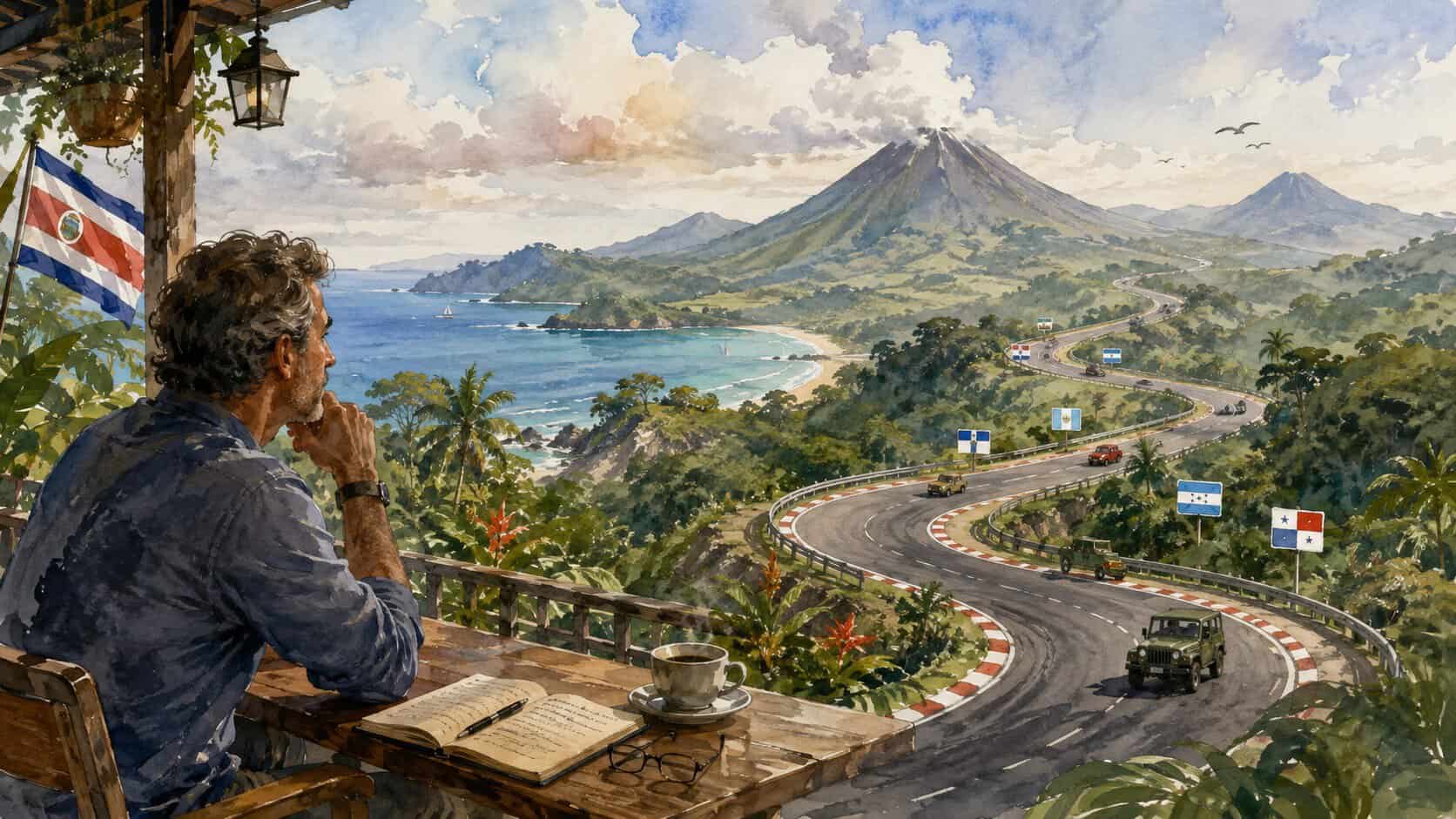
Imagine that the seven nations of Central America are participants in a race. The race has no finish line. Instead it’s an ongoing competition to be the tourism king of the region. Until lately it hadn’t really been competitive. Costa Rica was a Ferrari surrounded by Ford Pintos. Most of our neighbors had too many internal problems– El Salvador was run by gangs, Guatemala hit a peak of over 6,000 murders a year, Nicaragua was-and is- run by aging dictators, Honduras and Belize lacked tourist infrastructure and Panama, with the canal and international banking, was indifferent.
We have been the tourism giant in the region for three decades for good reason. Combine amazing nature, a multitude of tour options, housing that runs the gamut from simple cheap cabinas to 5-star luxury, and a class of local workers that understand good customer service and you have the winning recipe to bring in visitors and keep them coming back.
Don’t be fooled by the ‘Tico Time’ label; in my twenty years in various branches of tourism here I found the vast majority of Ticos to be pros, punctual, knowledgeable in their field and appreciative of the opportunity tourism provides. And the ones who lack professionalism usually get weeded out quickly.
Costa Rica remains the top dog, but a quick glance in the rear view mirror shows some of our neighbors gaining ground. Both El Salvador and Panama reported record numbers the first half of this year. Guatemala just announced a “Sustainable Tourism Master Plan”. Nicaragua, despite being Central America’s worst dictatorship, has shown an uptick in visitors the past few years.
One obvious advantage all of these places have over Costa Rica is the cost of a vacation. I recently ate at a restaurant in Manuel Antonio. A standard cheeseburger with fries came to over $18 (in colons) with service charge and tax included. This outrageous overpricing extends to other services throughout the tourist reliant areas of the country. The abysmal exchange rate has turned Costa Rica into a destination out of reach for many who would have come here in years past when travelers got more bang for their buck.
And Costa Rica does not have the market cornered on natural beauty. The first time I flew into Guatemala City at dusk, the fiery sunset highlighted the volcanic ranges ringing the city, I felt like I was flying into Shangri-La. Add Lake Atitlan and the ancient Mayan city at Tikal, and you have a place waiting to be explored.
Panama, while not reliant on tourism, offers miles of coastline, great offshore fishing, the canal and the glittering city of Panama itself. Honduras and Nicaragua are also making strides, with Roatan in Honduras in particular being a great drawing card.
And now El Salvador has entered the conversation as it has experienced a massive tourism boom in 2026, hitting record numbers driven by major security improvements, surf infrastructure, and global events. While their tourism revenue numbers are only about half of Costa Rica’s, they are marketing the country as a safe destination with surfing, fishing, historical tours and more.
As for Costa Rica, we are seeing a shift in strategy. Visitors ready to spend more money and not concerned with the exchange rate and the comparatively high prices are being targeted in marketing campaigns. Raw numbers are not as important as the per capita budget of visitors.
The budget traveler, the backpacker, the camping on the beach surfer are still welcome, but may find our much cheaper neighbors more appealing. The present day Central America tourism pie is big enough to share. We can only hope that Costa Rica doesn’t price itself out of reach for not only tourists on a budget, but locals as well.
Read more of Don Mateo’s writing from his newly published ebook.