

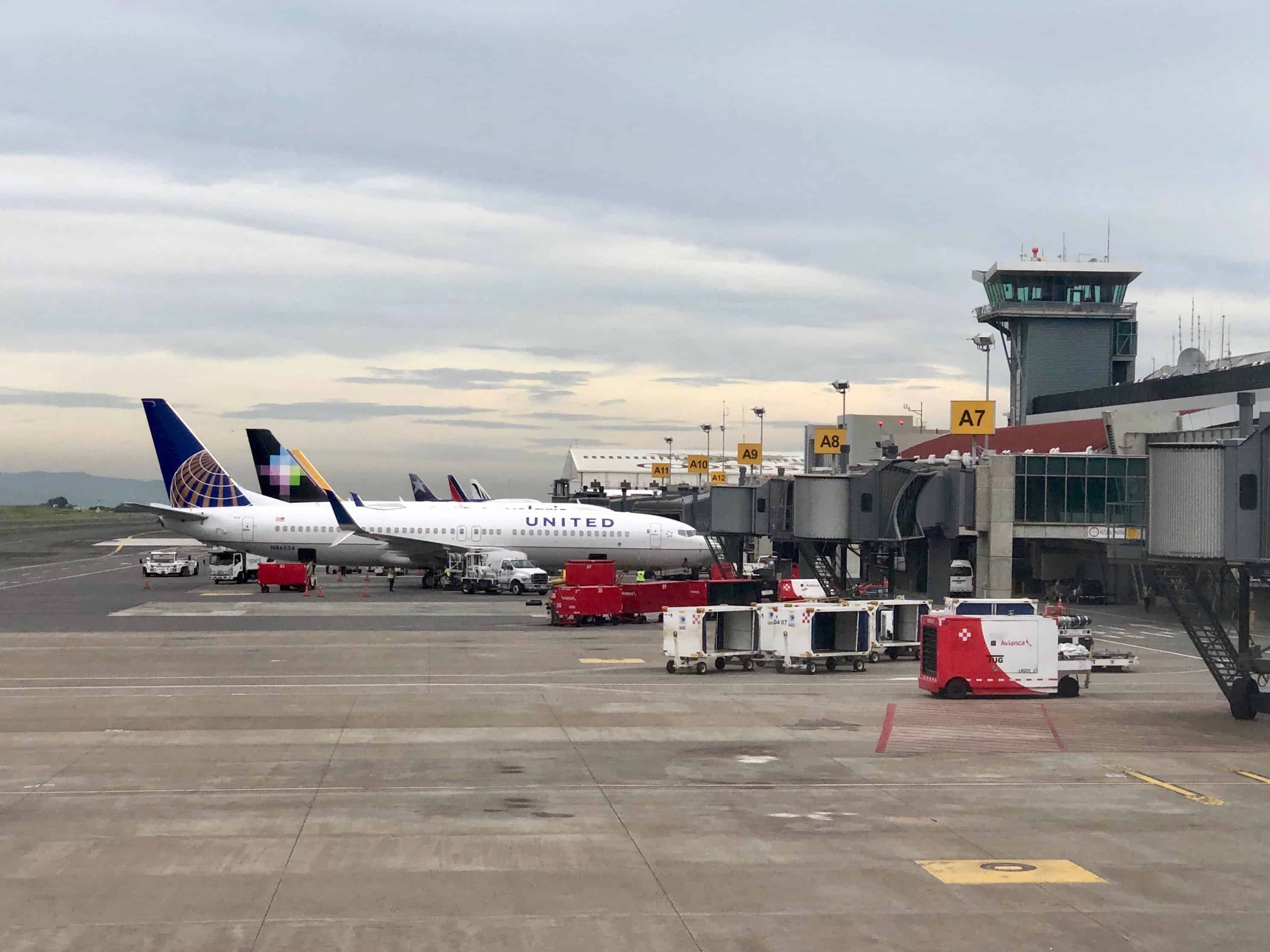
A leaked radio exchange at Juan Santamaría International Airport in San Jose has turned a tense runway dispute into a broader warning about the pressure facing Costa Rica’s air traffic control system.
The recording captures a disagreement between a commercial pilot and the control tower after the aircraft left the runway through a different taxiway than the one the controller had instructed. The move affected ground operations and temporarily blocked the movement of other aircraft, turning what might have remained an internal aviation matter into a public debate over airport safety, staffing and workload.
Editor’s note: The audio in the embedded report is in Spanish. In the exchange, the pilot and tower dispute runway exit instructions after the aircraft left through a different taxiway than assigned. The incident remains under official review.
The airport’s operational safety and quality teams are expected to examine the full set of frequency recordings, not only the leaked segment that circulated publicly. That review will be key because the short clip does not show the complete sequence of instructions, responses and traffic conditions at the time.
For that reason, the incident should not be treated as a final judgment against any one person. The official report has not been completed, and aviation reviews are meant to determine what happened, whether procedures were followed and what changes may be needed to reduce future risk.
Still, the leaked exchange has drawn attention because it reflects concerns air traffic controllers have been raising for years. Controllers have warned about staff shortages, work overload and a system operating with little room for error at the country’s busiest airport.
Juan Santamaría is Costa Rica’s main international gateway, serving millions of passengers each year and handling much of the tourism and business travel. When operations slow or become strained there, the effects can spread quickly through airline schedules, passenger connections and the country’s image as a reliable destination.
The airport’s traffic volume has grown while controllers continue to point to gaps in staffing and supervision. In aviation, those gaps matter. Air traffic control depends on constant attention, clear communication and enough trained personnel to manage arrivals, departures and ground movements safely.
The problem is not easy to solve quickly. Training an air traffic controller takes years, and a shortage cannot be fixed simply by hiring new personnel overnight. Vacations, illness, retirements and peak travel periods can place even more pressure on a system that controllers say is already stretched.
The physical layout of the airport also adds pressure. Runway exits, taxiways, gate availability and aircraft spacing all affect how quickly planes can land, clear the runway and move safely around the terminal. A missed or disputed taxiway instruction can delay other aircraft and force controllers to adjust traffic in real time.
There is no official finding that passengers were placed in immediate danger. But the incident has exposed a deeper concern: Costa Rica’s most important airport is carrying heavy international traffic while the people responsible for managing that traffic say the system needs more support.
Flights continue to operate at Juan Santamaría, and aviation authorities have not issued any warning for passengers to change travel plans. The larger question is whether the government and aviation authorities will treat the leaked audio as an isolated dispute or as another warning sign from a system that has been under pressure for years.
If the review focuses only on the radio exchange, the case may end as a procedural matter. If it looks at the wider context, it could force a more serious discussion about staffing, training and the resilience of Costa Rica’s main air gateway.





