

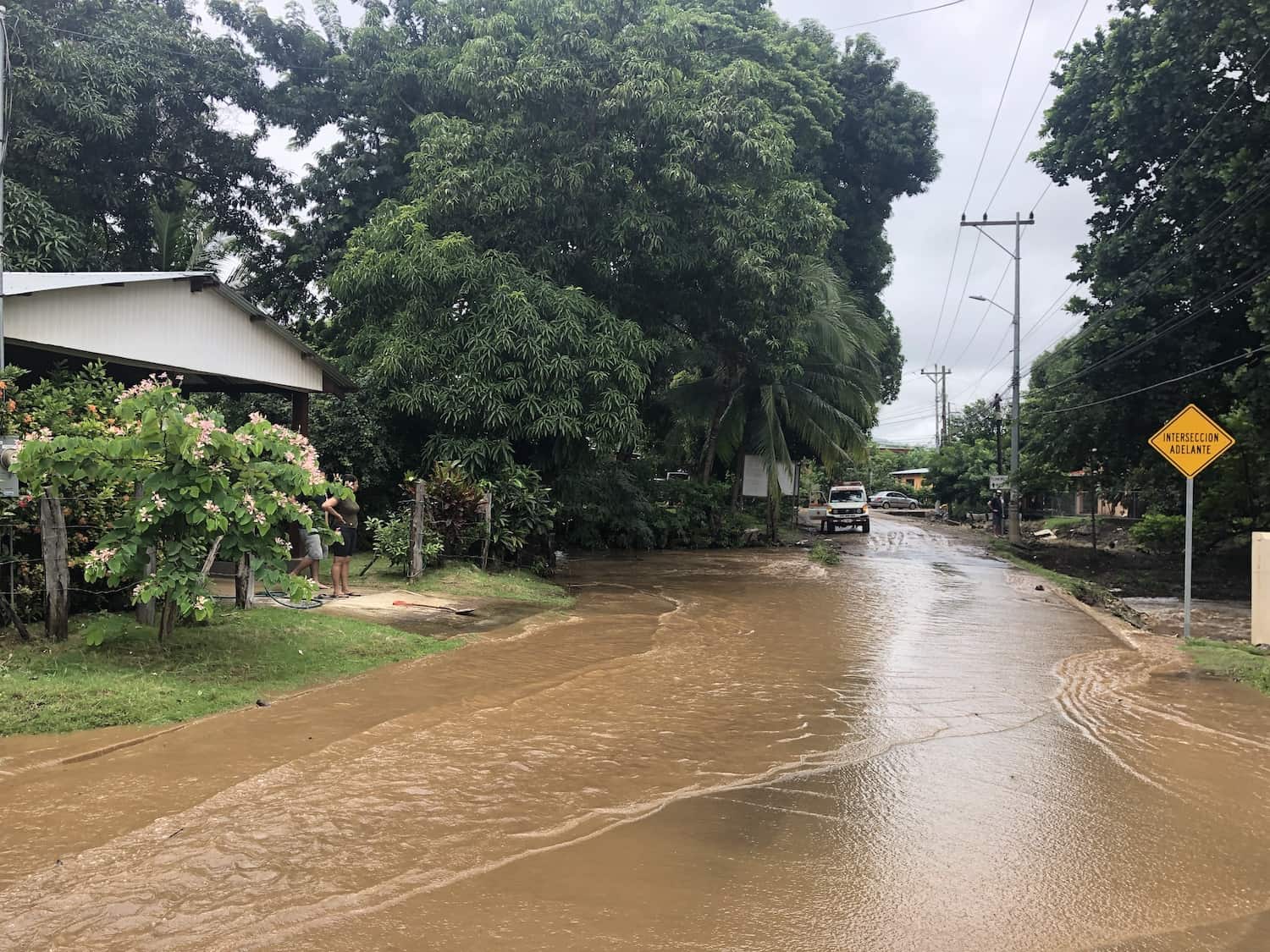
Costa Rica starts the day dealing with the effects of Tropical Wave 19, after heavy rains flooded homes, forced residents into emergency shelters, closed key roads and left one man dead in Guanacaste. The National Emergency Commission declared a nationwide green alert yesterday as the tropical wave crossed the country, bringing heavy rain and strong winds to the Caribbean, Northern Zone, Central Pacific and parts of the Central Valley.
At least 30 people spent Thursday night in temporary shelters after flooding hit communities in Sarapiquí and San Carlos. Two shelters were opened in Sarapiquí, at Finca 11 and Escuela El Tigre, where 25 people were housed. A third shelter was opened at the community hall in Pital de San Carlos, where five people stayed overnight.
In Matina, Limón, local emergency officials reported flooded homes and opened shelters for residents who needed to leave unsafe areas. Authorities said the Matina Emergency Committee remained active Thursday night, responding to reports from affected communities and coordinating shelter space.
The rains also turned deadly in Tilarán, Guanacaste, where a man was swept away by a flash flood Thursday afternoon. The Red Cross received the emergency report at 3:55 p.m. and found the man near the riverbank. Paramedics confirmed he had no vital signs, and the case was turned over to judicial investigators.
The heaviest rainfall totals reported yesterday were in Sarapiquí and Pococí, where accumulations reached about 150 millimeters, according to weather reports. Mountain areas in the Caribbean received between 40 and 50 millimeters, while parts of the Nicoya Peninsula recorded between 30 and 40 millimeters.
The National Meteorological Institute (IMN) said conditions would remain unstable and humid Friday even after the tropical wave moved out of the country. Rain was expected from the early hours along the Limón coast, with moisture possibly reaching mountain areas of the Central Valley during the morning. In the afternoon, showers were expected to be more isolated, with the strongest activity concentrated along the Pacific coast and in the mountains of the Northern Zone.
The weather also affected travel as Route 32, the main highway between San José and Limón, was closed Thursday after landslides and falling material blocked sections of the road, including areas near Braulio Carrillo National Park. Transport officials said they would announce when the route could reopen.
Another landslide was reported on Route 34 in the Central Pacific near Villa Caletas, an area where protective netting had already been installed to reduce the risk of falling material. A waterspout was also reported off Esterillos, drawing concern from residents and visitors along the coast.
Emergency officials urged residents and travelers to avoid crossing swollen rivers, stay away from landslide-prone areas, monitor official updates and call 9-1-1 if a home is at risk or if evacuation help is needed.
The alert comes at the start of Costa Rica’s midyear vacation period, when many families are expected to travel across the country. Drivers heading to the Caribbean, Northern Zone or Pacific beaches should check road conditions before leaving, especially on mountain routes and highways with a history of landslides.
Authorities warned that saturated soil in parts of the Caribbean and Northern Zone could increase the risk of additional flooding and landslides if more rain falls today.





