

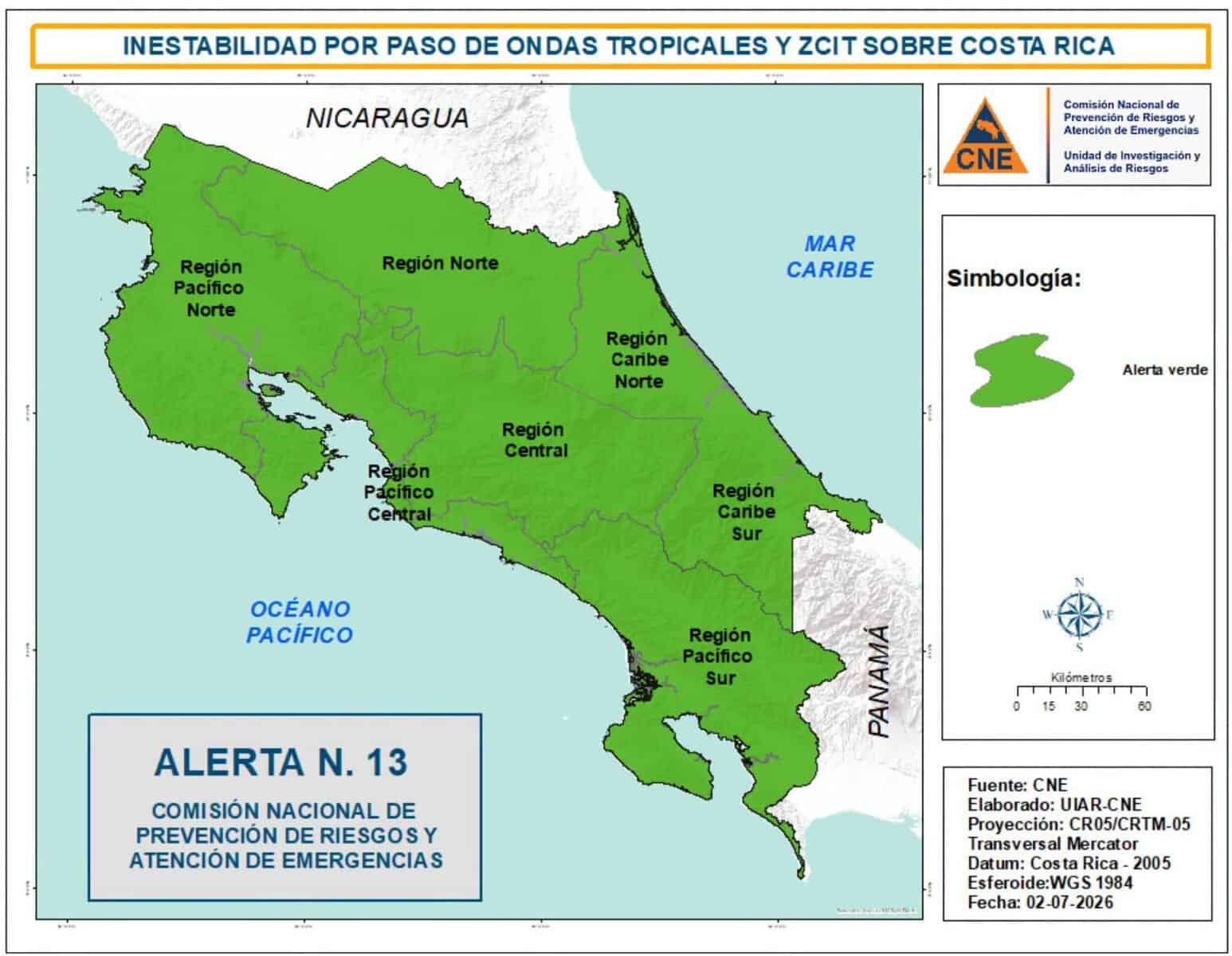
The National Emergency Commission (CNE) has declared a Green Alert for the entire country as Tropical Wave No. 19 moved across Costa Rica today, with a second system, Tropical Wave No. 20, expected to arrive over the weekend. The commission said the back-to-back waves will increase rainfall and strong winds nationwide and warned residents and travelers to stay alert through the coming days.
According to the CNE, the heaviest effects so far have concentrated in the Caribbean and the Northern Zone, where intense downpours and wind gusts have already been recorded. Reports from regional Emergency Committees pointed to areas such as Sarapiquí and Matina, where rainfall has caused localized flooding. The commission stressed that its assessment reflects conditions reported so far and that the situation could change as the systems develop.
Authorities are urging the public to exercise extreme caution and to avoid attempting to cross flooded areas under any circumstances. Residents in vulnerable zones are advised to closely monitor rivers, streams, and local drainage systems, which can rise quickly during sustained rainfall. Drivers should remain alert to the possibility of fallen trees, landslides, and reduced visibility, as wet and windy conditions may create hazardous travel, particularly in mountainous areas where slides are more likely.
The National Meteorological Institute (IMN) forecasts that the system will heighten atmospheric instability and bring greater cloud cover, making conditions cooler than in recent days, especially on Thursday and Friday. According to IMN meteorologist Gabriela Chinchilla, the tropical wave will strengthen rainy conditions as it moves from east to west Although the system is expected to leave Costa Rica on tonight, its effects will not end immediately.
The IMN has also flagged strong winds accompanying the wave. According to the institute, frequent gusts of 70 to 85 km/h (roughly 43 to 53 mph) are expected, with peaks of up to 95 km/h (about 59 mph) in elevated areas and the northern part of the country. Those gusts can push rainfall from the mountains toward lower sections of the Central Valley and Guanacaste.
Chinchilla explained that the wave will interact with the Intertropical Convergence Zone (ITCZ), allowing unstable conditions to persist into Friday. “This interaction will keep rainfall and atmospheric instability near the country. As a result, Friday will continue to bring cloudy skies, variable rainfall, and cooler temperatures across several regions,” the meteorologist said.
The timing is important to note because many families are traveling during the school vacation period. The CNE emphasized the importance of staying informed and following official updates, and recommended checking weather forecasts before setting out and allowing extra time for journeys, especially on mountain routes.
Emergency officials said they will continue monitoring conditions and may adjust alert levels if rainfall intensifies or new hazards emerge. A Green Alert is the lowest of the CNE’s three levels and is primarily informative, signaling that authorities are tracking a developing situation and asking the public to take precautions.
For earlier coverage of the system and its wind forecast, see our article from this morning on the tropical wave bringing rain and 95 km/h wind gusts to Costa Rica.





