

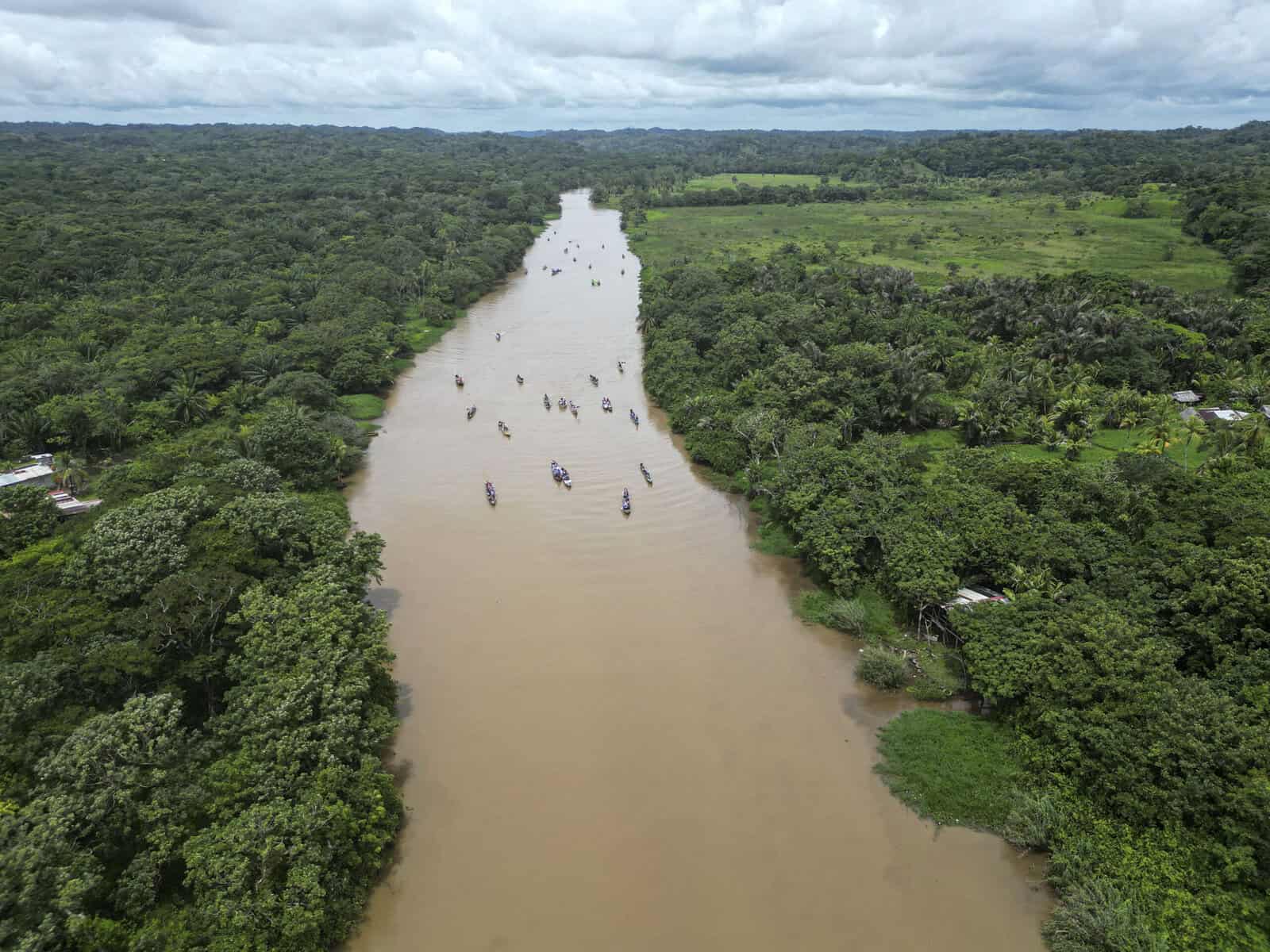
The public agency that operates the waterway plans to build a 4,600-hectare reservoir on the Indio River, west of the existing route, to store water and protect canal operations from future droughts. Officials said Tuesday that roughly 50 families, or about 200 people, will move first as preparatory work advances in the priority zone for the dam.
The full project will displace around 500 families, or some 2,000 people, who live in modest conditions and depend on subsistence agriculture across communities in the river basin. Construction of the main works is scheduled to begin in early 2028 and finish in 2031. The total investment stands at $1.6 billion.
Karina Vergara, the socio-environmental manager for the Indio River project, said the initial group will relocate from the town of El Limón de Chagres in Colón province on the Caribbean coast, where preliminary dam site activity will occur. The authority will first purchase land for new homes and complete land-use planning before any moves take place. The process will unfold gradually.
“We estimate that about 50 families, around 200 people, would be the first to be resettled in about a year,” Vergara said. “First we have to buy the land where the people will be moved, and then carry out the entire land-use planning process for construction. It will be gradual.”
The canal currently relies on rainwater stored in artificial lakes Gatún and Alhajuela. Water from the new reservoir will flow to Gatún Lake through a nine-kilometer tunnel by gravity.
Officials describe the reservoir as the most appropriate option to maintain reliable operations and support the country’s water needs for the next 50 years. The waterway carries about 5 percent of global maritime trade. The authority has allocated roughly $400 million for compensation, new homes and farmland for those affected. Families will receive replacement housing and support to restore their livelihoods, with the goal of improving living conditions.
Vergara and John Langman, vice president of the canal’s water projects office, said the agency has held multiple meetings with communities. Nearly 70 percent of residents have participated in sessions to review relocation plans and compensation rules.
The authority has completed the first phase of a nine-month dialogue process that included more than 200 collective and individual meetings. Some peasant organizations distrust the plans and filed a lawsuit against the project in the Supreme Court. The case remains pending as the authority moves forward with technical studies and appraisals.
The canal board approved funding for the reservoir in February 2025 under a resolution that declared it a national priority. A socioeconomic census of the area wrapped up in April 2025. Appraisals of properties and homes in priority zones began this month.
Land for collective relocations has been identified in Colón, Panamá Oeste and Coclé provinces, with new sites located between one and seven kilometers from current communities in most cases.
Tenders for the design-build contract are expected later this year or in early 2027. The environmental impact study is also advancing.





