

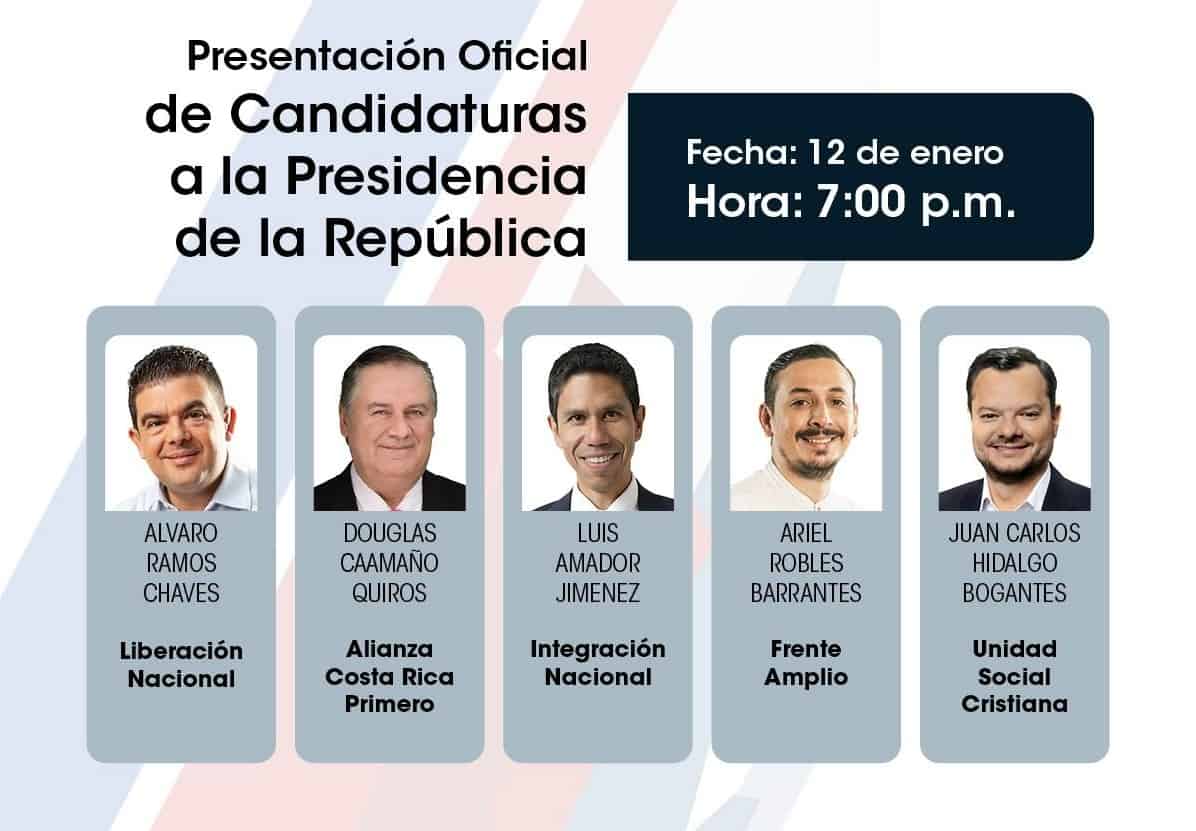
Five presidential hopefuls met in the fourth and final debate last night run by the Supreme Electoral Tribunal. Álvaro Ramos of Partido Liberación Nacional, Ariel Robles of Frente Amplio, Juan Carlos Hidalgo of Partido Unidad Social Cristiana, Luis Amador of Partido Integración Nacional, and Douglas Caamaño of Alianza Costa Rica Primero laid out plans on security, employment, health, and education. The session came weeks before the February 1 election, where voters pick a president, two vice presidents, and 57 lawmakers.
Security took center stage, with candidates addressing homicides and drug trade. Hidalgo proposed selling the Banco de Costa Rica to fund 20,000 more police and partner with Europol against narcotrafficking in Moín. Amador called for an elite anti-crime unit and revamping the DIS into a CIA-like agency with advanced gear.
Ramos suggested a top-tier security team, adding 6,000 officers, and ramping up drug seizures through major operations. Caamaño pushed to digitize the judiciary and investigations, labeling Costa Rica a regional narco bank and faulting institutions like the Central Bank. Robles focused on preventing a narco-state through community efforts and faster courts.
On jobs, proposals aimed at cutting unemployment and informal work. Robles backed a 40-hour workweek cut. Hidalgo sought lower social charges, axing non-essential payroll taxes, and easing usury laws to curb high-interest loans. Ramos offered credit relief for 700,000 in debt to ease living costs. Caamaño targeted youth jobs with revamped scholarships and business subsidies. Amador tied employment to broader economic shifts but kept details light in this round.
Health discussions centered on the Caja Costarricense de Seguro Social’s woes, like debts and wait times. Ramos vowed to protect the CCSS, build 400 Ebáis for two million people, and set up community mental health systems while opposing outsourcing. Caamaño planned to boost successful cooperatives in 100 days and use gas extraction to pay Caja debts.
Amador aimed to restructure the Caja as a thriving entity, pay private hospitals to clear backlogs, and give doctors fair pay without admin duties. Robles pushed debt repayment as state policy, reclaiming investments, and flexible specialist hours. Hidalgo stressed strengthening the Caja with co-managed Ebáis by cooperatives and universities, plus training and foreign specialist access.
Education reforms closed the main talks. Robles called for curriculum changes and gradual budget hikes to the 8% constitutional level. Hidalgo emphasized better teacher quality by dropping bureaucracy. Ramos promoted international baccalaureate in all high schools and first-job programs after graduation.
Caamaño addressed school health orders, cut teacher admin loads, and scrapped the MEP’s infrastructure office. Amador advocated bilingual education from first grade, international baccalaureate nationwide, quality controls for staff and students, and salary incentives for teachers.
Candidates wrapped with appeals: Ramos on steady leadership, Robles on fairness, Hidalgo on policy liberty, Amador on fixes, Caamaño on new ideas. With polls showing no frontrunner, the debate sharpened divides as campaigns head into the home stretch. The TSE has boosted voter aid, like longer ID office hours, to drive turnout.





