
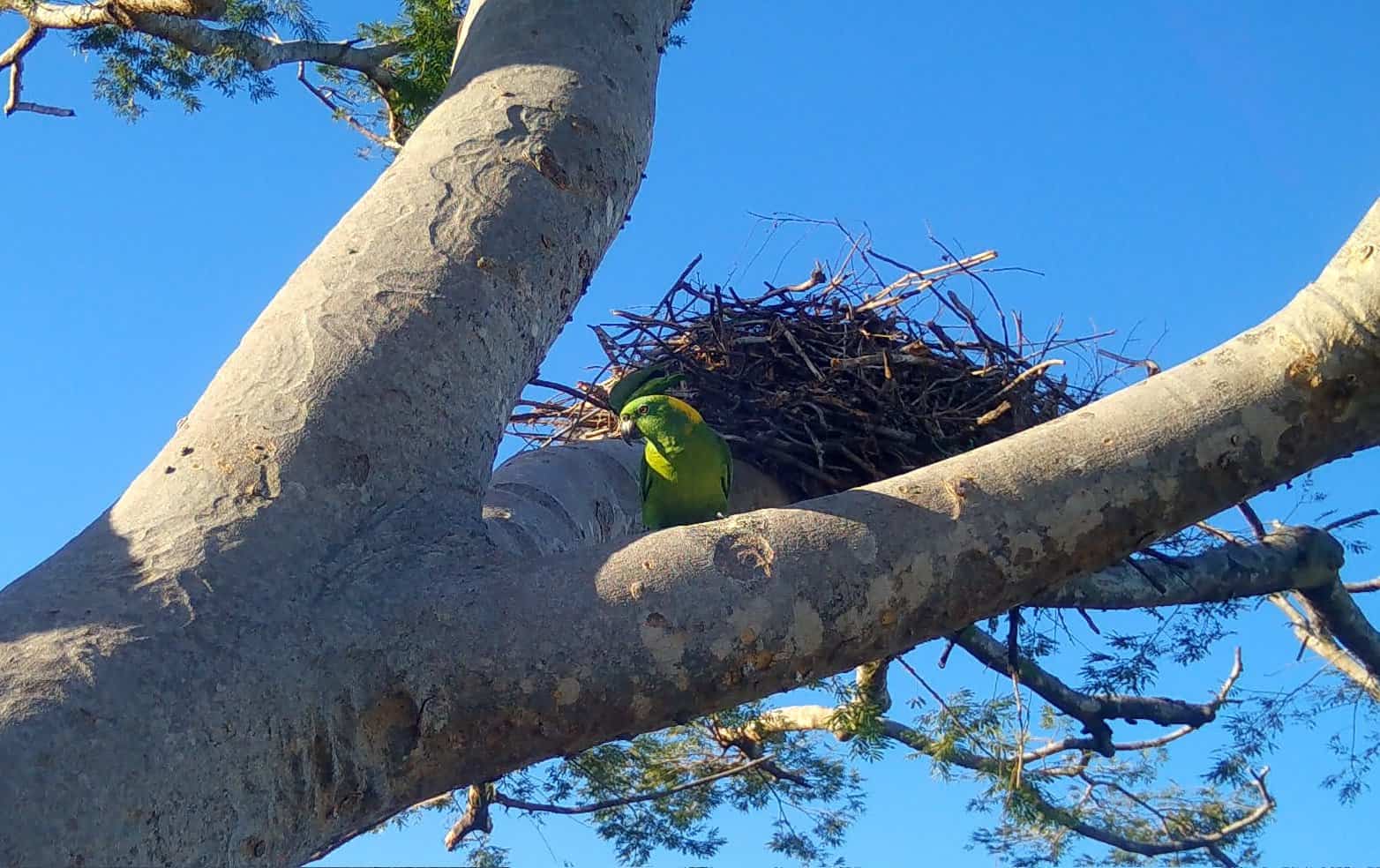
Critically endangered species have dangerously few individuals remaining in the population which normally makes them nearly impossible for people to see. The yellow-naped amazon is critically endangered yet it’s not difficult to spot in Costa Rica. Unfortunately, you’re much more likely to see this large parrot in a bar or a grandma’s house rather than the treetops.
The yellow-naped amazon or yellow-naped parrot (Amazona auropalliata) is known as the lora de nuca amarilla or lora copete amarillo in Tico Spanish. All of these names are describing a parrot with a yellow patch on the back of its neck.
Yellow-naped amazons are large birds. They weigh over a pound and are about 14 inches long. Like most of Costa Rica’s parrots and parrakeets, they’re mostly green. They have their namesake yellow patch on the back of their necks and some red and blue highlights on their wings.
They range from southern Mexico to northern Costa Rica, mostly along the Pacific coast. In Costa Rica they’re found in Guanacaste from the border to Nicaragua down to around Tárcoles.
Yellow-naped amazons travel in pairs or small flocks. Their diet includes nuts, berries, seeds, fruits, and flowers. They nest in preexisting holes in trees during dry season, usually laying three eggs.
While formerly abundant in their range, researchers have found a 92% decrease in population over the last three generations. A study led by a scientist named Timothy Wright in 2016 found a total of only 990 birds in Costa Rica. Their population has been crashing mainly due to their voices, which people find highly entertaining.
Yellow-naped amazons are able to illicit a vast variety of squawks, toots, warbles, and parrot-screams. Researchers that study their calls have found that groups of amazons in different geographic regions within their range make different noises, resulting in different dialects. What really got them into trouble is not only their ability to make parrot noises but their ability to talk like you and me. A huge contributing factor to their wild population decline is the pet trade.
Nests are raided or trees containing nests are cut down and the chicks are hand raised, placed in cages, and taught to talk. This was an incredibly common practice in Costa Rica in the past, but recent environmental education campaigns are focused on changing this bit of culture.
My own experience with yellow-naped amazons is related to the pet trade. I spent several years working to rehabilitate and release wildlife in a wildlife rescue center in Guanacaste. We would frequently receive birds that were raised as pets but became too messy, loud, or dangerous for their owners. Since they had spent their entire lives in captivity, they were unable to be released, resulting in many enclosures full of amazons. They delighted visitors to the center with their calls.
One amazon frequently requested scrambled eggs, apparently a meal it used to be provided. One would call one of my coworkers by name, having heard the staff use her name for many years.
Another would make the exact noise of the telephone from the office, making it impossible to know if the phone was really ringing or not. On the surface this is all very entertaining, but underneath is the reality that these birds are calling in cages instead of squawking in the canopy, producing the next generation of amazons.
I have camera trap projects in areas of Guanacaste where I frequently see and hear wild yellow-naped amazons. I was never lucky enough to record one with my camera traps until very recently. Usually they land so high in the trees that I could never hope to get a camera that high, but last week I was reviewing videos from a camera that I have placed on a jabiru nest and a few amazons stopped for a visit directly in front of the camera. I was so delighted that I wrote this article. Take a look at a few of the clips in the video below.
About the Author
Vincent Losasso, founder of Guanacaste Wildlife Monitoring, is a biologist who works with camera traps throughout Costa Rica. Learn more about his projects on facebook or instagram. You can also email him at: vincent@guanacastewildlifemonitoring.com