

BUENOS AIRES, Argentina – Jorge Lischetti applied to purchase dollars from the government the day Argentina eased controls. He stashed the $300 he was allowed to buy in January in his Buenos Aires home and did the same on the first day of February.
Argentines such as Lischetti, a legal adviser, are contributing to a drop in the country’s international reserves by refusing to deposit the dollars they purchase in local banks. More than 12 years after Argentina restricted withdrawals and converted dollar savings into pesos amid an economic crisis that led to a $95 billion default, 91 percent of those who qualify to buy foreign currency from the government are paying a 20 percent surcharge to keep the cash.
“History in Argentina is scary enough to make you want to keep your money out of the bank,” Lischetti, 24, said in an interview in the capital.
Argentines have applied to buy and take home $215 million since President Cristina Fernández de Kirchner opened up dollar purchases Jan. 27, exacerbating a plunge in reserves already at a seven-year low. Argentina’s 19 percent devaluation last month and the easing of currency controls reflect Fernandez’s efforts to cool black market trading, where the peso is 36 percent cheaper than the official rate.
The country’s bond yields and the cost to insure its debt against default are near a four-month high on speculation she won’t be able to stem the hemorrhaging of dollars. Reserves fell 35 percent to $27.8 billion in the 12 months to Feb. 3, according to the central bank.
The tax agency has received 463,327 requests to buy foreign currency since the government allowed the wealthiest Argentines to purchase dollars for savings at the official exchange rate for the first time in 18 months. Of that total, 423,645 have chosen to pay a 20 percent tax to take the greenbacks in cash, according to data from Afip, the tax agency.
“In a context of uncertainty such as this one, Argentines who have lived through hyperinflation and numerous mega- devaluations, they want to keep their dollars,” said Belén Olaiz, an analyst at Buenos Aires research company abeceb.com.
In the 2001 financial crisis, Argentina froze savings accounts to stop a run on bank deposits, a measure dubbed the “corralito.” Early the next year, the government forced banks to convert dollar-denominated deposits into pesos, which slashed savings to a fourth of their value.
Argentines have an estimated $160 billion of undeclared funds held abroad or stashed at home, according to the government. The Federal Reserve estimated in a 2006 report that Argentina, which the CIA says is the world’s 33rd-most populous nation, had at least $50 billion in U.S. cash – about one of every nine dollars then circulating abroad.
While some Argentines hide their dollars to evade government scrutiny, others are contributing to the erosion of the country’s reserves by spending abroad.
Juan Pablo Las Heras, 32, a manager at an agriculture company, said he was buying $300 at a local branch of Madrid- based Banco Santander SA in downtown Buenos Aires to spend on a holiday abroad. He said he planned to deposit the money in his dollar account and withdraw it once on vacation.
“I’m buying here because it’s cheaper than buying on the black market,” Las Heras said.
The loosening of currency controls after Fernández banned most dollar purchases in October 2011 also means Argentines are able to turn a quick 30 percent profit in pesos by trading the dollars in the illegal currency market, according to Olaiz.
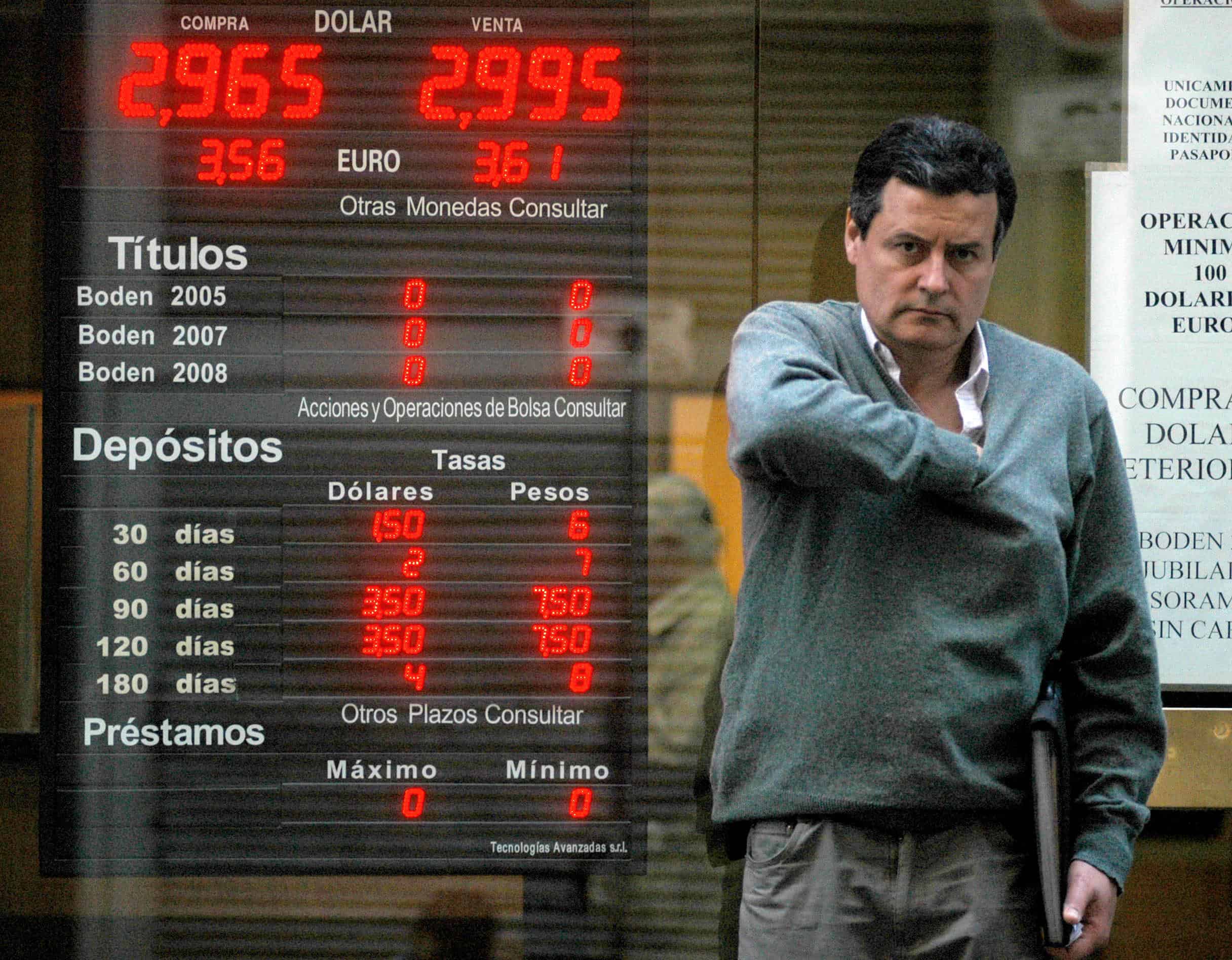
The peso trades at 7.8777 per dollar in the official market and at about 12.40 per dollar on the streets of Buenos Aires. The implied rate for purchasing dollars is about 9.46 pesos after accounting for the tax to keep the money in cash.
Five black-market traders interviewed on Florida street in downtown Buenos Aires say they haven’t seen any signs customers are doing that.
“Everything’s pretty much the same since the measure,” said Alejandro Gómez, 34, an international commerce student who’s been a trader in the black market for six months. “Argentines are probably waiting for a higher rate or taking the dollars for savings. If you’re earning enough to qualify to buy, why would you want pesos? They’re not worth anything.”
Cabinet Chief Jorge Capitanich on Jan. 26 criticized savers who hoard dollars.
“It’s very selfish to stash money under the mattress when you could buy a government security,” he said in an interview on the C5N television network.
In the latest effort to prop up reserves and attract investors to peso assets, policy makers raised interest rates and pledged the peso will stabilize at around 8 per dollar.
Still, the interest rates don’t compensate for estimated 28 percent inflation and non-deliverable forwards show traders betting the peso will weaken to 11.7 per dollar over the next year.
“People don’t know if we’re in the middle of a crisis and if these dollars will be worth a lot more in the future or there will be another devaluation,” Olaiz said.
© 2013, Bloomberg News





