

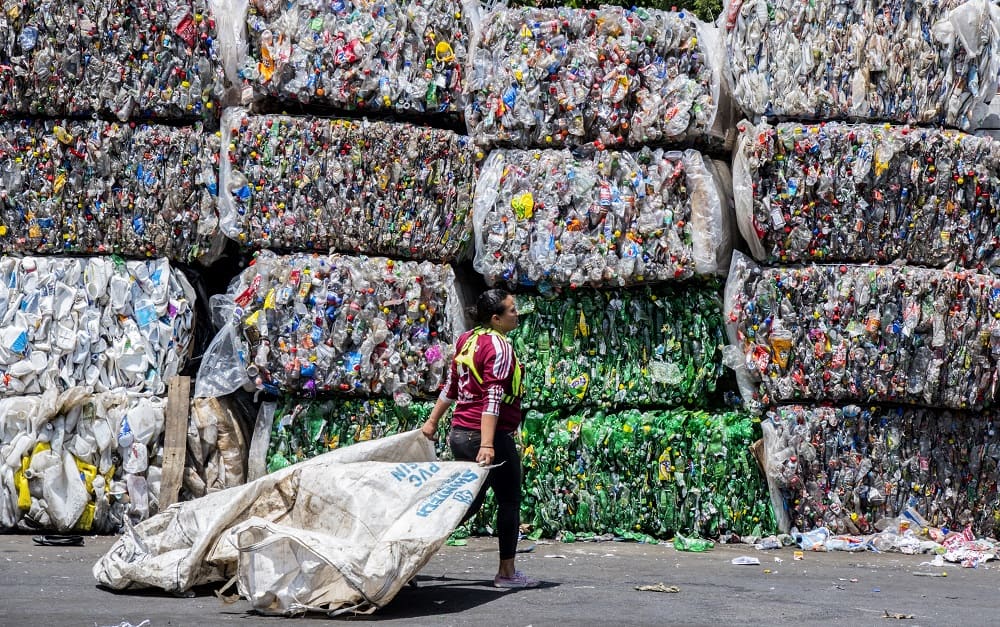
The Costa Rican congress approved this week a project that regulates the use of plastics, but authorities and environmentalists criticized the limited scope of the initiative for not prohibiting single-use plastic.
The project — voted Thursday night in the second and final debate by the Legislative Assembly — has as its main focus the prohibition of the use of plastic straws.
It also mandates plastic waste management as part of educational programs and recycling actions that must be taken by importers and producers of plastic containers.
Finally, it states that producers of plastic bags must use a percentage of recycled material.
However, environmentalists argued that many of these measures are already included in a 2010 waste management law, so the only new legislation is a prohibition on plastic straws that will be enacted within a year.
“It is not a time to weaken initiatives in the field of single-use plastic regulation, it is time to strengthen prohibitions,” said Environment Minister Carlos Manuel Rodríguez.
The government had attempted to ban within a period of two years all single-use plastics, but the initiative was modified by deputy Erwen Masís of the opposition Christian Social Unity Party.
Masís stressed that his project aims to reduce pollution and emphasizes environmental education.
But his colleague, Paola Vega, of the Citizen Action Party, criticized that the approved project does not attack the underlying problem in a country that generates 400 tons of plastic waste per day — much of which goes to rivers and seas.
Prohibiting single-use plastic “is a productive and environmental urgency because environmental systems are being damaged,” Vega said.
“There is enormous potential in Costa Rica for companies of alternative materials to plastic that need this change in supply and demand in order to grow,” she added.
The environmentalist Alberto Quesada, from the MarViva Foundation, said that the approved project ignores the recommendations of specialists by avoiding prohibitions on single-use plastics and betting on educational and recycling processes to make the change.
Masís admitted that the project was originally more ambitious, but that he modified it so as not to affect the plastics industry, which employs 14,000 people in Costa Rica.





