

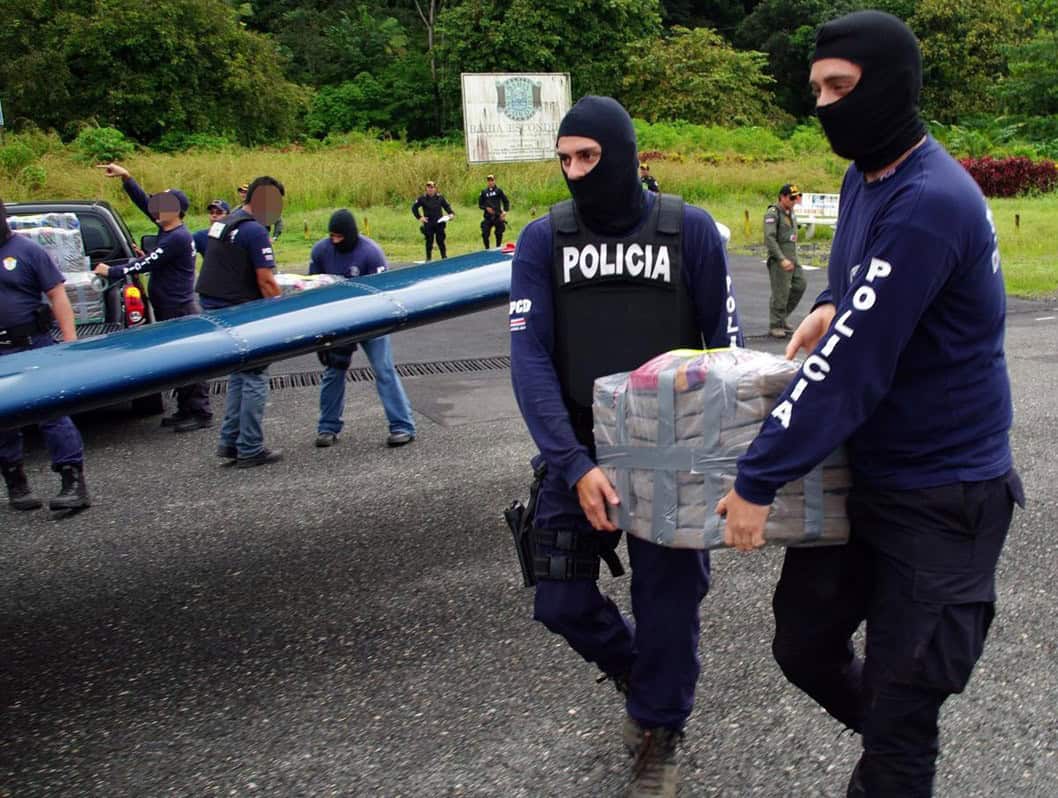
Costa Rica has again been included on the United States’ annual list of countries considered major routes or sources for illegal drugs entering the United States. The designation is part of what Washington calls the “Major’s List,” which identifies countries where large amounts of illegal drugs, or chemicals used to make them, are produced or transported.
Costa Rica is among 23 countries named on the U.S. government’s list for 2027. The list was submitted to Congress by U.S. President Donald Trump on September 15 and announced by the White House the following day. The other countries are Afghanistan, the Bahamas, Belize, Bolivia, Burma, China, Colombia, the Dominican Republic, Ecuador, El Salvador, Guatemala, Haiti, Honduras, India, Jamaica, Laos, Mexico, Nicaragua, Pakistan, Panama, Peru and Venezuela.
For Costa Rica, however, the designation does not mean the United States believes the government is failing to fight drug trafficking. That is a noteworthy distinction since the U.S. government says countries can be placed on the list simply because their geography, trade routes or economies make them attractive to international drug traffickers. A country can therefore appear on the list even when its government is actively working with the United States and taking steps to fight organized crime.
Costa Rica was not among the countries accused this year of failing to make sufficient efforts against drug trafficking. Only four countries received that more serious designation: Afghanistan, Bolivia, Burma and Colombia. The United States said those countries had “failed demonstrably” during the previous 12 months to meet their international drug-control obligations.
Costa Rica’s appearance on the broader list is also nothing new. Costa Rica was first designated a major drug transit country by the United States in September 2010 and has appeared on U.S. drug-transit lists repeatedly since then and Costa Rica’s location is a major reason.
Costa Rica sits between South America, where much of the world’s cocaine is produced, and major markets farther north. It also has long coastlines on both the Pacific and Caribbean, as well as busy ports, highways and international shipping connections. U.S. drug-control reports have for years described Costa Rica as an attractive stopping point for traffickers moving cocaine north from South America. Drugs can arrive by sea, be temporarily stored in Costa Rica and then continue north by land, ship or other routes.
That makes the 2027 designation less of a judgment on Costa Rica’s government and more of a recognition of the country’s continued importance along international drug-trafficking routes. The White House said the wider list is part of the Trump administration’s effort to pressure countries to confront international drug trafficking and organizations involved in the illegal drug trade.
For Costa Rica, the key point is that Washington continues to consider us an important drug-transit point, but it did not place Costa Rica among the countries it says have failed to take sufficient action against the problem.





