

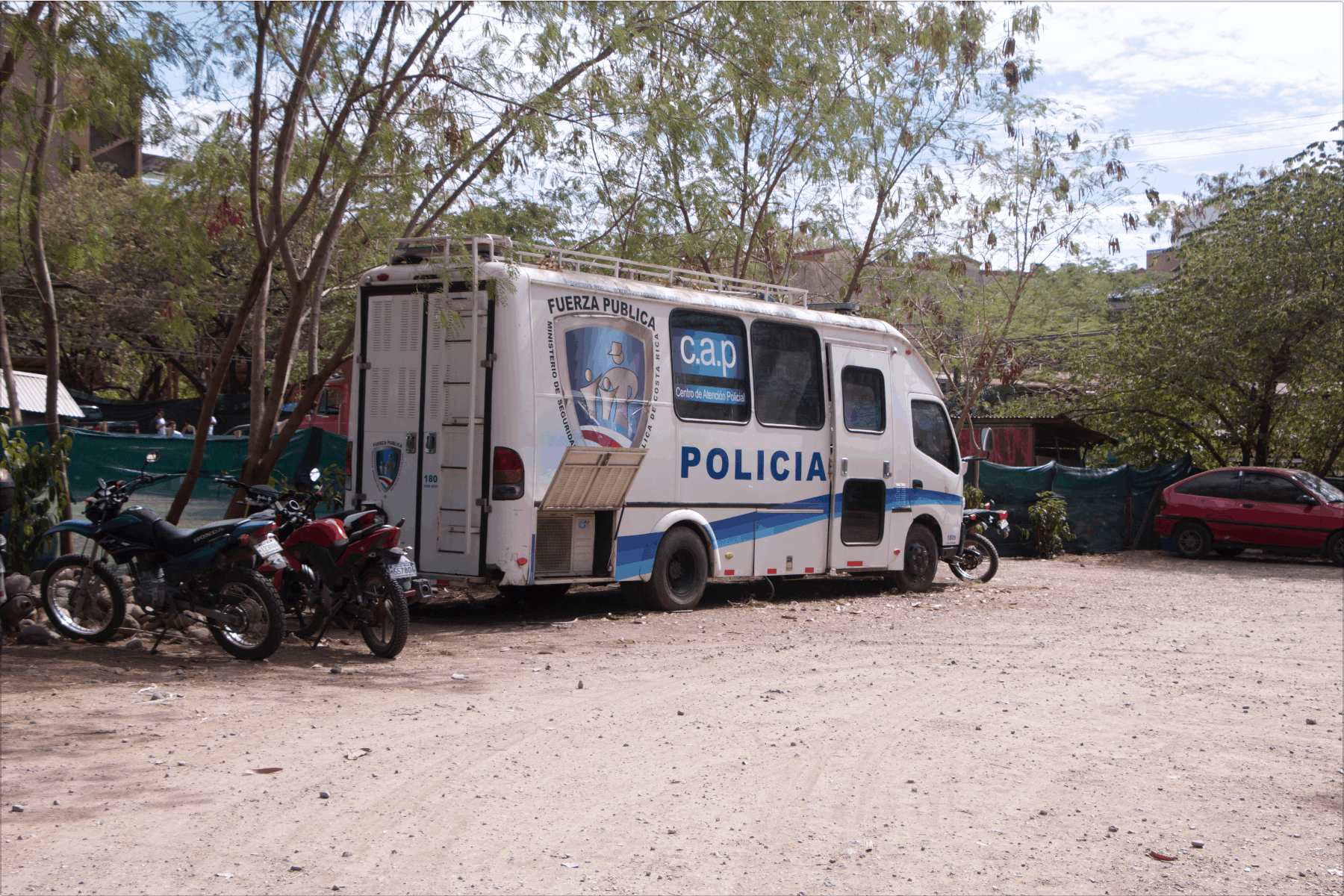
A long-running dispute over informal beach work in Playa Tamarindo has flared again, after residents and massage workers reported new police action against women offering massages to tourists along one of Costa Rica’s busiest beach destinations.
The conflict centers on a group of women who provide massage services on the beach, many of them working informally to support their families. Officers from the Fuerza Pública and Tourist Police have seized work equipment, including massage tables and awnings, as part of enforcement actions in the area. Workers say several tables have been confiscated since the beginning of the year, creating a heavy financial burden for families who depend on the income.
The dispute grew more tense around Semana Santa, when Tamarindo saw the usual surge of national and foreign visitors. Residents and workers reported that officers from the Ministry of Public Security and Tourist Police removed equipment from women offering beach massages, with one masseuse reportedly handcuffed during an operation. Around 50 women work in that activity in Tamarindo, a tourism-heavy district of Santa Cruz.
The episode has drawn criticism from residents who argue that police are using a heavy hand against women trying to earn a living while larger commercial activity along the coast faces less pressure. Workers say they would be willing to regularize their activity if authorities established a clear path for permits through the municipality or health authorities.
The case also falls into a larger legal and political debate over Costa Rica’s public beaches. Under our Maritime Zone Law, the public zone of the beach is reserved for public use and free transit, and no one can claim private rights over it. The same law gives authorities power to protect public access and restrict unauthorized development or occupation in the maritime zone.
But the Tamarindo dispute is not only a legal question. It is also about how enforcement is carried out in tourism towns where informal workers, hotels, restaurants, tour sellers, street vendors and visitors all compete for space. Tamarindo is one of Guanacaste’s main tourism centers, and the Costa Rica Tourism Board lists it among the area’s key tourism development areas.
For many residents, the concern is not simply that authorities are enforcing beach rules. It is that the response appears out of proportion when directed at women offering massages in a destination that depends heavily on tourism services. It has also linked the broader police presence in Guanacaste to operations aimed at combating delinquency, though workers argue their activity should not be treated the same way as public safety threats.
The clash highlights a problem Costa Rica has struggled with for years in its beach towns: how to keep public spaces open and orderly without pushing informal workers out of the tourism economy. In Tamarindo, that question is especially sensitive because the beach is both a public asset and the center of local income for families who do not operate from storefronts or formal tourism businesses.
So far, the dispute appears unresolved. Workers have called for dialogue and a way to operate legally. Residents are questioning the use of police force. Authorities, meanwhile, face pressure to regulate crowded beach zones without turning enforcement into a public relations problem in one of Costa Rica’s most visible tourist destinations.





