

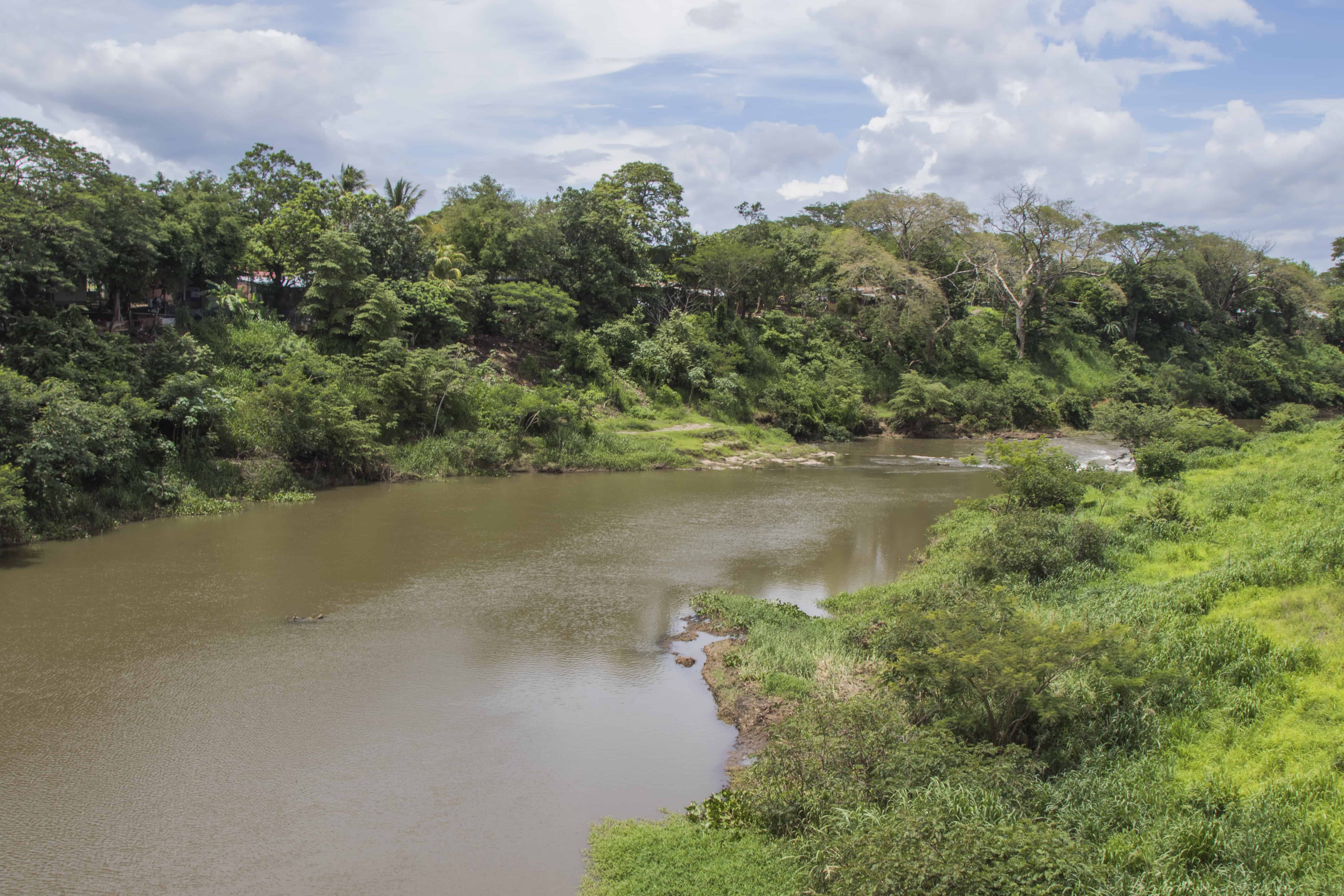
Costa Rica’s Constitutional Court has ordered several state agencies and local governments to act together to address the degradation of the Tempisque River, after finding that the official response to sand extraction and environmental damage in the area has been fragmented and insufficient.
The ruling stems from an amparo appeal over sand removal in the Tempisque River, one of Guanacaste’s most important waterways. The case raised concerns about damage to the riverbed, nearby wetlands, biodiversity, and the stability of vulnerable areas near Filadelfia, in the area of Carrillo.
The court ordered the Directorate of Geology and Mines, SETENA, SINAC, and the municipalities of Liberia and Carrillo to prepare an integrated technical report within three months. That report must identify current concessions, illegal extraction activity, authorized extraction volumes, the river’s recharge capacity, risks to the affected stretch, and stronger inspection measures.
The ruling does not impose a blanket suspension on mechanized extraction in the Tempisque. Instead, the court ordered corrective and preventive measures aimed at forcing the institutions involved to produce a coordinated technical assessment and improve oversight.
The case also highlights a long-running tension in Filadelfia, where traditional sand workers have extracted material from the river by hand, using carts and oxen, for generations. The appeal argued that this low-impact practice has been treated under the same type of regulatory burden as mechanized extraction, despite major differences in scale and environmental impact.
The court said the state is not required to exempt artisanal extraction from environmental controls. However, it said authorities must avoid applying rules in a way that ignores the difference between small-scale traditional work and more intensive mechanized operations.
SETENA was ordered to review whether environmental evaluation and monitoring tools for the area properly address cumulative impacts on the river channel, wetlands, riparian environment, and hydromorphological risk. SINAC must issue a technical assessment related to biodiversity, ecological connectivity, wetlands, and bodies of water linked to the case.
The municipalities of Carrillo and Liberia were also told to exercise their local responsibilities in land control, prevention, and risk management. During the case, both municipalities argued that regulation of concessions and extraction in public riverbeds falls mainly to MINAE through the Directorate of Geology and Mines. The court rejected the idea that this removed their own local duties.
The environmental stakes are high. The Tempisque River is tied to wetlands and protected areas that support some of Costa Rica’s richest wildlife habitat. Palo Verde National Park, located in the lower Tempisque basin, includes wetlands that make up about half of the park and serve as a sanctuary for thousands of migratory and resident water birds.
The ruling also points to concerns that extraction activity may be affecting wetlands and contributing to a phenomenon described as “reverse drainage,” in which earth movement alters the natural movement of water. Local concerns also include the possible weakening of protective structures near Filadelfia.
For Guanacaste, the decision puts renewed pressure on public agencies to move beyond isolated inspections and paperwork. The court found that while authorities had taken some actions, they had not produced the kind of integrated, preventive response required for a complex environmental case.
The Tempisque River has long supported communities, farms, wildlife, tourism, and protected wetlands across Guanacaste. The court’s order now forces state agencies and municipalities to show, within a clear deadline, how they plan to control extraction, assess damage, and protect one of the province’s key river systems.





