

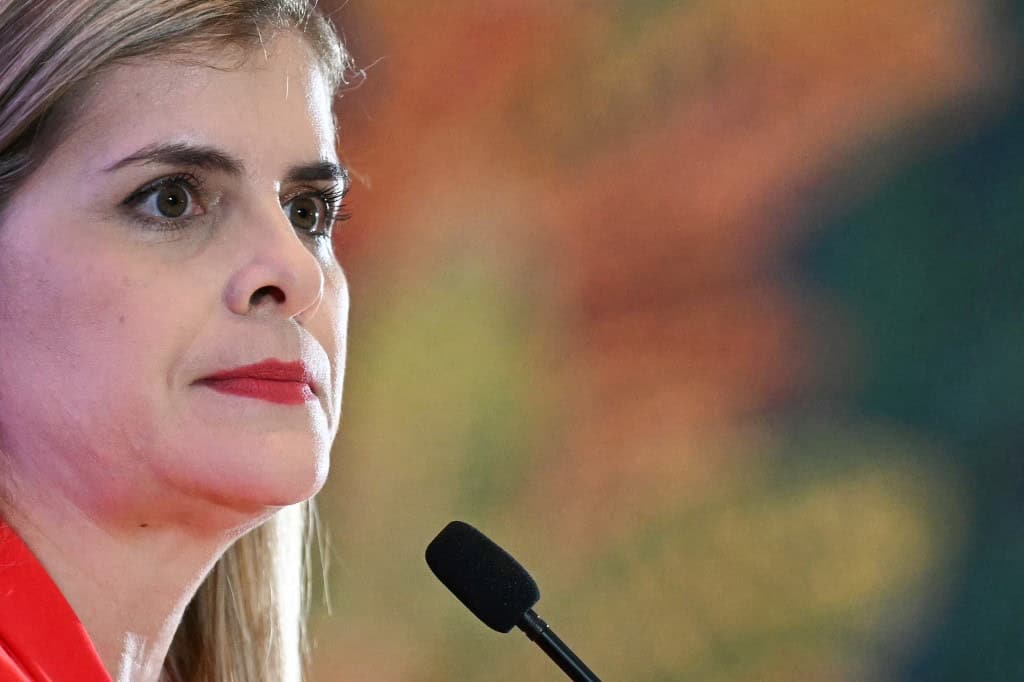
Laura Fernández will be sworn in Friday, May 8, as Costa Rica’s 49th president, succeeding Rodrigo Chaves at a ceremony that will mark several firsts in our country’s democratic history.
The 39-year-old president-elect, who won February’s election in the first round with 48.3% of the vote — the highest margin in 32 years — will receive the presidential sash at 11:00 a.m. at the National Stadium in La Sabana. Organizers moved the ceremony forward by two hours from its original 1:00 p.m. start to avoid expected afternoon thunderstorms. Fernández will become Costa Rica’s second female president after Laura Chinchilla (2010–2014).
In a break from tradition, Fernández will preside over her first Council of Government meeting immediately after the inauguration, in front of the press and the public attending the stadium event. She will swear in her cabinet there and sign her first executive decrees, including one defining the structure of the Executive Branch and another convening extraordinary sessions of the Legislative Assembly.
The latter carries significant weight: during extraordinary sessions, the president controls which bills are debated, giving Fernández substantial leverage over the legislative agenda for her first three months in office. The cabinet itself will be announced Tuesday, May 5, at the Teatro Popular Melico Salazar in San José. Fernández, who served as Chaves’s minister of the presidency and minister of planning, has signaled a mix of continuity and change. Health Minister Mary Munive and Agriculture Minister Víctor Carvajal will not continue.
Among those expected to remain or shift portfolios are Foreign Trade Minister Manuel Tovar — reportedly a candidate for foreign minister — Education Minister Leonardo Sánchez, IMAS executive president Yorleni León, and Justice Minister Gerald Campos, who may move to the Ministry of Public Security. Fernández has also said she would offer Chaves a position in her government, though no role has been confirmed.
Public attendance at the stadium is free, with up to three tickets available per person through the website kuikpei.com. Security will be heavy: more than 800 officers will be deployed, including plainclothes agents, within a perimeter of more than one kilometer around the venue. The decision to hold the inauguration at the stadium rather than the traditional Plaza de la Democracia was made, organizers said, to allow attendance from rural and coastal communities, indigenous territories, and other regions outside the Greater Metropolitan Area.
The ceremony will take place against a complicated political backdrop. Costa Rica’s press freedom ranking has fallen from 8th to 38th in the Reporters Without Borders index over the four years of the Chaves administration, according to civic organizations that have raised concerns about democratic backsliding.
The board of La Nación, the country’s largest newspaper, confirmed Saturday that the U.S. government has revoked the tourist visas of several of its directors without explanation — the latest in a series of similar revocations affecting Costa Ricans who have publicly criticized Chaves, including former president and Nobel laureate Óscar Arias.
Fernández, who has positioned herself as Chaves’s political heir and “protector of his legacy,” has confirmed she will continue the bilateral migrant deportation agreement with the United States, which permits up to 25 deportees per week to be transferred to Costa Rica. She has also signaled continuity on security, economic, and foreign policy. Her broader platform includes a “Third Republic” reform agenda, an anti-corruption push, expansion of free enterprise, and strengthened ties with Israel.
The Legislative Assembly’s new directorate, chosen this week in the first publicly recorded vote in the body’s history, is firmly controlled by Fernández’s Pueblo Soberano party — giving her a stronger institutional hand than Chaves had during most of his term. How effectively she uses it through the 90-day extraordinary session window beginning Friday will determine whether her opening months mark a continuation of the Chaves approach or a recalibration on her own terms.





