

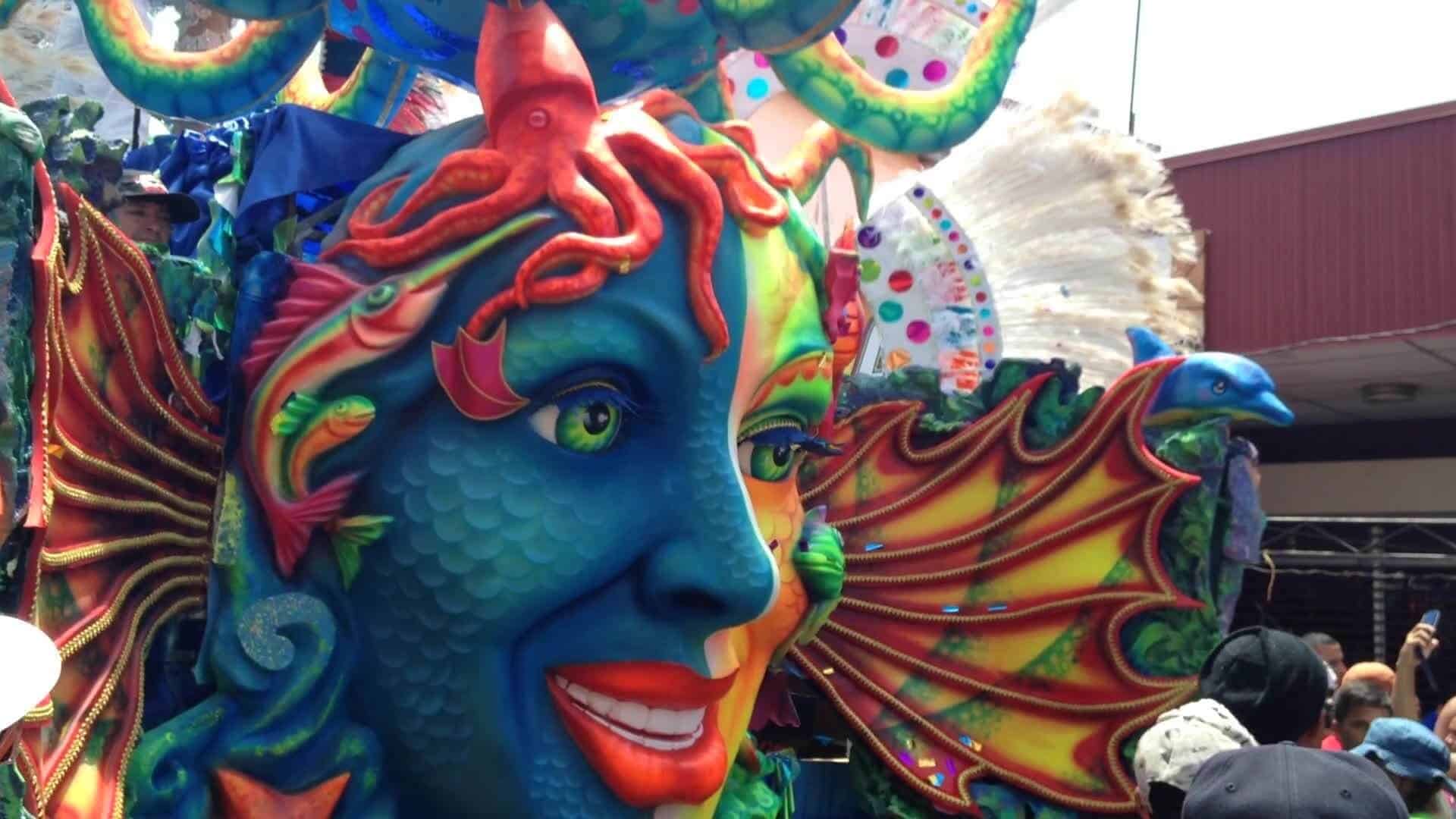
As couples across Central America exchange gifts for Valentine’s Day, Panama starts its annual Carnival today, turning streets into parades of color and music. The four-day event, running from February 14 to 17, draws crowds from neighboring countries, including Costa Rica, where many plan short trips to join the action.
Panama’s Carnival starts with water parades known as culecos, where trucks spray crowds to beat the heat. Parades feature brass bands, dancers in traditional pollera dresses, and floats carrying Carnival queens. Fireworks light up evenings, and outdoor dancing continues late into the night.
The main celebrations happen in Las Tablas, where rival groups compete in street displays. Panama City hosts events along the Cinta Costera, including the Festival Vol. Caribe with free stages for artists and family activities. Other spots like Chitré and Penonomé offer similar parades and gatherings.
This year, the start aligns with February 14, mixing romantic plans with festive chaos. Some visitors adjust schedules to include both, while others head straight to the parties. Panama’s president, José Raúl Mulino, called for responsible enjoyment in a social media post, urging people to celebrate traditions safely.
Travelers from Costa Rica often drive or fly to Panama for the event, boosting regional tourism. Borders see increased traffic during these days, with authorities advising early planning for accommodations and transport. The holiday closes businesses on Monday and Tuesday, extending the weekend vibe.
Carnival ends on February 17 with the Burial of the Sardine, a ritual marking the shift to Lent. Ash Wednesday follows on February 18, when normal routines resume. For Costa Ricans interested in crossing the border, direct flights from San José to Panama City take about an hour. Road trips via the Pan-American Highway require border checks, so carry valid documents.
The event highlights Panama’s cultural mix, with influences from indigenous, African, and Spanish roots. Participants wear elaborate costumes, and music ranges from salsa to reggaeton. Authorities prepare for large crowds by increasing security and water supplies for culecos. Health officials remind attendees to stay hydrated and use sunscreen in the tropical weather.
Panama’s Carnival stands out in Central America for its scale, bringing with it international guests. This year, diplomats like the U.S. ambassador plan to attend, adding a global touch. As the region shares similar traditions, Panama’s version offers a lively option for those seeking a break from daily life. With the dates set, many already pack for the trip south.





