

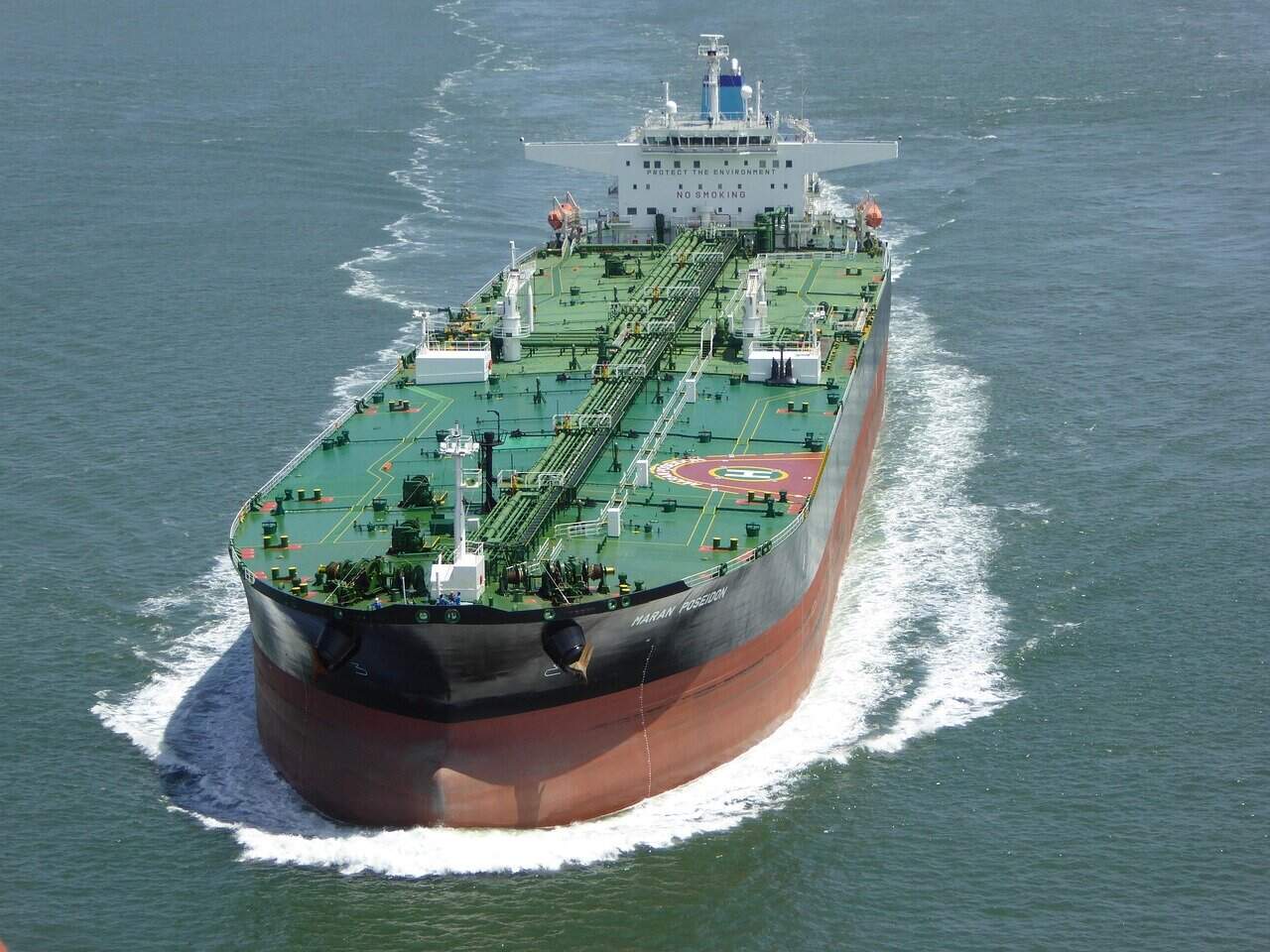
A U.S. blockade on oil tankers entering or leaving Venezuela would likely trigger a steep drop in exports, with experts estimating reductions of up to about 50%.
Trump ordered what he called a “total and complete” blockade of sanctioned tankers, escalating pressure on Nicolás Maduro’s government, which the United States does not recognize. The U.S. also deployed the aircraft carrier USS Gerald Ford to the Caribbean with additional ships, fighter jets, and troops, framing the moves as counternarcotics operations. Maduro argues the real goal is to force him from power.
Trump accused Maduro of using oil revenue to finance “narco-terrorism,” human trafficking, murder, and kidnapping. Venezuela describes the move as a “naval military blockade” aimed at stealing the country’s wealth.
According to an analysis of U.S. sanctions data (OFAC) and IMO data, about 600 of roughly 1,400 U.S.-sanctioned vessels worldwide are oil tankers that could be affected. Of those, 23 are tied directly to Venezuela-specific sanctions programs: 11 sanctioned during Trump’s first term, six during Biden’s term, and six added last week amid the current crisis.
Even tankers that are not sanctioned may still transport Venezuelan crude, but the increased risk of seizures would likely force Venezuela to sell at deeper discounts. Before Trump’s order, those discounts were around 35%, according to economist Francisco Monaldi.
PDVSA said exports are continuing normally and that ships are sailing with operational guarantees. But U.S. forces seized a tanker on December 10 carrying crude from Venezuela. The ship, Skipper, was described as a “ghost vessel” using a false flag, typical of black-market operations.
Venezuela produces around 1 million barrels per day, most for export. Monaldi estimates exports could fall by roughly half depending on how often sanctioned tankers are intercepted, calling it a dramatic decline. A parliamentary source told AFP that PDVSA had not been able to load vessels after the Skipper seizure and warned storage capacity could max out in about 15 days, potentially forcing production shut-ins. Monaldi estimates production could drop by roughly 400,000 barrels per day.
Oil prices rose after the announcement. Venezuelan crude was priced at $47.51 per barrel in November, its lowest level in nearly two years, according to OPEC. On geopolitics and companies: experts said the order has not, so far, affected Chevron shipments to the U.S. One analyst noted Chevron’s July license allows it to take about 50% of what joint ventures with PDVSA produce, though a Capital Economics report flagged significant uncertainty.
China is the biggest exposure: about 80% of Venezuelan crude goes to China via these tankers. Economist Asdrúbal Oliveros estimated that reduced shipments to Asia could jeopardize about $8.5 billion a year in Venezuelan income. Another analyst argued the hit may be short-lived because China can switch to its own ships as a workaround.





