

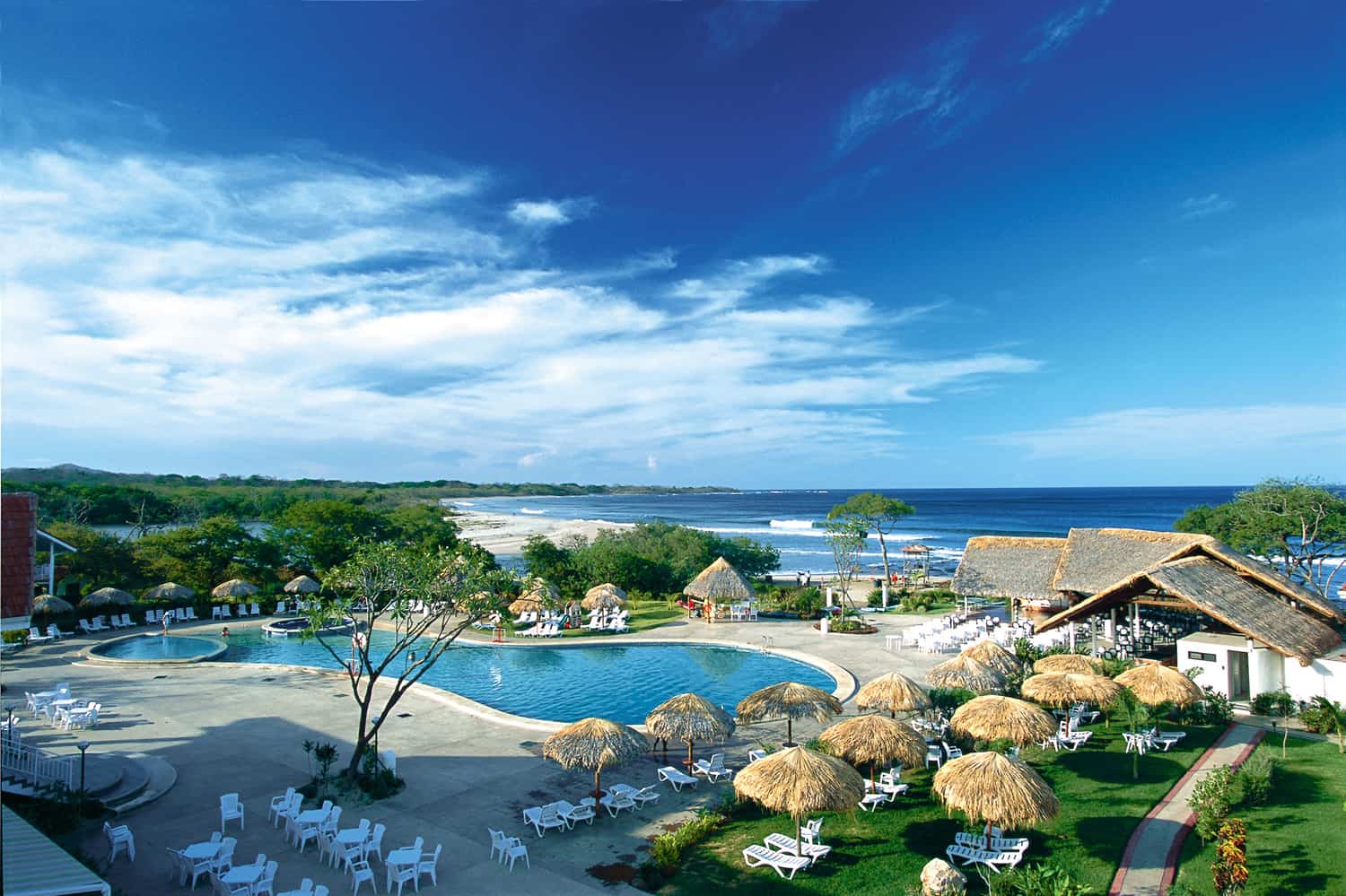
Guanacaste continues to solidify its reputation as one of Costa Rica’s most dynamic real estate hubs, with construction activity showing steady growth in 2024, according to the latest data from the Association of Engineers and Architects (CFIA). The province recorded a 3.2% increase in construction compared to the previous year, driven largely by urban infrastructure and housing projects. Yet, as development accelerates, outdated regulatory plans, environmental degradation, and a widening housing gap threaten the region’s sustainability.
The CFIA reports that urban infrastructure led the construction surge in 2024, comprising 44% of the total square meters built. Housing projects followed closely at 35%, with coastal areas like Nosara, Tamarindo, and Sámara seeing a proliferation of residential condominiums catering to tourists and foreign investors. Commercial developments, while growing steadily, accounted for just 9% of the built-up area, with industrial projects at 5% and miscellaneous construction at 7%. Notably, 79% of these efforts involve new developments, compared to 14% for remodeling, highlighting Guanacaste’s rapid expansion and high demand.
In key areas like Nicoya, Liberia, and Santa Cruz, real estate development is advancing at a brisk pace. However, the Association of Topographical Engineers warns that outdated urban planning regulations are stifling sustainable growth. Nicoya’s regulatory plan, unchanged for 42 years, is the oldest in the province, followed by Santa Cruz’s 31-year-old framework and Liberia’s 19-year-old guidelines—among the most antiquated in Costa Rica. These plans, meant to govern land use, protect water resources, and mitigate risks like flooding and sewer failures, are ill-equipped for the region’s modern demands.
Nicoya’s municipality is tackling this issue head-on, drafting a new regulatory plan that will extend construction guidelines to coastal hotspots like Nosara and Sámara. Currently in the study phase, the project—backed by local authorities and urban planning experts—aims to address unchecked growth and environmental strain. However, completion is projected to take four years, leaving a window for unregulated development to persist. “We’re racing against time,” said Josué Ruiz, head of Nicoya’s Public Works and Construction Control Department, in a recent interview with Voz de Guanacaste. “The longer we delay, the harder it becomes to balance progress with preservation.”
The stakes are high. Guanacaste’s luxury real estate boom, fueled by a 400% surge in coastal property prices between 2020 and 2023 (per the Observatory of Tourism, Migrations, and Sustainable Development), has transformed the province into a magnet for wealthy expatriates and retirees. High-end developments—such as the Waldorf Astoria and Ritz-Carlton projects slated for 2025—dominate the market, yet affordable housing remains elusive. A 2023 study by the CFIA and the University of Costa Rica found that while 26% of homes built in Guanacaste over the past decade exceed 150 square meters, the province faces a qualitative housing deficit of over 750,000 units, leaving most locals priced out.
This disparity is driving displacement. In districts like Cuajiniquil, vacancy rates have soared from 32.1% in 2011 to 66.4% in 2022, as homes sit empty for seasonal use by tourists rather than serving residents, according to the National Institute of Statistics and Census (INEC). “Housing has become a privilege, not a right,” said Franklin Solano, an urban planning researcher at UCR, in a Voz de Guanacaste report. “The boom satisfies economic needs for some, but the social impacts are mounting.”
Environmental concerns compound the crisis. Deforestation, loss of green spaces, and damage to protected areas are escalating as construction outpaces oversight. We reported in March 2024 that unchecked development in Guanacaste’s coastal zones has led to aquifer salinization and biodiversity loss, echoing local protests against mega-projects documented in a 2024 ResearchGate study. In Nosara, for instance, luxury developments have sparked outrage over water access, with communities reliant on overexploited wells. Meanwhile, the CFIA notes that only nine of Guanacaste’s 11 municipalities use its online permitting platform, leaving gaps in enforcement—Santa Cruz and La Cruz lag behind due to inadequate technology and training.
Despite these challenges, optimism persists. The Latinvestor forecasted in January 2024 that infrastructure upgrades—like the expansion of Liberia’s Daniel Oduber Quirós International Airport—could bolster Guanacaste’s appeal, potentially stabilizing the market. Legislative efforts, such as the Water for Guanacaste Law signed in 2022, aim to address resource scarcity, though implementation remains slow. Nicoya’s forthcoming regulatory plan, expected by 2029, promises stricter environmental and zoning controls, but experts warn that bureaucratic delays could undermine its impact.
For now, Guanacaste stands at a crossroads. As construction topped 2 million square meters in 2024—a milestone hailed by Revista Viajes—the province’s leaders face a stark choice: harness this growth for equitable, sustainable development or risk a future defined by inequality and ecological collapse





