

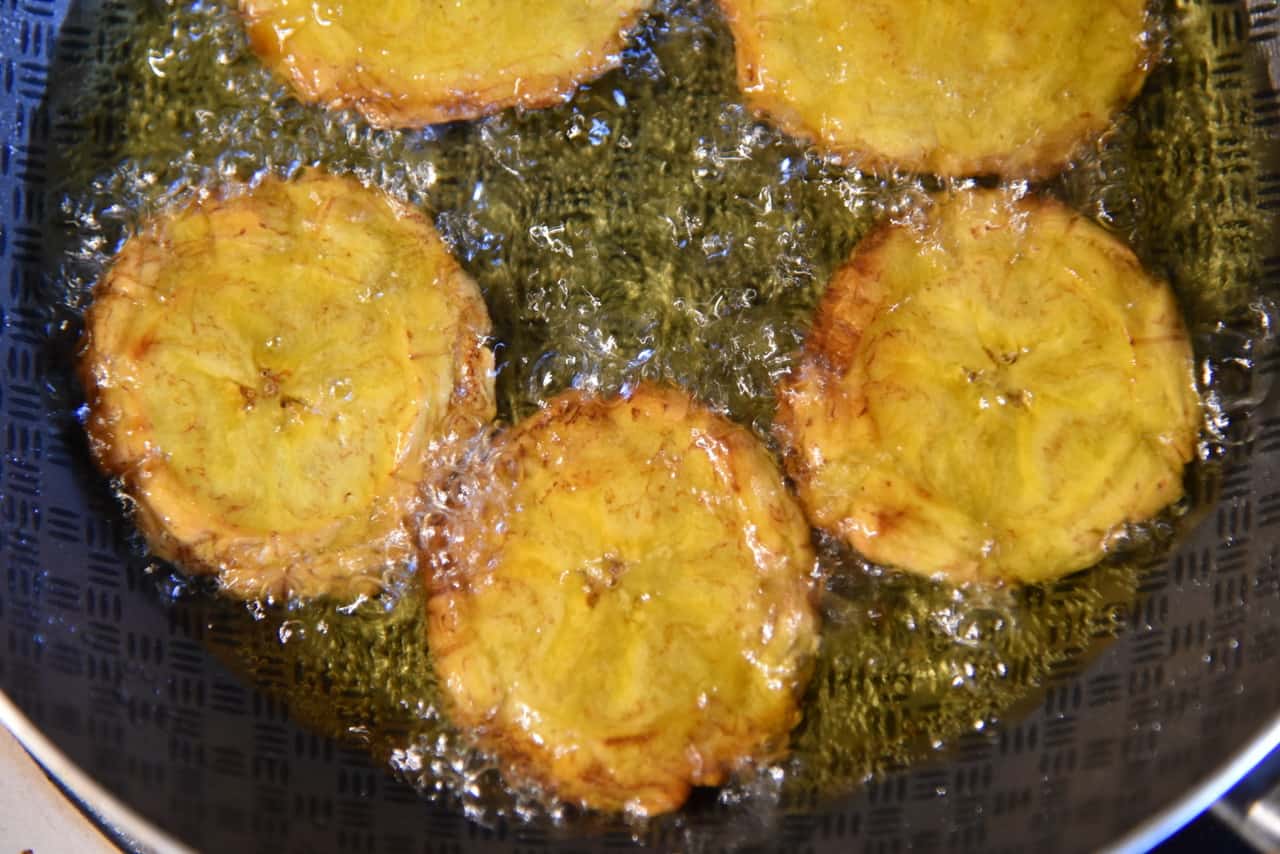
Patacones, also known as tostones, are a staple food in many Latin American countries, including Colombia, Costa Rica, Ecuador, Panama, and Puerto Rico. They are made by slicing green plantains, a type of banana, and then frying them twice to create a crispy and delicious snack. But where did patacones come from, and how did they become so popular in Latin America?
The origins of patacones can be traced back to the indigenous cultures of Central and South America, where plantains have been a staple food for thousands of years. The indigenous people of the region used plantains in a variety of ways, including grinding them into flour to make bread and roasting or boiling them to create a starchy side dish.
However, it wasn’t until the arrival of the Spanish in the 16th century that patacones became a widespread food. The Spanish were introduced to plantains by the indigenous people and quickly incorporated them into their own cuisine. They adopted the method of slicing and frying plantains to create a crispy snack, and the dish became particularly popular among the slave population, who used it as a cheap and filling food source.
As the Spanish colonized Central and South America, they brought the dish with them and it became a staple food in many of the countries they colonized, including Costa Rica. Over time, patacones evolved and took on different forms in different countries, with each culture adding its own unique twist.
For example, in Colombia, patacones are often served with a variety of toppings, such as cheese, avocado, or salsa. In Costa Rica, they are often served with a variety of dipping sauces, including a spicy ketchup or a tangy lime sauce. In Ecuador, they are often served with a spicy peanut sauce. In Puerto Rico, they are a popular side dish for traditional dishes like lechon asado (roast pork) and arroz con gandules (rice with pigeon peas).
Today, patacones are a beloved food in many Latin American countries and are enjoyed by people of all ages. They are a staple at street food stalls and are also served in restaurants and homes across the region. Their popularity continues to grow, and they can now be found in many other parts of the world, including the United States.
In conclusion, patacones have a rich history that spans thousands of years and multiple cultures. From the indigenous people of Central and South America to the Spanish colonizers and slaves, patacones have played an important role in the culinary traditions of Latin America, including Costa Rica. Today, they continue to be a popular and beloved food, enjoyed by people around the world.
Ingredients
- 4 green plantains
- Salt
- Vegetable oil for frying
Instructions
- Peel the plantains and slice them into 1/2-inch rounds.
- In a large saucepan, heat the oil over medium-high heat until it reaches 350°F.
- Add the plantain slices to the oil and fry for 2-3 minutes on each side, or until they are golden brown.
- Remove the plantains from the oil and let them cool for a few minutes.
- Once the plantains have cooled, use a flat object (such as the bottom of a glass or a rolling pin) to press down on each slice until it is flattened to about 1/4-inch thick.
- Return the flattened plantains to the hot oil and fry for an additional 2-3 minutes on each side, or until they are crispy and golden brown.
- Remove the patacones from the oil and let them drain on a paper towel-lined plate.
- Sprinkle with salt to taste and serve immediately.
Optional Variations
- For a sweeter twist, sprinkle the patacones with cinnamon and sugar before serving.
- For a savory twist, top the patacones with cheese, avocado, or your favorite dipping sauce.
Enjoy your delicious and crispy patacones!
Conclusion
Patacones have a rich history that spans thousands of years and multiple cultures. From the indigenous people of Central and South America to the Spanish colonizers and slaves, patacones have played an important role in the culinary traditions of Latin America. Today, they continue to be a popular and beloved food, enjoyed by people around the world. Now that you know how to make them, give this delicious recipe a try and enjoy the crispiness and flavor of patacones in your own home!





