

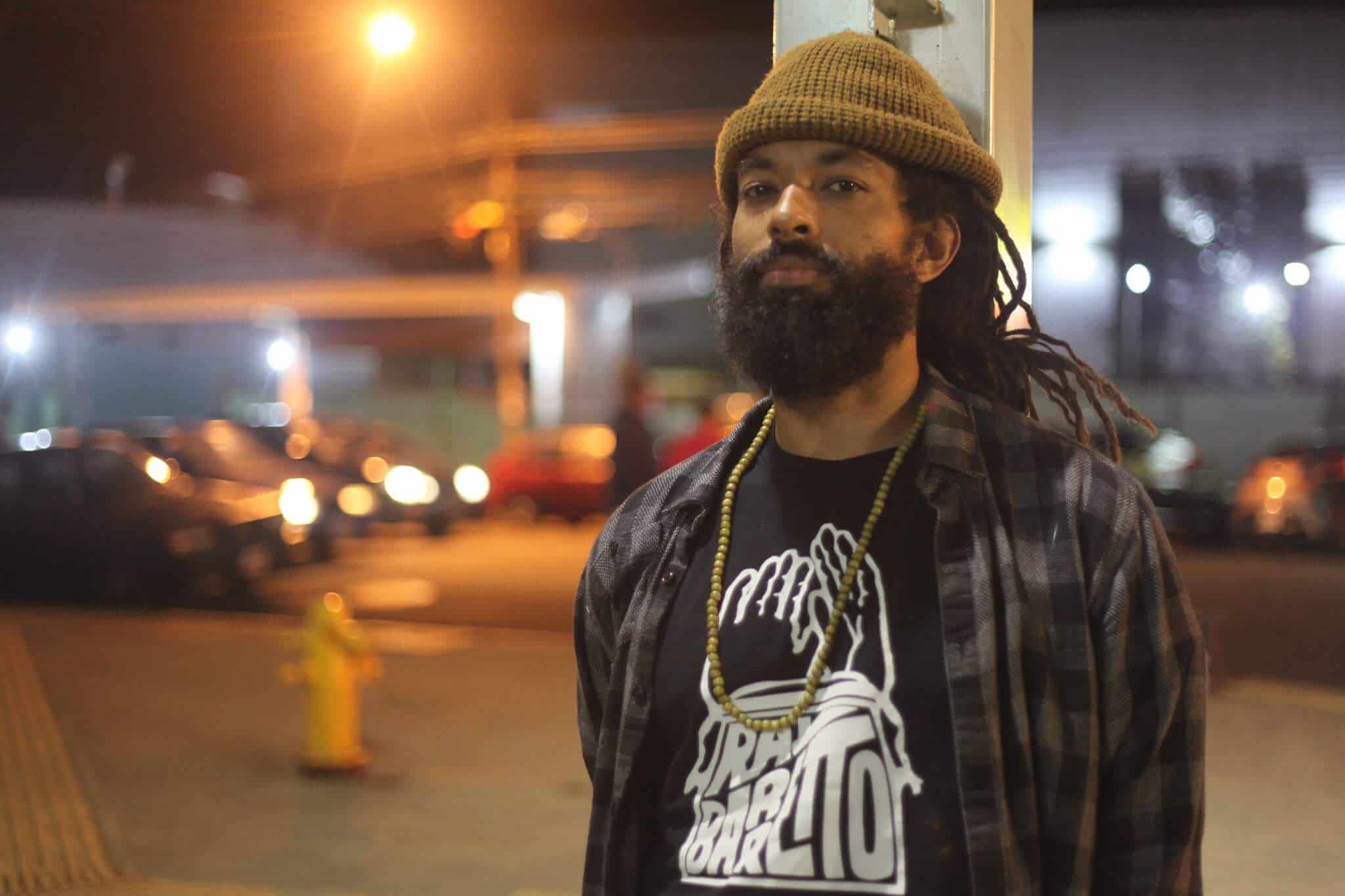
For many, music is a passion that can also be an educational tool. Ephniko, 36, is a Colombian rapper who has been mastering the power of music throughout his professional career.
Ephniko was born in Barranquilla, Colombia; at the age of 14, he moved to the U.S. state of Florida. Since he can remember, he has loved music, starting when his uncle shared with him his cumbia and salsa records. He remembers spending some of the best times of his childhood listening to these happy and contagious genres.
When he moved to the United States, Ephniko began listening to hip-hop; he studied anthropology at Florida International University (FIU) and then decided to dedicate his life to music as a rapper, taking on the identity of Ephniko, an acronym for Eternally Producing History Never Ignoring Knowledge.
“[The name] was created because a lot of people told me that my work was very ethnical due to the fact that I like Asian food, Chinese and French movies and that I’m Colombian, but I speak, dress, and create music in a hip-hop style. Everyone told me étnico, but in New York the th are pronounced as an f sometimes and that’s where Ephniko came from,” Epniko told The Tico Times.
Merging anthropological and musical concepts has allowed Ephiko to create lyrics and music for both his solo work and the bands Nag Champayons, Overground, and Nativos, and tour Latin American countries including Venezuela, Peru, Bolivia, his native country Colombia, Mexico and Costa Rica.
On a chilly night at the University of Costa Rica (UCR), during Ephinko’s third visit to this country, The Tico Times sat down and spoke with the artist about his life and work. Excerpts follow.
What is your process when you create music?
There are so many! I’m also a music selector, so I always spend a great part of my life searching for those things that sound good together. I try to fuse many worlds, such as a mariachi’s violin with a dubstep bass. My mind’s always on breaking established things and gravitating toward what has not sounded before.
On the lyrical level, I’m known in Latin America as a hip-hop MC. I base my work on the 90s metric and the sound texture of those times. I look for something exotic that can be converted into music that has a completely new definition of what was recorded. I also use samplers quite a lot to create the idea of the beat boys using the drums. After that’s done, I get with all of the musicians to practice it all. It’s part of the process.
The last production I was working with in New York: I made the sample with the machine, and the producers and musicians would think of new progressions. We sequence it with the hip-hop style, the quantification and the automation to give it the sound we like… Then I write the lyrics, which are a bit more crude and based on metaphors.
https://www.youtube.com/watch?v=WEdVL_V5-yQ
Which sounds do you like to explore?
[Sighs.] I like everything! The two things that I’ve been passionate about since I was a child are the tropical and folkloric music from Colombia. It’s music that always speaks about respecting nature, and something more mystical. Cumbia was more orchestrated when it came to the West and it’s different from the traditional African cumbia. Salsa was born practically at the same time as hip-hop; it’s Cuban music that also came from Africa.
I also love what happened after the 2000s, because it was the time when more technological sounds came out. Now everyone’s out there with their phones [imitates sounds of a phone] and it’s the way in which people perceive these sounds that inspires sound producers and designers. That same sonic ethic has become part of the world. The sound imitates society and society imitates sound. It’s a constant cycle.
What do you mean by that: sounds imitate society and society imitates sounds?
Now the more commercial music in the industry is electronica, but before it was very underground… Electronica was born in Europe… with the sounds of trains and machines. That’s when techno and drum and bass were born. The rhythmic patterns are found there when you live in an urban area. The same happens with cumbia or salsa. It was created centuries ago in places near the beaches, so it imitates the sounds of the birds, the wind, the earth and the water.
I think now we’re in an era in which everything goes very fast and sound designers are creating sounds faster than ever and have tons of inspiration. Everything carries a sound with it. There’s the phones’ ringtones, Facebook messages, the traffic lights. Everything has a sound, and sound designers innovate this with a more artistic purpose, which is inspired in society.
How does questioning things shape a social critique in your work?
I’m always questioning everything. [Laughs.] I’m very skeptical. I don’t believe in things at first sight. I think it’s because of literature and hip-hop. To be conscious [about things] you must be critical, because you may become unconscious about an incorrect thing. However, who dictates which things are correct? You’ve got to create your own position on how you act and what things mean to you.
Many people ignore things unintentionally. Maybe I didn’t know something and you didn’t know something and after this conversation you might find a door to a more profound perception.
Through hip-hop, we amplify our collective feelings about injustice, racism, institutional racism, and white supremacy that are still alive in the United States, Europe and all of the places I travel to. It’s very difficult to talk about because it’s hidden, so I try to express it through music, to express the critiques about things that have no consistency and are not based on logic, and feelings that are not valid, but that exist due to human history or the history that’s untold.
However, today I’m trying to do music with more positive messages because you realize that it’s not only about the external things and society. If people don’t change internally, the same things are always going to happen and without internal peace we won’t reach collective peace.
How has culture and education allowed you to get to know other cultures?
I think that’s why I studied anthropology. [Culture] is the first operational system that happens before socialization based on regulations of a nationalist system. Culture is the first level on which you form your perception. Perception is everything. For example, with the concept of a bird… if you say bird and know what it means, it won’t affect the fact that you don’t know the specific name or type of bird that you see. It’s still a bird because it’s your way of seeing and perceiving things. When you give it a specific name, your way of perceiving things just amplifies. I think that it’s the vocabulary that gives you the bricks to construct your vision and culture is the first level for that. Not all cultures are the same.
Watch Ephniko’s new single and video “Agradecido” (“Grateful”) recorded by Costa Rican director Federico Peixoto:
Our “Weekend Arts Spotlight” presents Sunday interviews with artists who are from, working in, or inspired by Costa Rica, ranging from writers and actors to dancers and musicians. Do you know of an artist we should consider, whether a long-time favorite or an up-and-comer? Email us at kstanley@ticotimes.net.





