

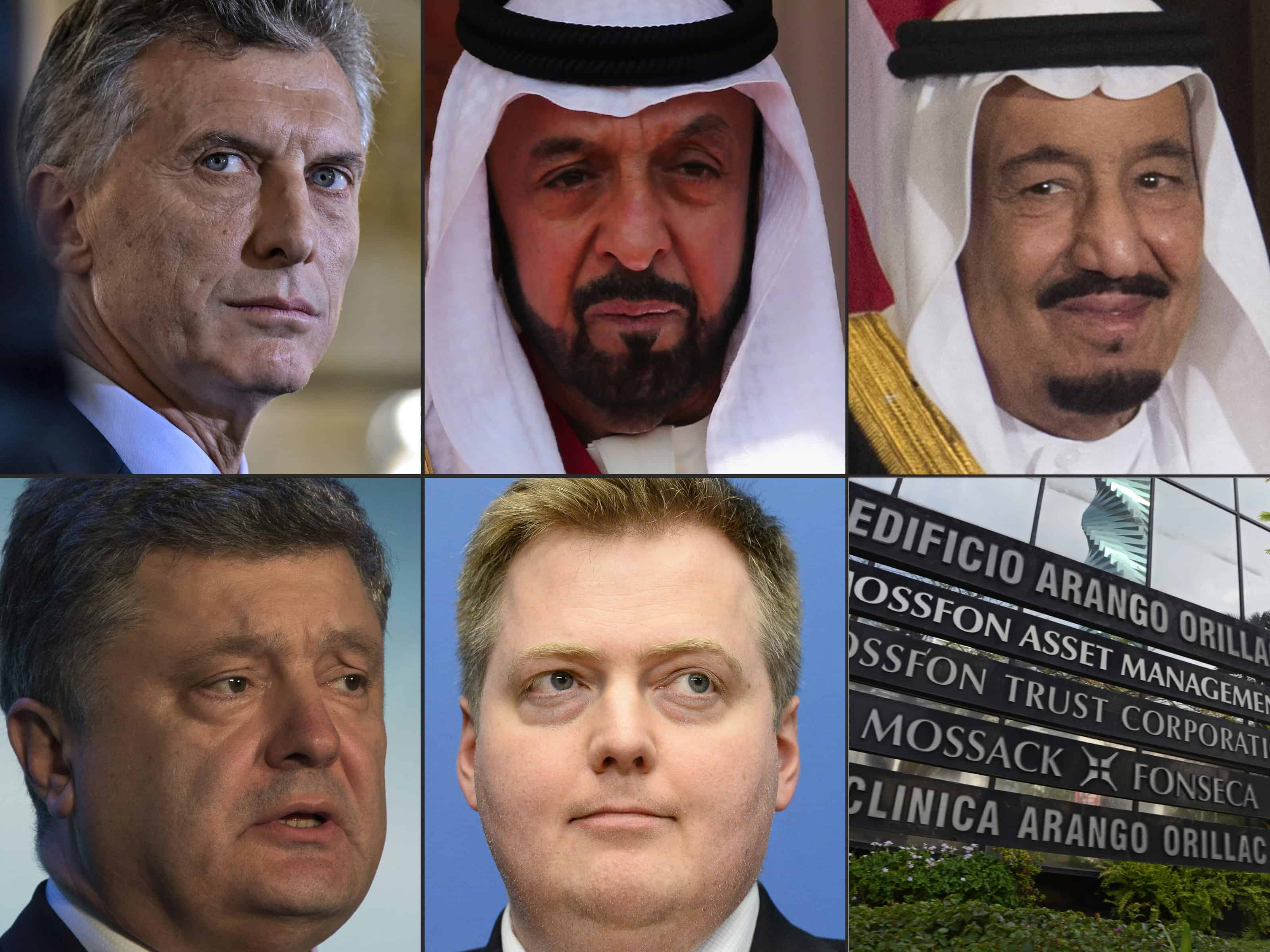
The recipient, German newspaper reporter Bastian Obermayer, promptly responded that he was. What followed was almost unimaginable: “Doe” began forwarding files that ultimately contained 11.5 million documents, four decades’ worth of digitized records from a Panamanian law firm that specializes in setting up offshore companies for wealthy clients.
The Doe data dump to Obermayer and his colleague Frederik Obermaier in 2014 eventually triggered a unique cooperative project among journalists around the world. The effort culminated on Sunday when, in a coordinated release, dozens of news organizations began publishing stories about the Panama Papers. The vast cache outlines how world leaders, celebrities and individuals have used offshore companies to shield their wealth from public disclosure, and in some cases possibly to avoid taxes or mask illegal activity.
Read: Costa Rica in the Panama Papers leak
The first wave of stories — the disclosures could go on for years — has already led Iceland’s prime minister to tender his resignation over revelations of his offshore holdings. Among the thousands of people named in the documents are Ukrainian President Petro Poroshenko, King Salman of Saudi Arabia, Chinese President Xi Jinping’s family members, close associates of Russian President Vladimir Putin, British Prime Minister David Cameron’s late father, Ian, and soccer superstar Lionel Messi. The news reports prompted President Barack Obama, among others, to call for international tax reform.
More than a year after Doe first contacted them at their Munich-based newspaper, Suddeutsche Zeitung, Obermayer, 38, and Obermaier, 32, still have no idea who their source is or why he or she (or possibly they) came to them.
To protect Doe’s identity and safety, however, they remain purposely guarded about what they do know. “We can’t disclose any numbers or times (of contact), of course, or if we are still in contact,” Obermayer said in an exchange of emails Wednesday. “But we have communicated a lot, through different ways, all encrypted. On some days, I chatted more with the source than with my wife. We had a lot to talk about.”
The little background they gleaned involves the source’s motivation, which Obermayer quotes this way: “‘I want you to report on the material and to make these crimes public.'” The source never asked for financial compensation, they said.
The extent of the material from the law firm, Mossack Fonseca & Co., proved so daunting — it would take more than 38,000 average-sized books to contain 11.5 million pages — that the German reporters turned to the Washington-based International Consortium of Investigative Journalists (ICIJ) for help.
ICIJ, an 11-person unit of the nonprofit Center for Public Integrity, had worked with the German newspaper and other news organizations on cross-border investigations before. The organization coordinated reporters in 45 countries last year to investigate leaked files from a Swiss private-banking firm that hid hundreds of millions of dollars from tax authorities. The “Swiss Leaks” project followed one a few months earlier involving the revelation of secret tax deals between hundreds of global companies and officials in Luxembourg.
But the sheer sprawl of the Panama Papers, covering thousands of names and entities around the world, presented a much larger challenge.
Working gradually, region by region, ICIJ assembled a team of 370 journalists from about 100 media organizations spread over 70 countries, according to Michael Hudson and Marina Walker, the ICIJ’s senior editor and project manager, respectively. (The organization’s American media partners were McClatchy Newspapers and Fusion, the website and cable network; The Washington Post and ICIJ were partners on a 2013 investigation of tax havens.)
The goal was to find local journalists who knew the territory. “Instead of us parachuting in to do reporting, we let the folks on ground do it,” Hudson said. “So many of the most important stories today are so complex and so global that the old-style lone-wolf reporter or Woodward and Bernstein just can’t do it.”
The effort, known internally as Project Prometheus, required an unusual degree of cooperation among typically competitive news organizations. The “partners” had to agree to share newsworthy nuggets with the entire group, and not to publish anything ahead of the mass release on Sunday.
All of the particulars were spelled out in a series of meetings held in Washington, Munich and Johannesburg last year.
The potential for security breaches also required the journalists to remain tight-lipped about the project for months on end. Digital protections are one thing, but “sometimes the weakest link is the human link,” Walker said. “We told people, ‘Don’t leave your computer open. Don’t open (WiFi) in a cafeteria. And if you ever lose your phone, tell us.”
The precautions seemed to have worked; the first public inklings of the project came only last week when Russian officials, contacted by reporters for comment, denounced the questions and falsely accused ICIJ of being an arm of the U.S. government.
The upshot may be that there is strength in numbers. Said Obermaier: “We are always better in a huge group of journalists than doing it alone.”
© 2016, The Washington Post





