

BUENOS AIRES, Argentina – The late U.S. diplomat and strategist George Kennan is remembered as the creator of the doctrine of “containment,” which formed the centerpiece of the United States’ policy for waging the Cold War. But Kennan was also among the key architects of another U.S. grand strategy: the “dominance and discipline” approach toward Latin America. While less discussed, the latter strategy has long outlasted the Cold War. Fortunately, this may finally be changing, thanks to U.S. President Barack Obama.
In 1950 – four years after sending an 8,000-word cable to U.S. Secretary of State George Marshall detailing his views on the Soviet Union and U.S. policy toward it – Kennan sent another memorandum to Secretary of State Dean Acheson. This time, he argued that the U.S. needed to take a tougher stance in regions with communist connections and sympathies. The report, which Kennan produced after a tour of Latin America, included a series of notable assertions about the region.
For starters, Kennan claimed that the particular combination of “nature and human behavior” in Latin America had produced a uniquely “unhappy and hopeless background for the conduct of human life.” Impediments to progress in the region, Kennan observed, were “written in human blood and in the tracings of geography,” and the solutions that had been proposed were “feeble and unpromising.” This, he argued, had produced a “subconscious recognition of the failure of group efforts,” which manifested itself “in an exaggerated self-centeredness and egotism.”
In Kennan’s view, it was critical that Latin America resist the “communist pressures” emanating from the Soviet Union – an outcome that the U.S. should help to bring about. That meant, first and foremost, creating incentives for Latin American governments to implement pro-U.S. policies.
But the incentives that Kennan envisioned were not all positive. On the contrary, he argued that “where the concepts and traditions of popular government are too weak to absorb successfully the intensity of the communist attack,” the U.S. must concede that “harsh governmental measures” to repress communist sentiment were the “only answer.” While such measures “would not stand the test of American concepts of democratic procedure,” he was convinced that they were necessary.
Similarly, Kennan saw a need for increased U.S. investment in Latin America, with business leaders deploying their “financial power” judiciously. But he also observed that bribery may have “replaced diplomatic interventions as the main protection of private capital.” In that sense, the prospects for private investment in Latin America were based, in many cases, on “the corruptibility, rather than on the enlightenment, of the local regimes.”
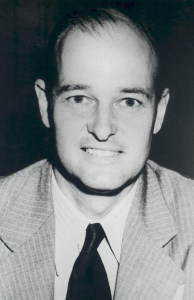
Kennan’s policy recommendations centered on dominance. The U.S., he believed, should emphasize its position as a great power – one that needed Latin America far less than Latin America needed the U.S. If Latin American governments did not cooperate with the U.S., they would be directly or indirectly disciplined. As he put it, “the danger of a failure to exhaust the possibilities of our mutual relationship is always greater to them than to us.” That assumption has shaped U.S. policy toward the region ever since.
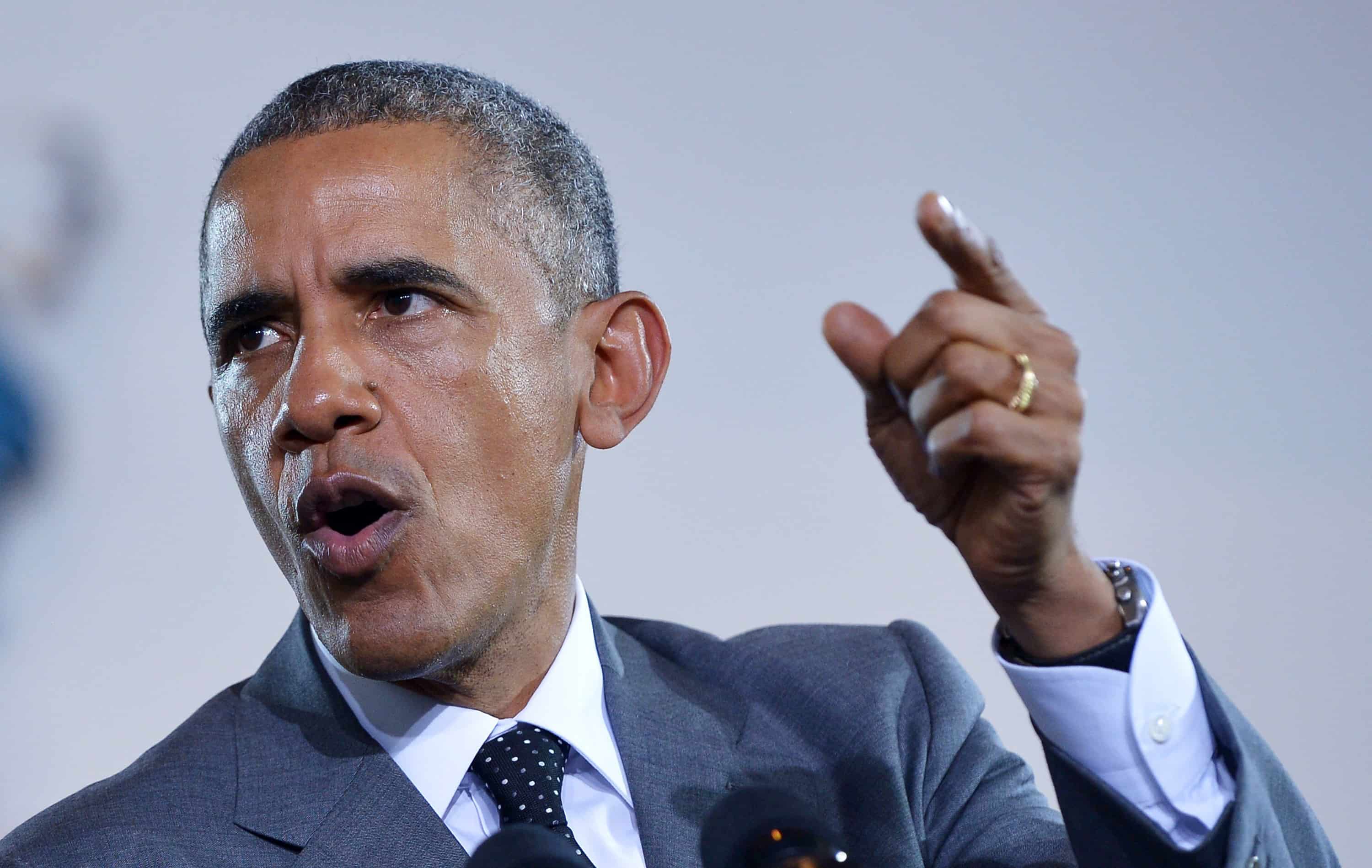
But now Obama appears determined to bring U.S. policy, at long last, into the 21st century. At the recent Summit of the Americas in Panama, Obama highlighted the fact that “the Cold War has been over for a long time.” Rather than remaining locked in battles that began before he was born, Obama continued, he would seek to cooperate with Latin American leaders to solve today’s problems.
Moreover, Obama reiterated his desire for a “new beginning” in the U.S.-Cuba relationship. And, unlike the first such declaration, made at the 2009 Summit of the Americas, this one was followed by concrete action, with Obama removing Cuba from the U.S. list of states that sponsor terrorism.
Despite these positive steps, however, the U.S. has not fully escaped the legacy of Cold War coercive democracy. Nowhere is this more apparent than in Obama’s recent executive order imposing sanctions on seven mid-level Venezuelan law-enforcement and military officials, who are accused of violating protesters’ rights during last year’s anti-government demonstrations. The move highlights the persistent influence of Kennan’s belief that the U.S. maintains a right – indeed, a responsibility – to intervene in the domestic affairs of Latin American countries where government policies are not to its liking.
If the U.S. is serious about establishing a genuine partnership with its Latin American neighbors, it must change not only its policies, but also the attitudes – rooted in a long-standing presumption of cultural superiority – that underpin them. The question now is how long Obama’s new message of sincere dialogue and shared interests with Latin America will coexist with Kennan’s hegemonic strategy before one or the other prevails.
In this sense, next year’s U.S. presidential election may prove to be a watershed. Will it mean the triumph of the best of Obama or a return to the worst of Kennan?
Juan Gabriel Tokatlian is director of the Department of Political Science and International Studies at Universidad Torcuato Di Tella in Buenos Aires.
© 2015, Project Syndicate





