

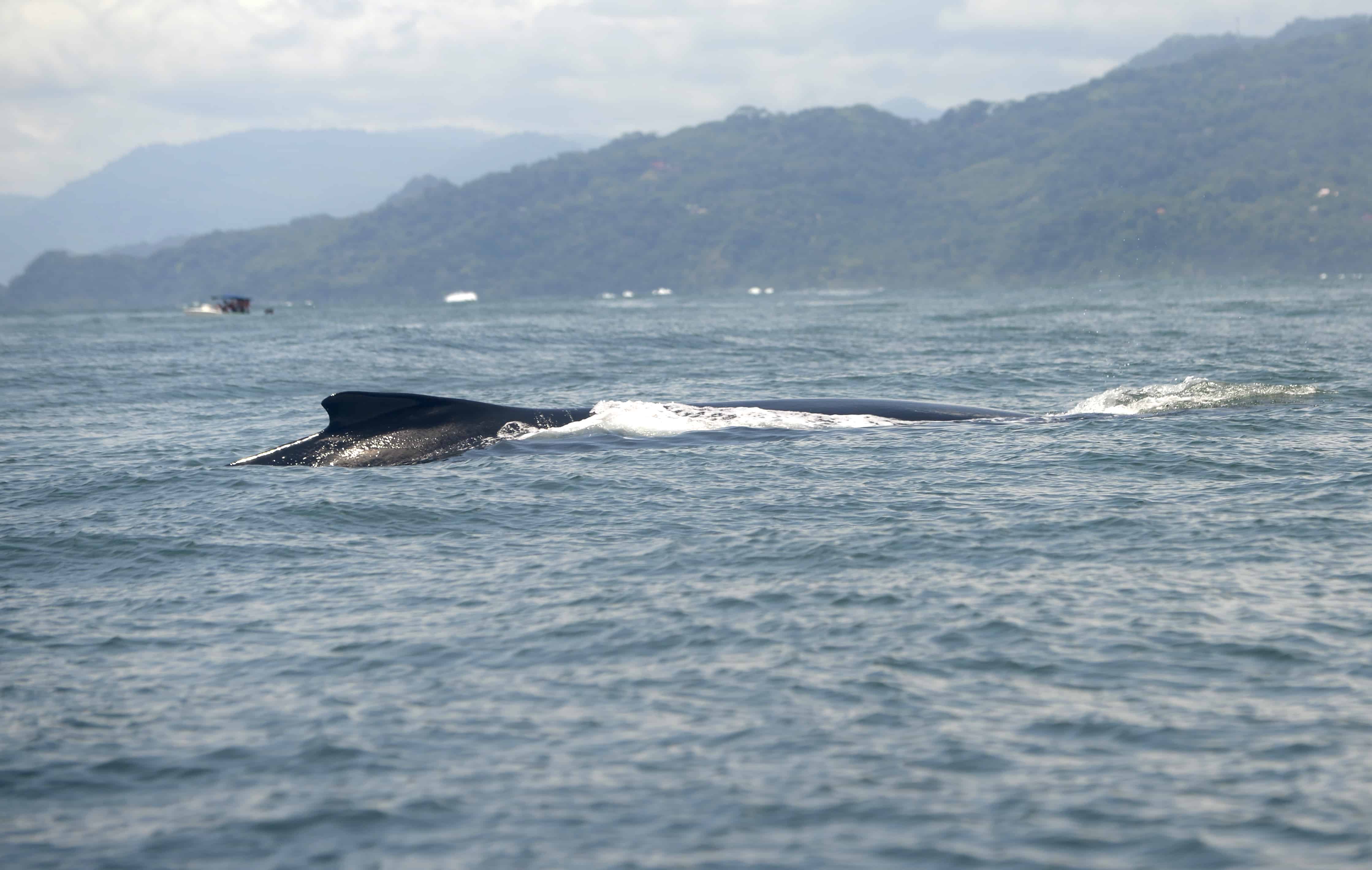
The biggest being you are likely to see in Costa Rica is the humpback whale, and now is probably the best time of year to see one here. These massive creatures arrive from as far away as the Southern Ocean International Whale Sanctuary, the ring of ocean surrounding Antarctica. The whales are coming back home to court, mate, give birth to the next generation of Costa Rican whales, and generate a lot of money for Costa Ricans working in tourism.
They make the now famous Antarctic-to-Costa-Rica trek, one of the longest in the animal kingdom, because Costa Rica’s waters are a prime place to make a little whale big enough to survive in cold seas full of large predators. Around the end of the rainy season, they head back to the Southern Ocean, the best place in the world for these unique mammals to become full-sized whales.
Adult whales need to eat more than your car weighs every day to grow bigger than a bus, and they cannot find that much food in Costa Rica. The Southern Ocean is where whales feast on vast amounts of shrimp-like krill and other tiny creatures that congregate into cloud-sized swarms. But Costa Rican-born whales may be in big trouble when they head back south for food this year.
The same whales that thrill tourists and locals alike and support one of the fastest growing segments of Costa Rican tourism may be hunted and killed by illegal Japanese whalers when they return to the Southern Ocean.
According to the May 2006 issue of National Geographic Adventure magazine, when the whales arrive south, Japan plans to kill 50 or so humpbacks in the Southern Ocean Whale Sanctuary for research and later sale of the meat. Fifty dead Tico whales would probably mean the end of Costa Rica’s whale watching, as probably only about 50 of these endangered species come to Costa Rica each rainy season.
So what can tiny Costa Rica do against a powerful First-World nation that is an expert at exploiting the resources of other countries? Probably not much, but perhaps we could take an important symbolic step.
Using fin-print photos, why not declare the easily identifiable whales born in Costa Rican waters Ticos, and ask the countries of the world to respect these citizens and not kill them when they visit other places? The whales will generate far more money in the long run from whale watchers in Antarctica and Costa Rica than they will with a onetime sale of meat in a fish market.
Tourists of the world are already starting to boycott nations that support whaling. By declaring whales born here to be Ticos, Costa Rica would set a worldwide example of helping to protect these mysteriously intelligent mammals that have been hunted to near extinction in the past. We would also be poised to receive all the tourists who will stop going to offending destinations that normally compete with Costa Rica.
Too bad Nicaragua doesn’t see the writing on the wall. If it worked together with Costa Rica to develop dolphin and whale tourism, both countries could make untold money year after year. Sadly, at least one Japanese whale-factory ship is registered in Panama, and that might not bode well for our other neighbor’s marine tourism prospects.
The three countries working together would be that much more influential, and could help establish the area as a mega marine tourism destination.
If you like the idea of Costa Rica’s whales not being killed when they visit feeding waters, or if you like to make money working with tourism, tell everyone you know to help save these whales by declaring them officially Ticos.





