

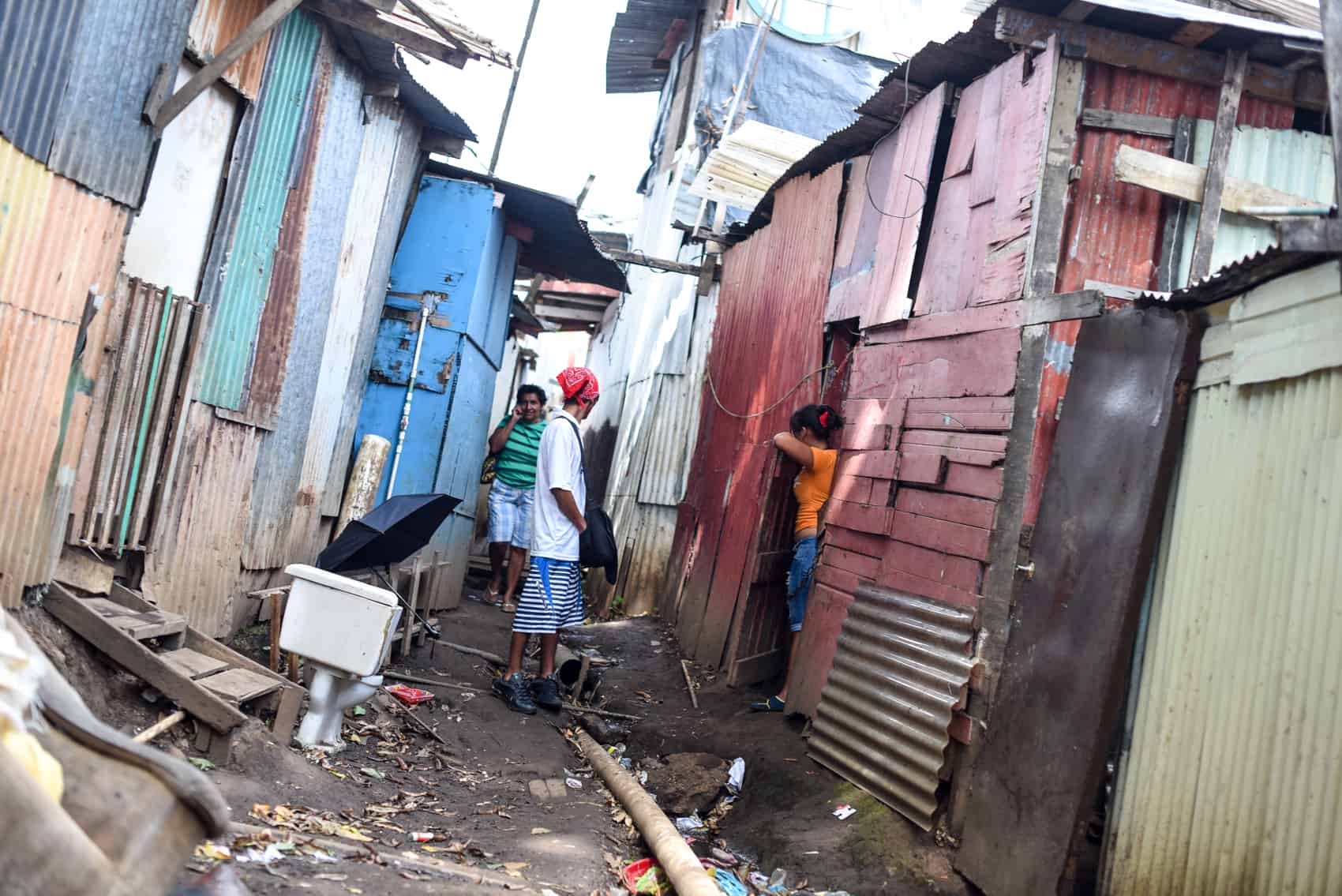
More than 1.1 million Costa Ricans live in poverty, according to the latest household survey from the National Statistics and Census Institute (INEC), released Thursday.
Extreme poverty reached its highest recorded rate in the last six years, according to the annual report on poverty in Costa Rica.
The 2015 Household Survey reported an overall poverty rate of 21.7 percent, slightly lower than the 22.4 percent reported in 2014. Meanwhile, extreme poverty continues to rise — from 5.8 percent of the population in 2010 to 7.2 percent in 2015.
The report was a mixed bag for the country, depending on location. Income for rural families was up 4.1 percent, to an average of ₡678,682 ($1,285) per month, but urban families saw a 1.2 percent decrease in income, to ₡1,125,672 per month ($2,100). The GINI coefficient, which measures inequality, remained steady at 0,516 overall but rose in rural areas over the past year, indicating a wider income gap.
Public assistance to poor families also increased during the last year by 9.3 percent per household on average and 6.9 percent per person.
The report had some clear positive notes. Households in the Chorotega region — the area made up of Guanacaste province and the lower part of the Nicoya peninsula that belongs to Puntarenas — saw a nearly 22 percent jump in income over the previous year, to ₡830,707 per month or roughly $1,550. The rise in income was mirrored by a drop in poverty from 33.2 percent in 2104 to 27 percent in 2015.
Extreme poverty there fell from 12.1 percent in 2014 to 10.4 percent in 2015. INEC reported that improved employment indicators and a reduction in the average household size were contributors to the spike in income.
INEC also released a profile of Costa Rica’s poor. Poor Costa Ricans are more likely to live in a single-mother household and have a higher-than-average number of children under 5 years old and dependents (children under 14 years old or adults over 65 years old living in the same home). More than 77 percent of poor Costa Ricans work in the informal sector and have roughly three years less schooling than their peers who are not poor.





