

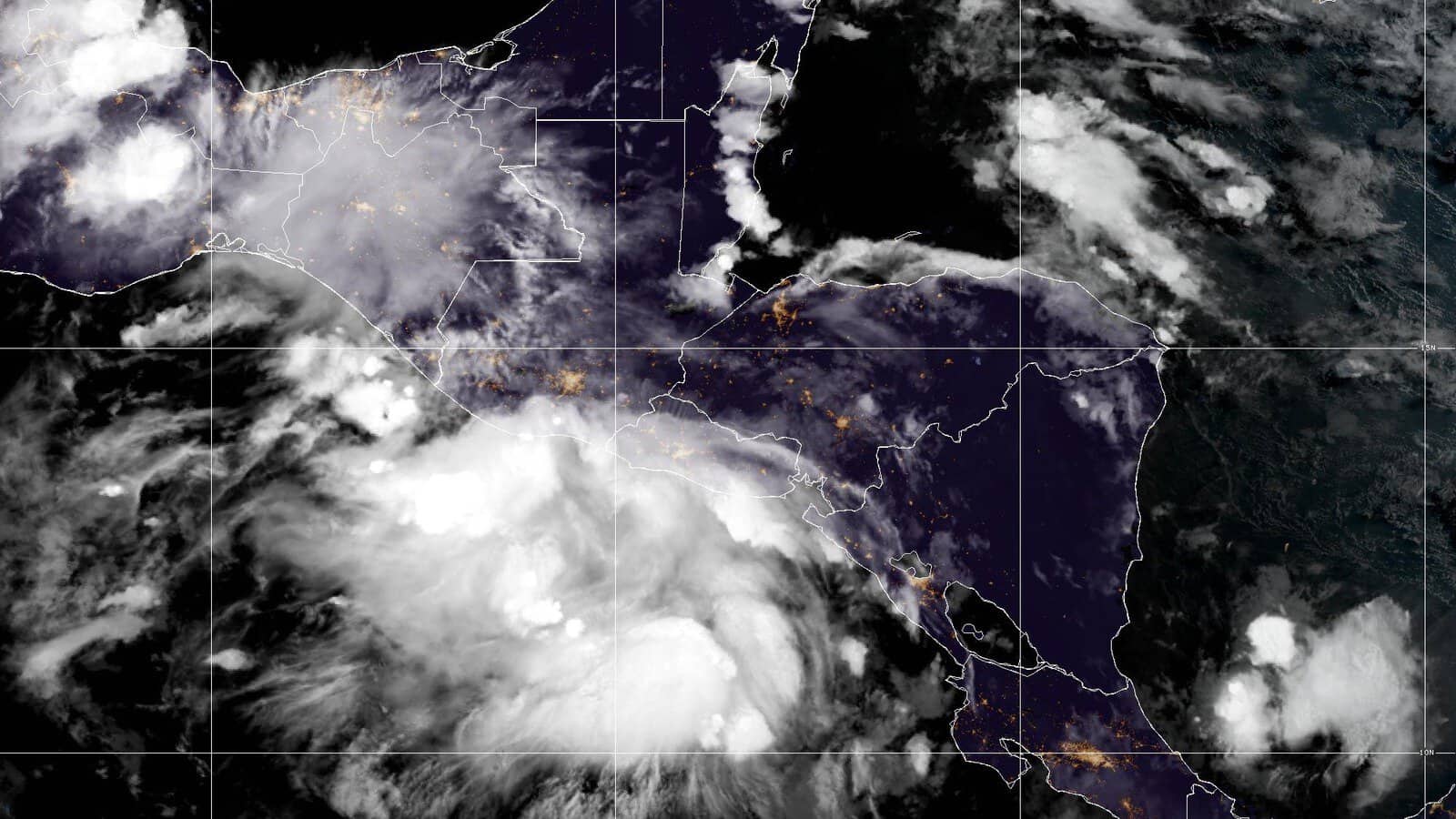
Tropical Storm Cristina is moving away from Costa Rica, but its effects are still being felt across the country, with rain, rough seas, strong gusts and saturated soils keeping authorities on alert.
The storm is not expected to make a direct hit on Costa Rica. Its path is carrying it toward northern Central America, but the system continues to pull moisture over the country while the Intertropical Convergence Zone remains active nearby. That combination has kept the rainy-season pattern unstable, especially along the Pacific coast and in mountain areas.
The heaviest conditions remain focused on the Pacific, particularly the Nicoya Peninsula, the Central Pacific and the South Pacific. The Northern Zone and the mountains of the Caribbean are also under watch for afternoon downpours and thunderstorms. In coastal areas, rough seas continue to pose a risk for small boats, fishing crews, tour operators and swimmers.
The National Meteorological Institute warned that saturated soils increase the possibility of landslides and sudden flooding, especially in areas that have already received heavy rain since the weekend. Rivers, streams and drainage systems may react quickly during new downpours, even if rainfall becomes more scattered than it was earlier in the storm cycle.
Cristina’s strongest impact on Costa Rica came while the system was forming and moving parallel to the Pacific coast. Guanacaste recorded some of the highest rainfall totals, while coastal communities dealt with strong winds and dangerous surf. Maritime conditions have already caused serious incidents in the province, where two small boats capsized Monday in rough seas.
One fisherman who had been missing after a boat overturned near Playa Negra was later found alive after spending more than a day adrift. Rescue teams have continued searching for four other people who were traveling in another boat that also capsized during the same period of dangerous surf.
The Commission of Emergencies has maintained alerts for the Pacific and the Central Valley, while the Caribbean and Northern Zone remain under monitoring. Emergency officials have urged residents and visitors to avoid swollen rivers, unstable slopes and beaches affected by high surf. Drivers should also use caution in areas where falling branches, washed-out roads or reduced visibility could create hazards.
Weather conditions are expected to gradually return to a more typical rainy-season pattern, with warmer mornings followed by scattered afternoon showers and thunderstorms. That does not mean the risk has fully passed. With soils already saturated, even normal rainy-season downpours can trigger localized flooding or landslides.
Those planning beach activities on the Pacific coast should check local conditions before entering the water or booking boat tours. Rip currents, large waves and sudden changes in sea conditions can remain dangerous even after rainfall begins to ease inland.
For residents in high-risk areas, the main concerns over the next day are short bursts of heavy rain, thunderstorms, gusty winds and the condition of rivers and hillsides. Authorities are also watching the arrival of another tropical wave later in the week, which could reinforce rainfall in parts of the country.
Cristina is weakening as a direct weather threat to Costa Rica, but the storm’s indirect effects are still shaping the country’s forecast. The immediate concern is no longer a direct impact, but the combination of leftover moisture, unstable rainy-season conditions, rough Pacific seas and ground that has already absorbed several days of rain.





