

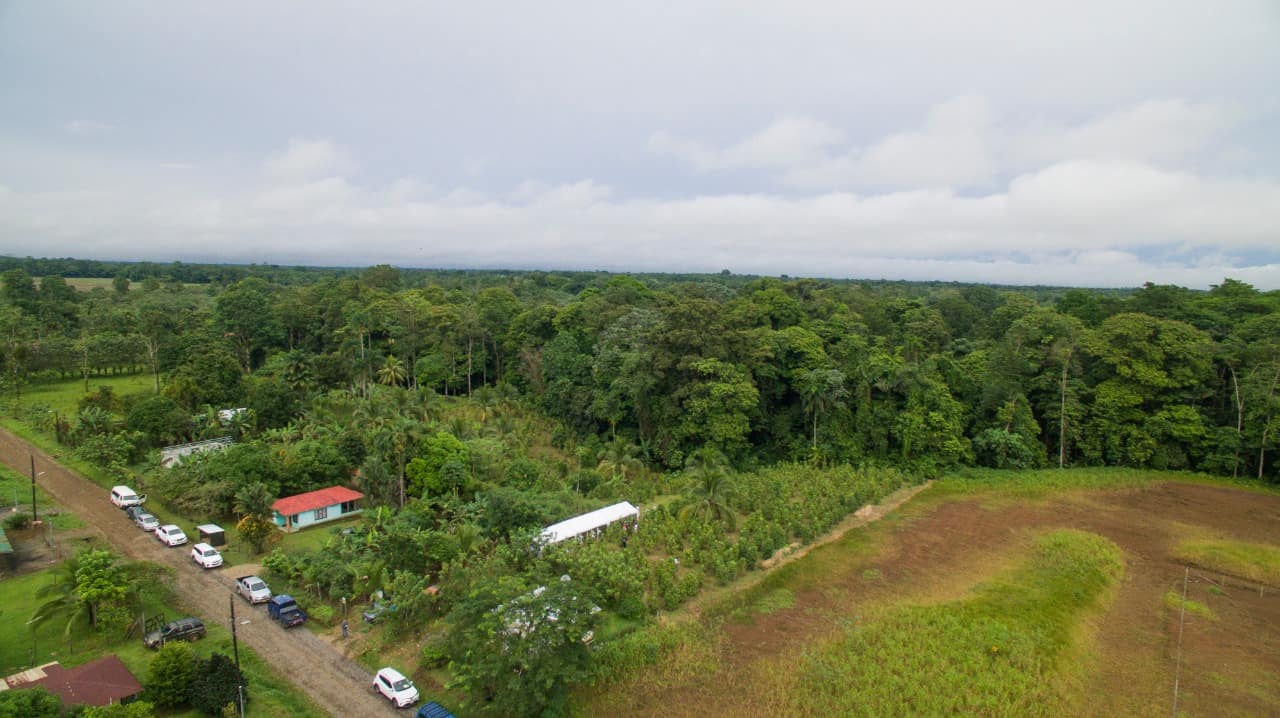
Four days after floodwaters came through Sarapiquí in the dark, the water has not gone down. More than 330 people are still in shelters. At least three communities cannot be reached by road, and food and supplies are going in by boat. The number of people sleeping in shelters has risen every single day since Monday, which is the opposite of what normally happens four days into a flood. That tells you the rivers have not settled and the ground has not drained.
The reason is the ground itself, and it is the part of this that reaches well beyond one area.This is the second major flood to hit the same soil this month. Tropical wave 19 forced evacuations across Sarapiquí, Limón and Siquirres at the start of July, and those shelters only closed on 6 July. The ground never fully dried out.
When soil is already saturated, new rain does not soak in — it runs straight off the surface into rivers that are already running high. That is why tropical wave 24 was able to put four rivers over their banks at once in the early hours of Monday, and why an ordinary afternoon storm can now do damage that the same storm would not have done in May.
If you live anywhere on the Caribbean slope, in the Northern Zone or around Turrialba, that saturated ground is under you too. The National Emergency Commission has a yellow alert covering all three areas. A yellow alert is not a road closure and it is not an evacuation order. It means conditions are expected to keep causing damage, and it is a signal to change how you make decisions for a few days — leave earlier, take the longer route that stays out of a river valley, and do not assume a slope or a low crossing behaves the way it did last week.
Saturated ground fails in two ways. Water that cannot drain fills rivers and floods flat land. On steep ground, the same water adds weight and lubricates the layer where soil sits on rock, which is how hillsides let go. If you live below a cut slope or on the downhill side of a steep road, that is the risk to watch, and the warning signs are worth knowing: new cracks in the ground, doors and windows that suddenly stick, fences or retaining walls tilting, or water appearing where it never used to.
Today’s forecast keeps the pressure on. A band of storms that sits over Central America at this time of year has strengthened, and the air across the country is primed to build tall storm clouds fast. Expect rain near the Limón coast and the South Pacific coast in the morning, then heavier downpours with thunderstorms over the Central and South Pacific mountains through the afternoon, when the day’s heat makes the air rise hardest. The North Pacific gets gusts over the mountain ridges throughout. Emergency crews are watching the Sarapiquí, Puerto Viejo, Sucio and Tigre rivers around the clock because they expect more overflow.
Wherever you are, the rule that saves lives this week is simple. Do not drive through standing water. It is tempting when the water looks shallow and you know the road underneath, but moving water scours out the roadbed and undercuts pavement from below, so a surface that held yesterday can collapse today and there is no way to see it from behind the wheel.
Roughly 30 centimeters (12 inches) of moving water is enough to float a small car and take your steering away. Turn around, take another route, or wait it out. The same goes for walking across a flooded crossing — you cannot judge the current or the depth by looking at it. Report emergencies to 911. Crews from the Red Cross, the fire service and the emergency commission have been working Sarapiquí continuously since Monday, and municipal emergency committees are still assessing communities they have not yet reached.
What happened in Sarapiquí on Monday is worth understanding rather than skipping past. The water rose around 4 a.m., in the dark, while people were asleep. Rescuers spent the day pulling residents out by raft. In Palmar, a pregnant woman was among those taken from a house that had flooded completely.
Poultry farms lost large numbers of birds. Neighbors floated cattle and pigs out on rafts alongside whatever else they could carry. These are working farms, and most were still recovering from the flooding three weeks ago. The second hit landed before anyone had finished paying for the first.
The rain that did this was not extraordinary. It fell on ground that had run out of room. There is a lot of rainy season left.





