

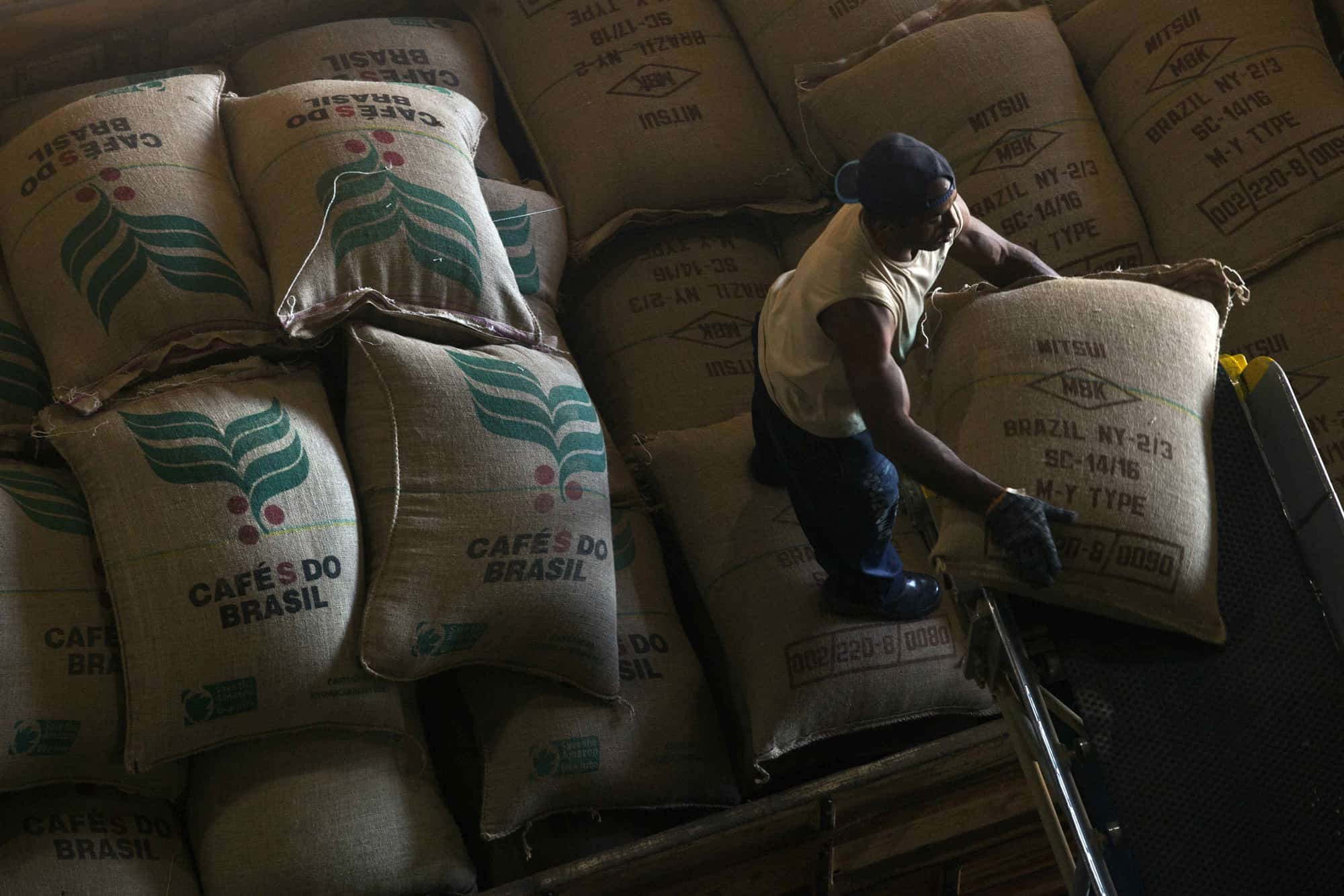
NEW YORK — A prolonged drought in Brazil has already claimed about half of José Francisco Pereira’s coffee crop. Next year could be even worse as the country heads for the first three-year output decline since 1965.
“Everybody is praying for rain,” said Pereira, general director of Monte Alegre Coffees, a grower with 2,500 hectares (6,280 acres) based in Alfenas, Minas Gerais, that forecast this season’s harvest at 45,000 bags, down from 82,000 last year.
Production in Brazil, the world’s top grower, may drop as much as 18 percent to 40.1 million bags when the harvest ends next month, the National Coffee Council estimates, after a 3.1 percent slide last year. With damage worsening before the start of spring in the Southern Hemisphere, the council said farmers may collect less than 40 million bags in 2015, creating the longest slump in five decades.
Citigroup forecast Aug. 21 that a global production deficit may last into 2016 because of the shortfall in Brazil, which accounted for 36 percent of world supply last year. Futures that have gained more than any other commodity this year may rally 15 percent further by the end of December, to $2.25 a pound, a Bloomberg survey of 18 analysts showed. The surge is forcing buyers including J.M. Smucker, maker of Folgers, the best-selling U.S. brand, to raise retail prices.
“The market is vulnerable to the upside given all the problems in Brazil,” Donald Selkin, who helps oversee $3 billion as chief market strategist at National Securities Corp. in New York, said yesterday. “People are anticipating tighter supplies and are waiting for more dramatic weather developments.”
Arabica coffee has rallied 77 percent this year to $1.9545 on ICE Futures U.S., the biggest gain among 22 raw materials in the Bloomberg Commodity Index, which fell 0.1 percent. The MSCI All-Country World Index of equities rose 5.7 percent over the same period. The Bloomberg Treasury Bond Index gained 4.1 percent.
Higher costs for unroasted beans will be less favorable for gross margins in the quarter ending next month, Frances Rathke, the chief financial officer for coffee retailer Keurig Green Mountain, said in a conference call Aug. 6. The company boosted retail prices this month, after similar increases this year by Starbucks and J.M. Smucker.
Brazil is having its worst drought in decades. Reservoirs in the southeast and central-west regions, home to most of the nation’s coffee plantations, are at less than 32 percent of capacity as of Aug. 24, compared with an August average over the previous 13 years of 59.3 percent, according to ONS, the grid operator for Brazil, which gets about 70 percent of its power from hydro-electric dams.
Coffee cherries are usually picked from April to September. As of Aug. 7, 86 percent of the crop had been collected, according to Porto Alegre, Brazil-based researcher Safras & Mercado. With harvest mostly done, trees need rain to spur blossoms that will produce next year’s crop. Most growing regions will get 35 percent less rain than normal in September, São Paulo-based weather forecaster Somar Meteorologia said.
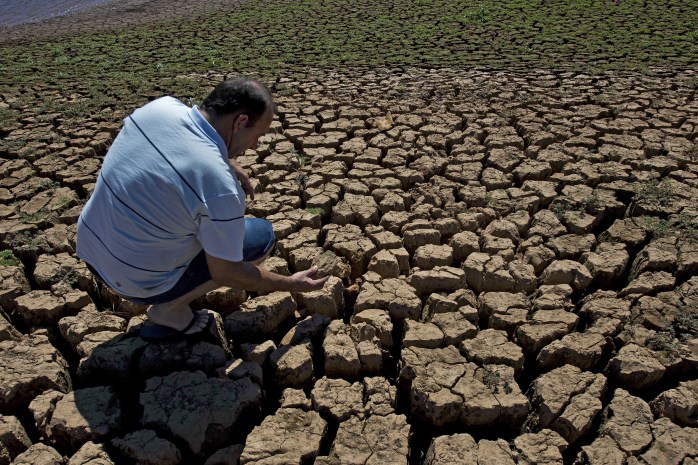
From Jan. 1-Aug. 19, the key growing areas of Mogiana, Cerrado and South Minas Gerais got 450 millimeters (17.7 inches) of rain, or half of historical averages, said Celso Oliveira, a meteorologist at Somar Meteorologia in Sao Paulo.
Compounding the damage to this year’s crop were unexpected downpours in July that led to premature flowering on harvested trees. When dry weather returned this month, the blossoms withered and fell, further eroding yield potential for 2015.
“Next year’s harvest appears as if it will be even lower than the current crop,” Tiago Ferreira, head of the coffee department at FCStone do Brasil in São Paulo, said in a report last month.
With the next harvest still eight months away, there’s time for rain to limit yield losses or spur new blossoms on drought- stressed trees.
While reduced output in Brazil is eroding supplies, the world has had four straight years of production surpluses that sent arabica futures in November to a seven-year low of $1.0095. The Department of Agriculture is forecasting a fifth, with output exceeding demand by 961,000 bags in the 12 months that start Oct. 1, down from 4.56 million a year earlier. Each bag weighs 60 kilograms (132 pounds). Colombia, the second-largest producer of arabica beans, will produce its biggest crop since 2008, the USDA said.
“There’s still enough coffee around,” Christian Wolthers, the president of Wolthers Douque, an importer in Fort Lauderdale, Florida, said in a telephone interview. “Colombia’s crop is recovering. This doesn’t leave us in the comfort zone, it leaves in the alert zone.”
Brazil’s shrinking crop and rising consumption means a global production deficit of as much as 10 million bags in the year that starts Oct. 1, the International Coffee Organization in London said Aug. 1. Volcafe Ltd., a unit of commodities trader ED&F Man Holdings Ltd., estimated the deficit at 11.3 million bags. About 58 percent of world output is arabica, a bean favored by Starbucks, while the rest is robusta used in instant coffees and blends.
Inventories also are shrinking, with reserves at the end of 2013 totaling 40.1 million bags, down from 72.9 million a decade earlier, leaving supply “vulnerable,” the ICO said.
Much of the damage for next year’s crop may already be done in Brazil.
“Growth was too slow,” said Alemar Braga Rena, an independent researcher and retired agronomy professor at Minas Gerais-based Federal de Viscosa University. “The roots are the brain of the plant, and they were damaged by the heat and lack of water and left them unable to absorb nutrients.”
Paulo Sergio Elias, who farms 25 hectares in Cajuru, São Paulo state, said his trees produced smaller coffee cherries than last year, and the lack of rain has deprived plants of the moisture they needed for next year.
“Vegetation is terrible,” said Elias, who has been farming for 28 years and is the product relations director of the Cooparaiso coffee cooperative. “The plants are in a state of stress.”
With assistance from Anna Edgerton in Brasilia and Mario Sergio Lima in Brasilia Newsroom.
© 2014, Bloomberg News





