

The United States asked its international partners to immediately end normal dealings with Nicaragua’s government, hours after the Ortega-Murillo administration formalized a constitutional rewrite that bars opposition figures from running for office and extends the terms of nearly every elected and appointed post in the country.
Secretary of State Marco Rubio said in a State Department statement that Nicaragua’s National Assembly had eroded what remained of the country’s democratic framework by amending the constitution to entrench what he called an illegitimate dynasty. “Dictatorships that deny the unalienable rights of their citizens should not enjoy the same economic or political benefits as governments committed to defending hemispheric peace and security,” Rubio said, adding that Washington urges international partners to stop business-as-usual operations with the government in Managua.
Rubio said the United States will bring specific measures to the next meeting of foreign ministers at the Organization of American States, though he did not describe what those measures would be. The OAS Permanent Council voted on Aug. 19 to convene that ministerial session on Nicaragua, with Brazil opposing and Mexico abstaining. No date has been set. Nicaragua withdrew from the organization in November 2023.
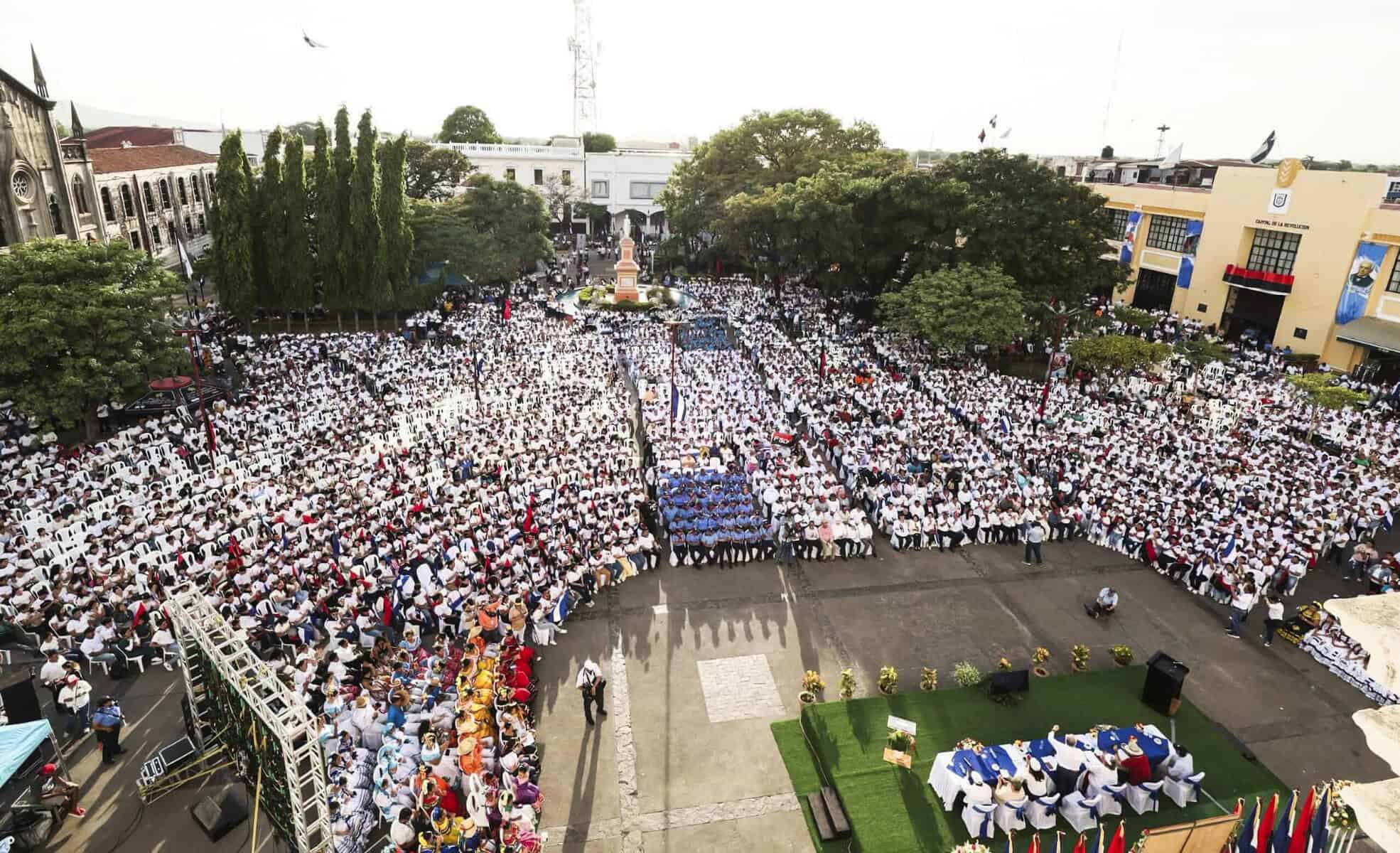
The reform passed unanimously and by show of hands on Tuesday during a special session held in León, roughly 90 kilometers (56 miles) northwest of Managua, staged in a plaza near the city’s cathedral to open what the government calls Patriotic Month. Assembly president Gustavo Porras laid a copy of the text at the tomb of poet Rubén Darío before the vote. La Gaceta, the official gazette, published certification of the amendment on Wednesday morning.
The text bars anyone designated a “traitor to the homeland” from standing for elected office or holding public posts, a label the government has already applied to at least 452 critics and opponents stripped of their Nicaraguan nationality, among them the writers Sergio Ramírez and Gioconda Belli.
It also disqualifies anyone linked to what the government characterizes as coup planning. A separate article expands the powers of the Supreme Electoral Council, allowing it to grant or cancel the legal standing of political parties that were formed with foreign financing or whose leaders are found to have violated constitutional principles.
Terms for co-presidents, deputies, mayors, Supreme Court and electoral magistrates, the attorney general, the banking superintendent, and the heads of the army and national police all move from six years to seven. Officials already in office have their current terms extended automatically. The date on which co-presidents are sworn in shifts from Jan. 10 to Jan. 18, in another gesture to Darío.
Under Nicaraguan law, constitutional amendments must be approved by two consecutive legislatures. The second vote is expected after the new legislative session opens in January 2027. Accounts of what that means for the electoral calendar differ. Earlier amendments had already pushed general elections from November 2026 to November 2027; some regional reporting places the next vote at 2028 once the seven-year extension is applied.
Daniel Ortega, 80, has governed since 2007. His wife, Rosario Murillo, served as vice president from 2017 and was elevated to co-president under a constitutional reform that took effect in early 2025, a change the State Department has said gave her a title without elections, mandate, or legitimacy.
Ortega told a crowd in Managua on July 19, at the 47th anniversary of the Sandinista revolution, that there would be no more elections in Nicaragua. Washington has imposed visa restrictions on more than 2,350 Nicaraguan officials and family members. The European Union and the United Nations also rejected Tuesday’s vote. Nicaragua’s government had not responded publicly as of Wednesday morning.
Costa Rica has kept its diplomatic relationship with Nicaragua at consular level since 2018, when San José declined to name an ambassador following the crackdown on that year’s protests. In August, President Laura Fernández recalled the chargé d’affaires in Managua, Óscar Solís Rangel, for consultations, joining Panama and the Dominican Republic in downgrading contact.
Costa Rica also signed a joint OAS declaration condemning the electoral changes. Foreign Minister Manuel Tovar has raised arbitrary detentions, forced disappearances and harassment of religious leaders in Nicaragua at the OAS General Assembly. Managua has answered Costa Rican criticism by invoking non-intervention.
What “business as usual” would actually cover has not been spelled out, and that ambiguity is the open question heading into the ministerial. Trade, development lending, and diplomatic representation are all in play, and Central American economies are the ones most exposed to any of it. Nicaragua remains a CAFTA-DR member, and its northern border is Costa Rica’s busiest overland crossing for freight.





