
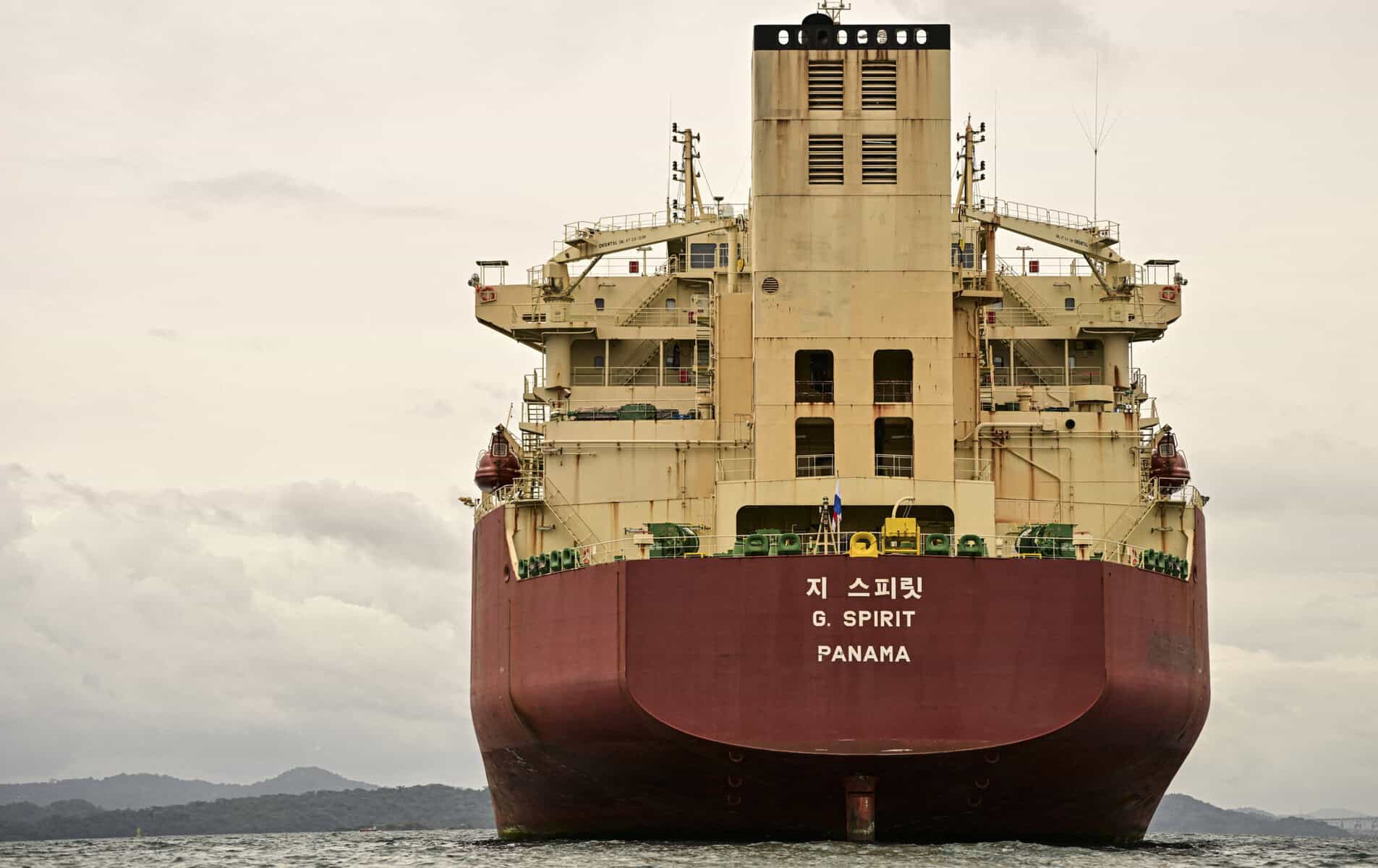
A ship paid a record $5.3 million to cross the Panama Canal sooner, just days before a reduction in vessel traffic takes effect due to drought caused by the El Niño weather phenomenon. The canal, which handles 5% of global maritime trade, will reduce the number of ships allowed to pass through each day from 36 to 34 beginning September 3. Twelve days later, the daily limit will fall to 32 to conserve the fresh water needed for operations.
The interoceanic waterway operates using rainwater stored in the artificial Gatún and Alhajuela lakes, where water levels have fallen because of the adverse effects of El Niño. Incoming canal administrator Ilya Espino de Marotta confirmed on Thursday, in response to a question from AFP, that a ship had paid $5.3 million to cross the route.
“It is the largest amount” ever paid to transit the canal, she said, without providing details about the vessel. Bloomberg reported that South Korean company SK Gas Ltd. paid the amount for the G. Spirit to cross on September 1. A local team located the vessel a few kilometers from the canal’s Pacific entrance.
“We have had three auctions like this, with somewhat high bids, recently,” added Espino de Marotta, who will formally take office on September 7. Nine out of every 10 canal crossings, whose main users are the United States and China, are scheduled through reservations. The remaining slots, or transit times changed because of last-minute contingencies, are auctioned.
Information about the payments made by shipping companies is confidential. On Friday, the Panama Canal announced temporary changes to its Transit Reservation System for large Neopanamax vessels to “increase flexibility and promote equitable access to available slots.”
The changes will take effect on August 30 for reservation dates beginning September 13. In April, a vessel paid as much as $4 million because of the urgent need to transport hydrocarbons amid increased demand caused by the blockade of the Strait of Hormuz. With fewer transits, “there are fewer opportunities to secure a reservation,” meaning the slots “have greater value,” Espino de Marotta said. She added that the price is “set by the market” and the vessel’s “need.”
The Panama Canal Authority, an autonomous government agency, reported that the average auction price between October 2025 and February 2026 was approximately $55,000. Former canal administrator Jorge Quijano said on Friday that payments “could be” even higher because more than 120 ships are waiting to cross the canal.
According to Quijano, some of those vessels do not have reservations and could seek a slot through an auction to deliver their cargo on time and avoid multimillion-dollar penalties from customers. The canal primarily connects the East Coast of the United States with China, South Korea and Japan.