

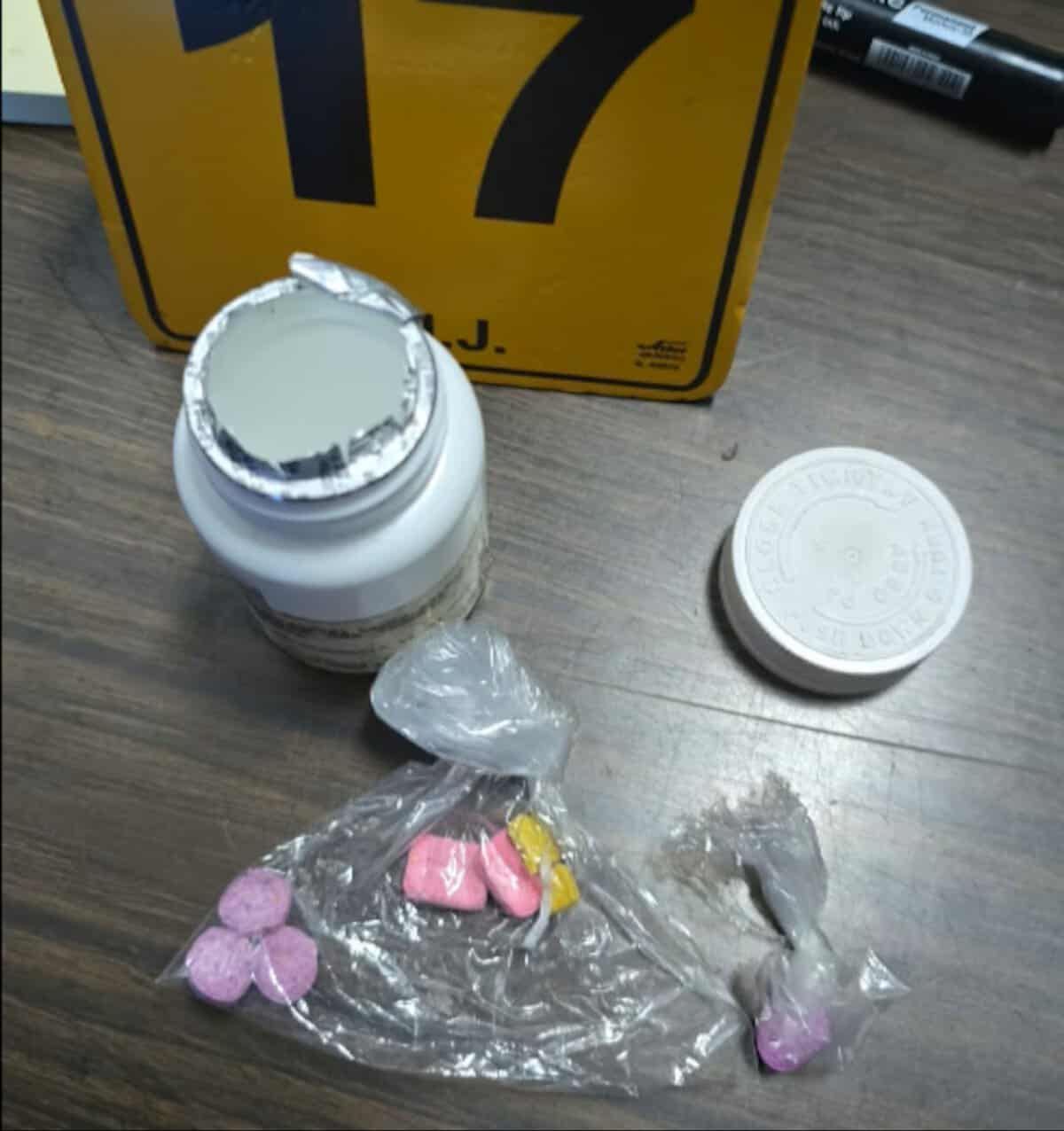
The Fuerza Pública officer, identified as Ureña, was detained this week during raids in Sarapiquí and Pococí. Prosecutors are investigating his suspected relationship with the organization formerly headed by Arias Monge, who was caught in July after years on the run.
Authorities allege Ureña provided two police radios to members of the group, allowing them to listen to law-enforcement communications and potentially avoid police operations. Investigators also suspect the officer passed information to Randall Delgado Mora, better known as “Míster Músculo,” who was considered one of Diablo’s close collaborators.
Perhaps the most serious allegation is that Ureña took drugs that had already been seized by police and handed them to Delgado so they could be sold again. During raids connected to the investigation, authorities searched Ureña’s home and the Sarapiquí police station where he worked. Investigators said they found drug-seizure paperwork hidden in his locker and drugs linked to those records beneath a mattress at his home.
The accusations have not been proven in court and Ureña remains under investigation since preventive detention is intended to keep him in custody while the case moves forward. The case took another dramatic turn this week with the death of Míster Músculo. Delgado, a 34-year-old former OIJ investigator, died early Wednesday at Hospital Calderón Guardia after being shot after coming into contact with agents from Costa Rica’s Judicial Investigation Organization (OIJ).
According to the OIJ, organized-crime investigators attempted to stop Delgado along Route 32 in Pococí on Tuesday night. They say he opened fire and agents then returned fire. Delgado was hit at least five times, while an OIJ investigator was also wounded and has been reported in stable condition.
Delgado had appeared in several investigations involving organized crime and was described by authorities as a trusted associate of Diablo. He was also linked in investigative files to Edwin López Vega, alias “Pecho de Rata,” who was extradited to the United States in a drug-trafficking case.
The police investigation is unfolding at the same time as a separate corruption case involving two Pococí judges and an OIJ investigator suspected of helping people connected to Diablo’s organization. Those arrests were made earlier this week and there has been a significant update Thursday morning.
A court ordered the two judges, Valverde and Ramírez, and an OIJ investigator Rojas suspended from their jobs for six months. They are also barred from leaving Costa Rica, must report to a court every 15 days and cannot come anywhere near the Pococí courthouse or talk with employees there. Gelen Arias Monge, Diablo’s sister, who is also being investigated in that case, was released without restrictions.
Prosecutors appealed part of the decision as they had sought preventive detention for judge Valverde and Arias Monge. The accusations against the judges, OIJ investigator and Arias Monge also remain unproven. Taken together, the investigations are increasingly focusing on a question authorities had raised even before Diablo’s capture: whether his organization survived for so long partly because people inside Costa Rica’s police and justice system were helping it.
Arias Monge was arrested July 24 in Río Frío de Sarapiquí after roughly a decade as one of Costa Rica’s most wanted fugitives. His capture did not end the investigation into his network but instead appear now to be working from in to our, targeting people suspected of providing information, protection or other assistance from inside public institutions.
For now, the case against Ureña provides one of the clearest examples of what investigators believe that assistance may have looked like: access to police communications, warnings about operations and, according to prosecutors, drugs taken from police custody and returned to the criminal market.





