

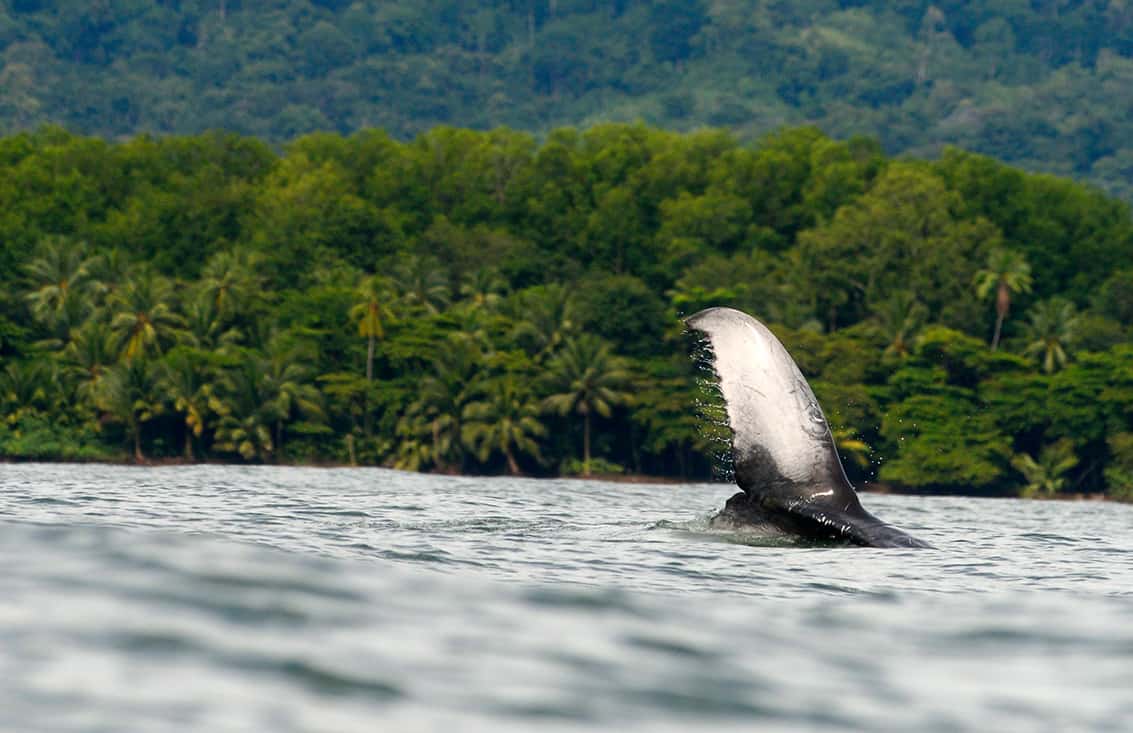
If you have been waiting for the right weekend to see humpback whales in Costa Rica, this is it. The 16th Whale and Dolphin Festival takes place this weekend, September 4, 5 and 6 in Costa Ballena in the South Pacific, timed to the peak of the season when humpbacks fill the warm water off Uvita.
The whales are the reason the festival exists. Adults reach nearly 16 meters (52 feet) and weigh up to 36 metric tons (about 40 short tons), and they arrive here after one of the longest migrations any mammal makes. Whales reaching Costa Rican waters can cover between 5,000 and 8,000 kilometers (3,100 to 5,000 miles) from cold-water feeding grounds, some as far south as the waters near the Antarctic Peninsula.
They come to breed, give birth, and raise their calves where the water is warm and sheltered. Mothers spend these weeks teaching their young to feed, socialize, and move through open ocean. Bahía Ballena, next to Marino Ballena National Park, is one of the best-documented breeding areas in the country. It is also home to the tombolo that gives the park its nickname, a sandbar that takes the shape of a whale’s tail when the tide drops and you see it from above.
Festival organizer Karol Monge said Bahía Ballena belongs on every Costa Rican’s list, describing it as a destination known not only for whale watching but for its beaches, mountains, rivers and waterfalls. Programming runs across all three days and mixes cultural, sporting and nature activities with whale-watching tours sold at special rates for Costa Ricans.
You will also find kite-making workshops, free surf lessons, a food court, a craft fair built around nature themes, concerts, and a communal ceviche event. A whale sculpture several meters tall, built from recycled material including plastic bottles, is on display. To check schedules and prices or reserve a tour, organizers are directing people to the festival’s Facebook page, Festival de Ballenas y Delfines Costa Rica, and to the phone number 8729-3624. Tours book out fast during festival weekend, so calling ahead matters more than usual.
Marcos V. Borges, executive president of the Costa Rican Tourism Institute, said whale watching in the southern Pacific during breeding and calving season is one of the experiences that sets Costa Rica apart. He encouraged domestic travelers to come for the weekend and to choose sustainable tour operators.
That last point is worth taking seriously as Costa Rica regulates how close boats may approach whales and how long they can stay near mothers with calves, and those rules exist because a boat that crowds a nursing calf can separate it from its mother. Ask an operator whether they are licensed and whether a naturalist guide is aboard. Smaller boats carrying eight to twelve passengers generally give you a better view than large catamarans, and morning departures usually mean calmer water and more active animals.
Book a morning tour if you can since most run three to four hours and leave by boat from Bahía Uvita inside the park. If you are driving from San José, you have two routes. Route 34, the Costanera Sur, runs down the coast. The alternative is Route 2 south to San Isidro, then Route 234 toward Dominical. Either way, allow more time than a map suggests on a festival weekend.
The land section of Marino Ballena National Park is open daily and charges a small entrance fee, lower for nationals and residents than for foreign visitors. There are no shops or facilities inside, and the beach at the Uvita sector has almost no shade, so bring water and sun cover. Walking out onto the whale’s tail only works at low tide, so check a tide table before you plan the day around it.
The southern humpback season runs roughly from July into November and peaks between August and October, which means the whales will still be here after the festival packs up. What the weekend adds is the rest of it, the crowds and the music and the ceviche, and the reminder that in Uvita and Bahía Ballena the arrival of these animals is not just an ecological event but the thing that keeps hotels, restaurants, guides and small businesses running through the green season.





