

Divers in Costa Rica should know that as the rainy season in the Central Valley and Pacific coast started early and strong, summertime on the Caribbean coast did the same thing. While the right coast of the country often has several “summertimes” each year, historically the most predicable are September-October and March-April. In the local patois, often called “de broken language” by native speakers, summertime means any extended period of sunny skies and flat seas.
The summertimes of the Caribbean result from global weather patterns that shift with a band in the middle of the tropics called the doldrums. Old sailors named the area – often with no wind to fill sails – that shifts north and south regularly each year with the change of the seasons. Adding to this effect, southwest Caribbean tropical storms and hurricanes that pass a certain distance away suck air from Costa Rica, causing humid air to drop its rain to get over the mountains from the Pacific coast. The result is Limón province basking in near perfect weather, with a fresh land breeze blowing down from the mountains, calming the sea. The recent Hurricane Irene seems to have caused this effect from afar on its Atlantic trail of destruction.
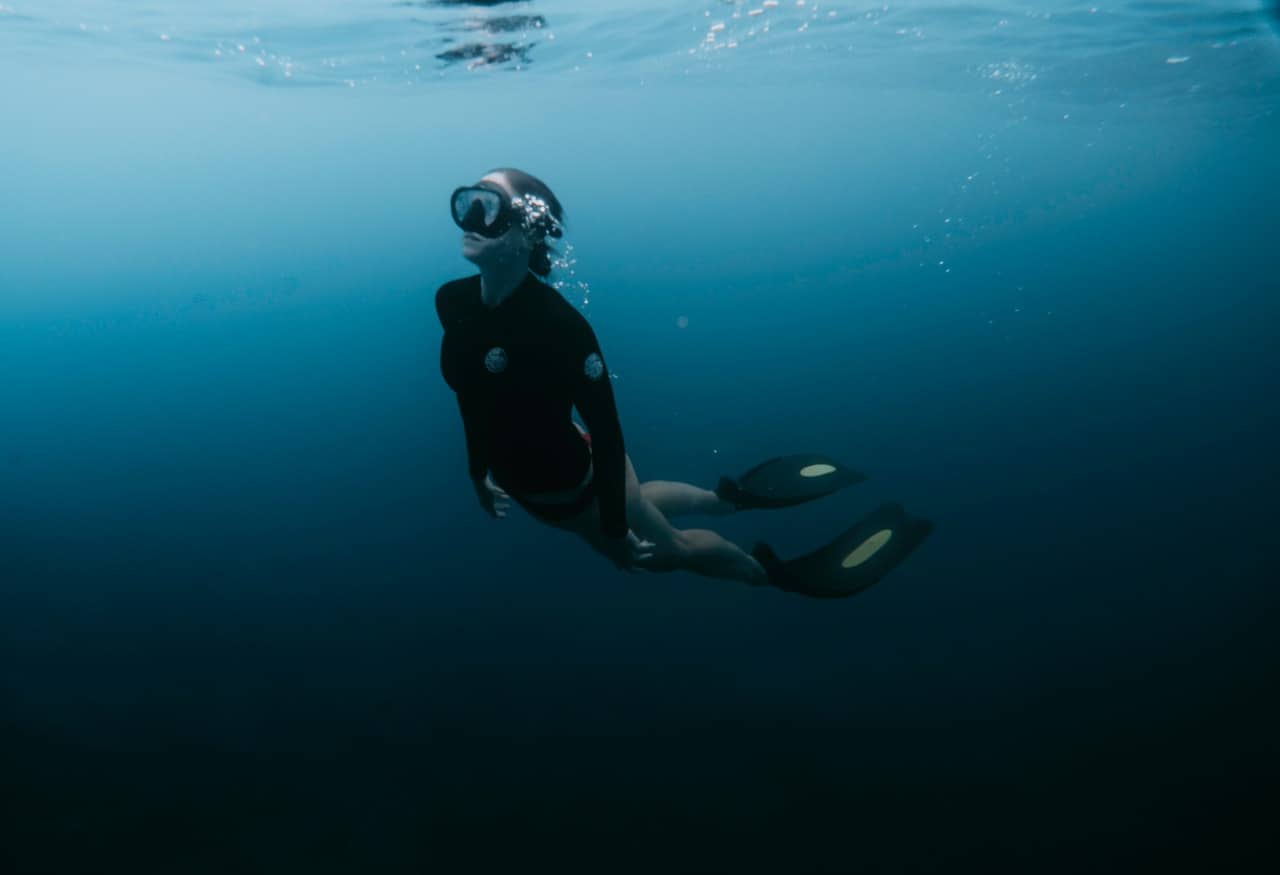
So, summertime is in full force on the southern Caribbean coast, and, as all locals know, that means dive time. Weather you scuba, snorkel, or free-dive, the picture-perfect blue skies and seas will beckon you seductively. With these conditions, it’s as easy as it gets to drop below the waves and check out the big blue, coral reef style.
Most of the world’s great dive destinations require a boat ride – not so for the Talamanca coast from Cahuita to Punta Mona. There are more reefs and coral heads right off the beaches here than even a local could ever get to know. The best way to see most of these reefs is to walk down the beach with mask, fins and snorkel until you find a sandy patch through the shallow reef. Get in and start swimming. When the sea is calm, excellent places to start are Cahuita National Park, Cocles Island, and almost anywhere from Playa Chiquita and Punta Uva to Manzanillo and Punta Mona.
While the diving is so easy that you can do it yourself, you will see a lot more if you get a guide. All guides have their own favorite secret spots of interesting reef life to see. These reefs are probably the most biodiverse marine ecosystems in Costa Rica. Don’t plan on learning the names of everything. If you can remember the broad categories of reef life, you are doing well. Even scientists will still be learning about new species of Costa Rican Caribbean marine life for a long time to come.
Some Caribbean characters stand out more than others. A perennial favorite is the spiny lobster. You don’t have to dive to enjoy the company of this crustacean, as you can find it in many area dining establishments. There may be more lobsters seen here though the local onion and chile dulce sauce than through dive masks.
An animal you won’t be eating but may fear will take a bite of you is the charming moray eel. As these animals move water over their gills, they appear to be getting ready to give you the vampire treatment, opening wide and showing off big, bad fangs. No worries – they won’t bother you unless you ask for it.
The same goes for stingrays, fire worms, sea wasps, fire and other corals, hydroids, many sponges, snapping shrimp, jellyfish and sharks. There are even fewer sharks left on Costa Rica’s Caribbean reefs than on the overfished Pacific. If you see one, you are lucky (and please send me an email about it). An easy way to remember dangerous species of the reef and dive safe: Don’t touch anything.
The unsurpassed colors, textures and diversity of the reef will make touching tempting, however. Perhaps the most vivid and multihued ecosystem on earth is the shallow coral reef lit by bright noonday sun. To be able to experience it a few strokes off a deserted jungle-fringed beach is truly one of Costa Rica’s natural blessings – not to mention a great way to escape the rains in the rest of the country.





