

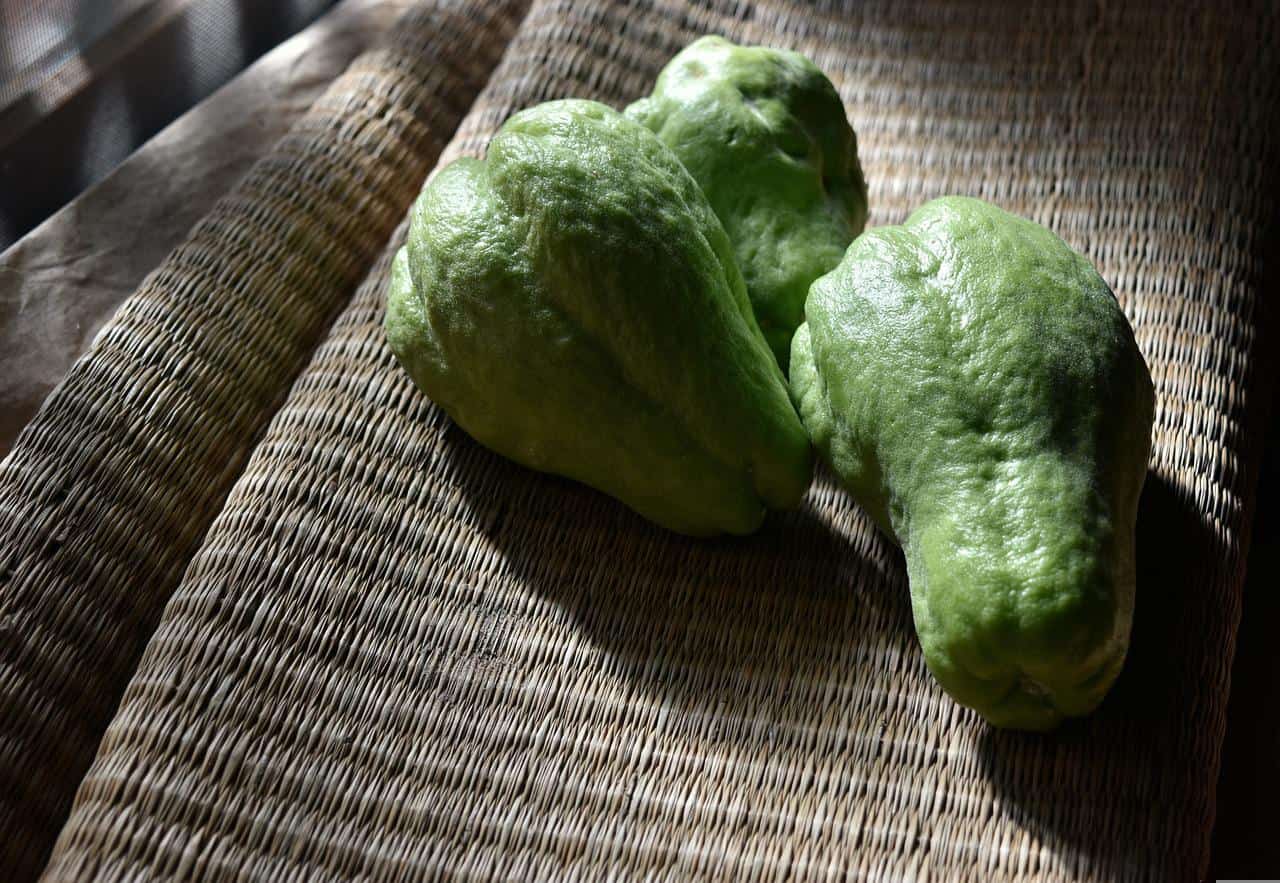
The chayote is an old acquaintance found in many cultures around the world. Its humble origin lies in the deep forests of Central America. Sechium edule is a true New World squash that has the qualities of a winter squash with the soft rim and outer shell of a summer squash. Its versatility lends it to many possibilities for culinary magic in any kitchen, making it worthy of an honored spot on tables around the world.
The word “chayote” comes from the Nahuatl chayotli. It was a staple food of the Mayans and Aztecs, who domesticated the species long before the arrival of the Spaniards. They used every part of the plant: the fruit as a squash, raw and cooked; the shoots as greens in stews and salads; and the root cooked down to be used like cassava or sweet potato.
It is believed they even drank a concoction made from chayote leaves to maintain health; it appears now they were right, as recent medical studies have shown that chayote-leaf tea acts as a powerful antioxidant cleansing agent, helping dissolve kidney stones as well as a being a great help in arteriosclerosis and hypertension disorders.
In the southern United States, chayote is known as mirliton or christophene and appears in a number of recipes complementing and substituting squash in Creole and Cajun cooking.
The pear-shaped fruit is pale or dark green and can be consumed as young and tender 40-day-old baby fruits (which are crunchy, sweet and fast to cook) or as larger, fully mature, 90-day-old, fist-sized fruits, spiny, more watery and with tough skin, weighing up to a pound each or more. The root is a tuber delicacy that can be used as a replacement for root vegetables such as potatoes, cassavas or sweet potatoes.
The chayote’s so-called bland flavor allows it to receive a certain amount of aggressive seasoning without losing any of its character. This, along with its unique shape and versatility, adds style and exotic flavor to dishes from all over the world. Its relatively low cost is an added bonus.
It has become a favorite in Asia, Western Europe and all of the Americas, its original home, where deep in the jungle its invasive vine takes over everything as it grows. The fruit can be eaten raw, baked, stewed, broiled, grilled or sautéed.
Costa Rica has been for many years one of the world’s top exporters of chayote. The best chayotes for export are grown east of San José in the towns of Ujarrás, Cachí and the areas between Irazú and Turrialba volcanoes.
Ujarrás periodically hosts a Chayote Festival in which almost any use of chayote is celebrated with jams, drinks, turnovers, stews, pies, sauces, desserts and chayote-leaf salads.
There is nothing like a tender, fresh, baby chayote cut right from the vine around your house, which is why chayote vines abound in every corner of the isthmus. The Costa Rican old-fashioned growth system yields a decent quantity of chayotes on spreading plants supported by stilts. This creates a wide, leafy shelter from the scorching sun and a perfect spot to store wood that can later be used for stoves and water heating.
Gastronomically speaking, the chayote is present in many traditional dishes, from the quintessential Tico stew olla de carne (a soup of vegetables, tubers and meat) to picadillo de chayote (a chayote and corn ratatouille usually spiced with thyme and oregano).
Nevertheless, Ticos have a keen taste and like their chayote in many different ways. For this column, I have chosen a classic dish I grew up enjoying in my family’s kitchens, with a little more exotic approach to the traditional flavors. ¡Buen provecho!
Chancletas (Stuffed Chayote) with Mango Salsa
Ingredients:
- 3 large chayotes, sliced in half
- 1 onion, finely chopped
- 2 garlic cloves, minced
- 1 red bell pepper, finely chopped
- 1 carrot, cut into small cubes
- 1 tomato, finely chopped
- 2 tbsp. olive oil
- 1 tsp. ground oregano
- 1 tsp. ground cumin
- 1 tsp. coriander seed
- 1 tsp. chipotle sauce
- 1 tbsp. lime juice
- 1 tsp. sugar
- 1 tsp. salt
- 1 cup shredded Monterey jack cheese
Directions:
1. In a heavy pan, bring two quarts of water to a boil and add the chayote halves, cooking until soft.
2. Transfer chayotes to an ice bath. Using a spoon, carefully scoop the flesh out, leaving the skin to be filled. Cut the flesh in cubes and reserve.
3. Preheat oven to 375° Fahrenheit.
4. In a wide skillet over medium heat, sauté onion, pepper and carrot in oil for three minutes.
5. Add chayote, garlic, tomato and remaining ingredients except cheese and cook for three minutes. Reserve.
6. Stuff the hollow chayote shells with the vegetable mixture, topping each with grated cheese.
7. Transfer to a baking dish and bake for 25 minutes or until golden brown.
8. Serve hot, accompanied by mango salsa.
Makes three servings.
Mango Salsa
Ingredients:
- 1 large, ripe mango, peeled and cubed
- 1/3 cup fresh cilantro, chopped
- 2 garlic cloves, minced
- 1 tsp. chipotle sauce
- 1 tbsp. lime juice
- 1 tsp. ground cumin
- 1/2 tsp. salt
- Black pepper to taste
Directions:
1. In a mixing bowl, combine all ingredients and toss well.
2. Let stand at least 15 minutes to allow flavors to mix together.
Makes one cup.





