

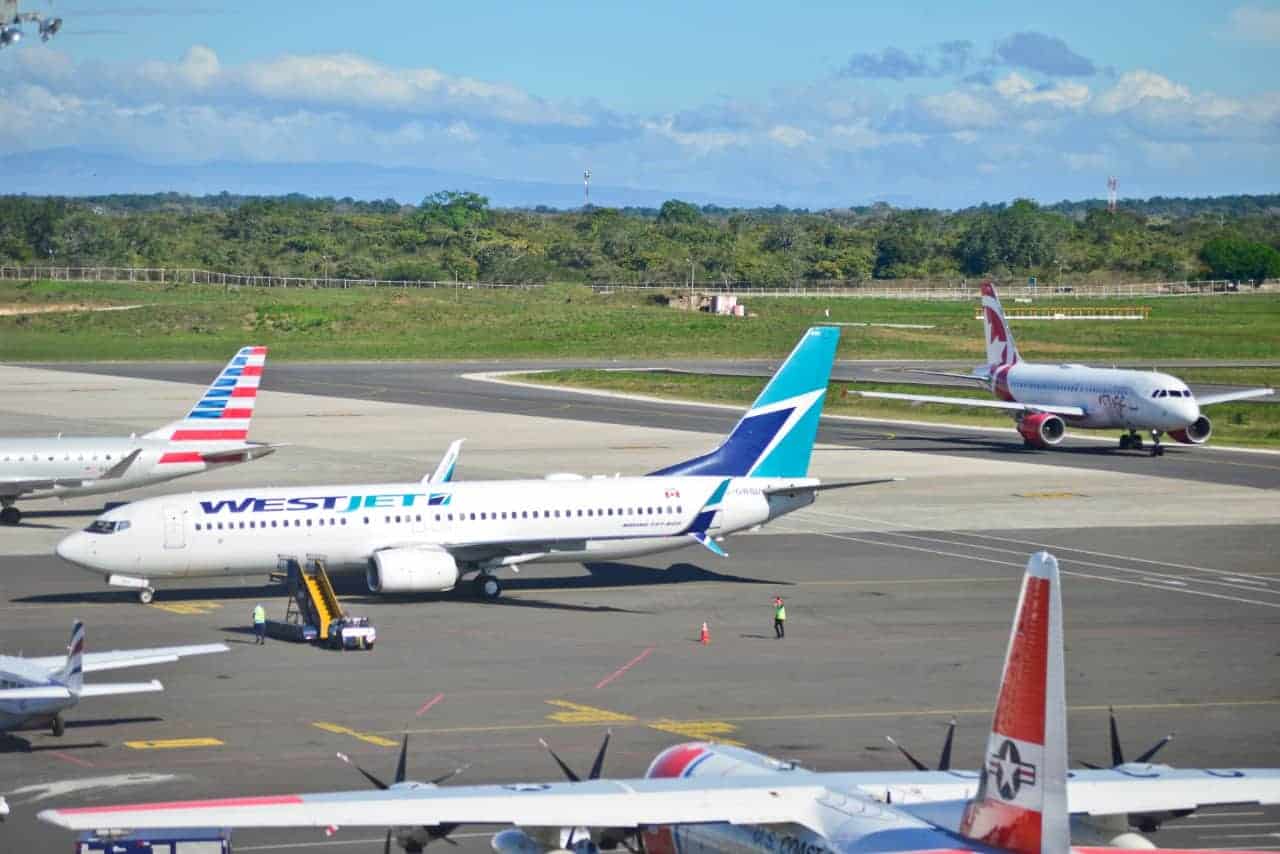
Costa Rica welcomed more than 2 million international tourists during the first seven months of 2026, but the clearest sign of change was not simply how many people arrived. It was where they chose to land. Guanacaste Airport in Liberia recorded the strongest airport growth, reinforcing its role as the main gateway to Costa Rica’s northern Pacific beaches.
For those heading to Tamarindo, Playas del Coco, the Papagayo Peninsula or other parts of the Nicoya Peninsula, flying into Liberia can eliminate the need to cross the Central Valley and then make the long drive west. The airport’s expanding network of direct flights is making that option available to more visitors.
A total of 698,079 international tourists entered Costa Rica through the Guanacaste airport between January and July, an increase of 13.3% from the same period in 2025. In July alone, the airport received 89,947 visitors, up 12.6%. Juan Santamaría International Airport remained Costa Rica’s busiest entry point, welcoming 1,154,732 international tourists during the seven-month period. Arrivals at the Alajuela airport grew by 3.6%, including 158,076 visitors in July.
Together, the two airports accounted for most of the 2,001,660 international tourists who visited Costa Rica from January through July. The overall number was 6.4% higher than during the same period last year. Air travel continued to power the tourism industry, accounting for 1,853,430 arrivals and growing by 7%. Another 142,780 visitors entered by land or water, although arrivals through those routes declined by 1.7%.
The figures also reveal a gradual shift in where Costa Rica’s visitors are coming from. The United States remained the largest tourism market by a wide margin, sending 1,142,234 visitors during the first seven months of the year. Americans accounted for 57% of all international arrivals, but growth from the United States was almost flat at 0.4%.
That makes the performance of other international markets increasingly important. Canada recorded one of the strongest increases, with 220,691 Canadian tourists arriving between January and July, up 24.4%. Costa Rica also received 315,340 visitors from Europe, an increase of 8.4%.
Arrivals grew from North America, South America, Europe, the Asia-Pacific region, the Caribbean and the Middle East. Visitor numbers from Central America and Africa declined. The July results also brought some relief after tourism arrivals slipped in June. For hotels, vacation rentals, restaurants, transportation providers and tour companies, continued growth heading into the year-end high season would be welcome.
Still, the gains are not evenly distributed. Costa Rica’s tourism growth is increasingly being driven by Guanacaste Airport and markets such as Canada and Europe, while the much larger U.S. market remains largely unchanged. More than the two-million-visitor milestone, that changing pattern may be the most important tourism story of 2026.





