

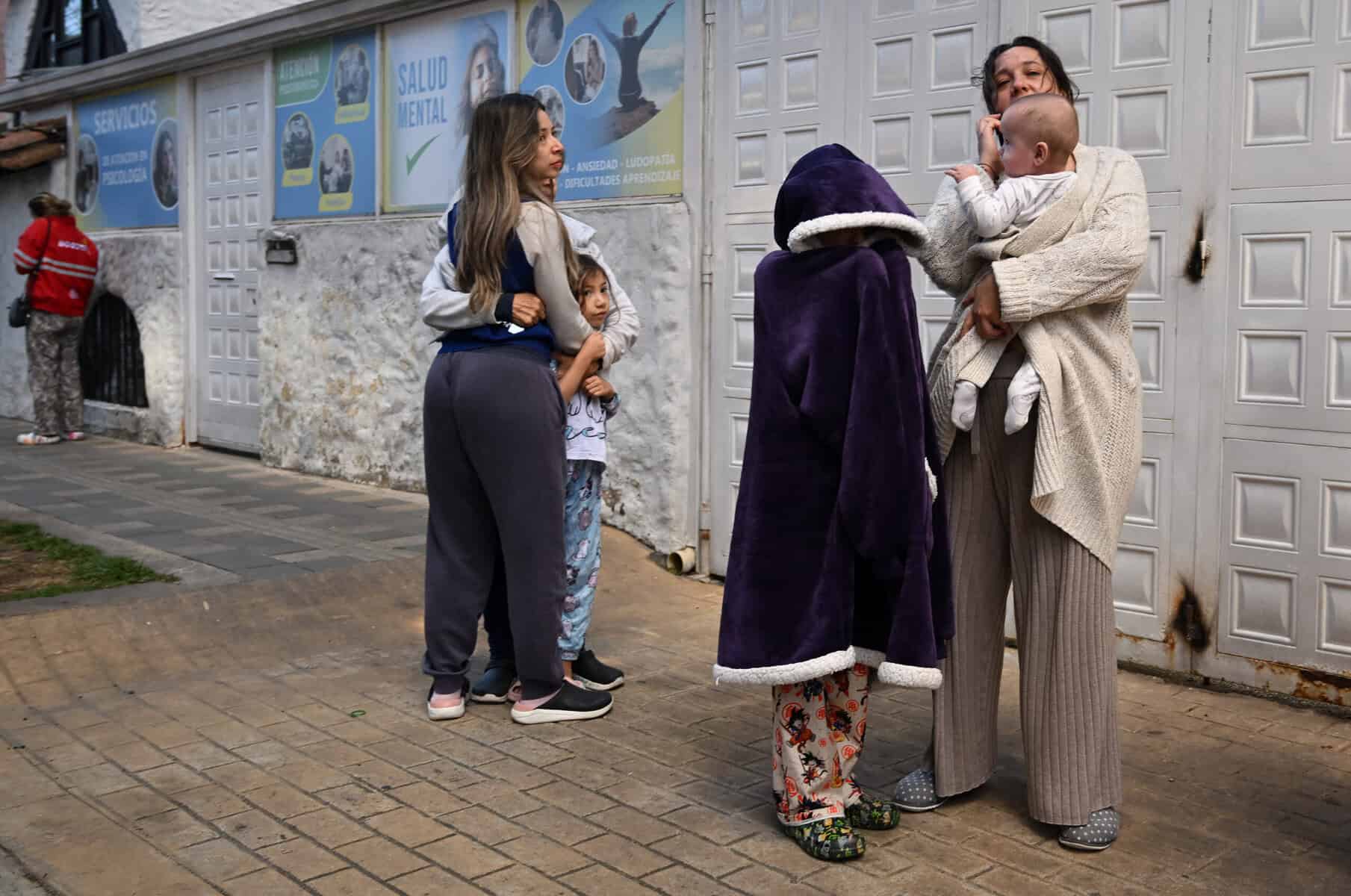
A powerful earthquake struck western Colombia on Monday morning, damaging buildings in the Pacific department of Chocó and sending office workers into the streets in Bogotá, Quito and Panama City.
The quake hit at 7:34 a.m. Colombian time — 6:34 a.m. here in Costa Rica — with its epicenter about 5 kilometers (3 miles) from San José del Palmar, a town in the mountainous southwest of Chocó, near the borders with Risaralda and Valle del Cauca. That puts it roughly 280 kilometers (174 miles) west of Bogotá.
Preliminary magnitude estimates ranged from 6.8 to 7.6, with most settling near 7.4. Depth estimates ran from 76 to 107 kilometers (47 to 66 miles). Wide spreads like these are normal in the first hours after a large event, and the figures will tighten as more stations report. The depth matters more than the number.
A rupture that far below the surface spreads its energy over a very wide area but arrives at ground level with less violence than a shallow quake of the same size, which is why this one was felt across three countries without producing widespread collapse. The heaviest damage was close to the source.
Chocó Governor Nubia Carolina Córdoba Curi reported injuries and serious structural damage to buildings in the departmental capital, Quibdó, and said authorities were worried about aftershocks. Damage assessments in the area were still underway and no casualty count had been released.
In the Colombian capital the picture was calmer. Mayor Carlos Fernando Galán said no significant structural damage had been reported in Bogotá, only some cracking. Shaking was reported in Pereira, Manizales, Armenia, Medellín, Ibagué, Cali and Quibdó, with people evacuating buildings as a precaution, and the tremor was noticed as far away as Venezuela.
In Ecuador, residents felt it in Quito, Guayaquil, Portoviejo, Otavalo, Chone, Sangolquí and Atuntaqui, describing the motion as long and rolling rather than violent. No emergencies had been reported there at this time. Panama City also felt the quake, and civil protection crews began checking for damage in the interior, advising anyone in a high-rise to take the stairs rather than an elevator.
There were also no reports of the earthquake being felt in Costa Rica as the epicenter sits more than 700 kilometers (435 miles) southeast of us and the rupture was deep and far inland from the Pacific shelf, with no tsunami advisory in effect for any coastline.
If you are traveling through Colombia this week, check your flight status before heading to the airport. Bogotá’s El Dorado is Colombia’s busiest airport and the main connecting hub for Avianca, LATAM, Copa Airlines Colombia and Satena — the carriers linking San José to much of South America. No disruption had been confirmed there as of yet, but airlines routinely inspect ground infrastructure after an event this size, and knock-on delays can surface hours after the shaking stops.
Unfortunately, the region, as a whole, has had a punishing season. Rescue teams were still working in Venezuela after the twin magnitude 7.2 and 7.5 earthquakes of June 24, where the confirmed death toll passed 5,300 by late July and more than 1,400 aftershocks were recorded. Monday’s quake sits along the same subduction boundary that runs the length of the Pacific coast of the Americas, where the Nazca plate grinds beneath South America.
It is the same tectonic engine, further south, that shapes Costa Rica’s own seismic risk. Every figure attached to this earthquake — magnitude, depth and casualties alike — is likely to keep moving for the rest of the day.





