

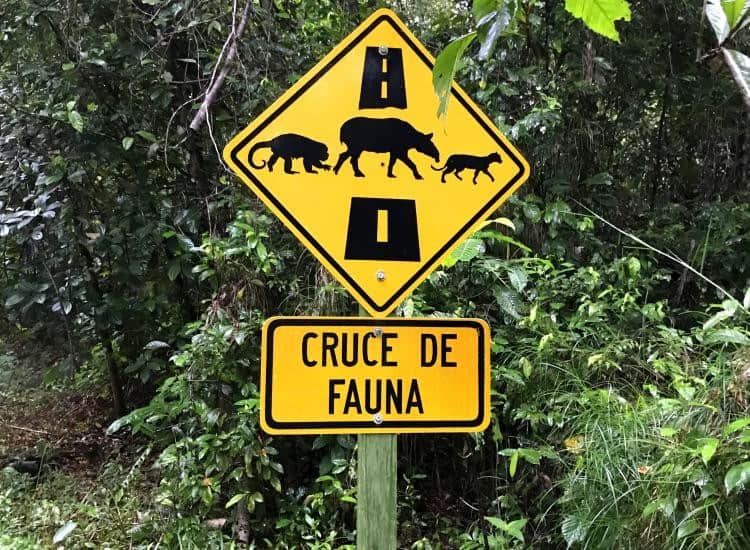
Costa Rica’s Legislative Assembly unanimously approved a bill today requiring wildlife protection measures in new and existing public infrastructure projects, a major legal step aimed at reducing animal deaths on roads and reconnecting fragmented habitats. The Wildlife Crossings Bill passed its second and final debate with 56 votes in favor. One lawmaker was absent.
The proposal now moves to the Executive Branch for the president’s signature and publication in La Gaceta, Costa Rica’s official government newspaper. It will take effect once published. The legislation adds to Costa Rica’s Organic Environmental Law that requires appropriate wildlife crossings wherever scientific studies show that a national or municipal road disrupts natural movement or divides aquatic or land habitats.
The requirement applies everywhere, with particular attention paid to protected areas, national parks, forest reserves, state-owned natural areas and locations identified as natural wildlife crossing points. Crossings may include tunnels, culverts, dry underpasses, fencing and elevated bridges or ropes used by monkeys, sloths, squirrels and other tree-dwelling animals. The design will depend on the species, terrain and risks identified at each location.
The bill does not establish a fixed nationwide number of crossings. Instead, technical and scientific studies will determine where structures are necessary, what kind should be installed and how they should be maintained. The Ministry of Public Works and Transport, municipal governments and other state agencies must coordinate with the National System of Conservation Areas (SINAC), when planning new projects. That process may determine that a wildlife crossing is required or that the project does not need one.
Existing roads are also covered. Wildlife protection measures must be considered when authorities replace road components or carry out rehabilitation, improvements, widening or maintenance in areas where roads have disrupted ecological connections. The law requires wildlife measures to be included during the earliest planning and budgeting stages of public infrastructure projects. The costs of building and maintaining the crossings must be calculated before construction begins rather than added after a project is underway.
Costa Rica’s National Environmental Technical Secretaria (SETENA), will be responsible for verifying that projects include the required wildlife commitments before receiving environmental approval. Developers must conduct technical studies to identify high-risk areas, including places with documented wildlife collisions. SINAC must approve those studies, while the company responsible for the project must install the crossings according to its environmental management plan.
Within 24 months after regulations for the law take effect, SINAC has to begin identifying natural wildlife crossings and other vulnerable points along existing roads and infrastructure. Agencies will then coordinate the measures needed to protect animals at those locations. The regulations must also establish standards for design, maintenance and monitoring so authorities can determine whether the crossings are being used and working as intended.
Wildlife issues have been documented across Costa Rica for decades. More than 19,000 roadkill records were compiled between 1996 and 2025. On a 20-kilometer (12-mile) section of Route 253 between Comunidad and Papagayo, researchers estimated approximately 7,000 wildlife collisions during 2019 alone.
Road construction can also isolate animal populations even when collisions do not occur. By dividing forests and natural migration routes, highways can restrict access to food, breeding areas and other habitat. The new legislation specifically calls for crossings that support animal movement, genetic exchange and healthier ecosystems.
Former Frente Amplio lawmaker Ariel Robles introduced the proposal in June 2022. Lawmakers approved it in its first debate on April 21, 2026, before extending its four-year legislative deadline in June to prevent the bill from being archived. Once signed and published, the legislation will make wildlife connectivity a required part of Costa Rica’s public infrastructure planning instead of an optional environmental measure.





