

Costa Rica’s Central Bank has lowered its growth forecast for this year, pointing to a climate shock that has already begun to weigh on output and warning that a severe El Niño could push up the cost of food and electricity before the year is over. In its Monetary Policy Report, the Banco Central de Costa Rica projected the economy will expand 3.4% in 2026, down from the 3.5% it forecast in its previous report.
The 2027 projection was trimmed as well, from 3.6% to 3.5%. Róger Madrigal, president of the institution, attributed the revision to a climate shock together with a moderation in household consumption and in external demand, factors he said had already left their mark during the first months of the year.
The climate variable is no longer hypothetical. The Instituto Meteorológico Nacional has confirmed that El Niño has taken hold and is strengthening through the second half of the year, with its early-warning system for the phenomenon raised from surveillance to advisory — the threshold at which forecasters treat the event as effectively certain.
The institute’s seasonal outlook for August through October anticipates below-normal rainfall across most of the country and temperatures above average, with the Pacífico Norte facing a rainfall deficit of up to 60%. The strongest impacts are expected between October and March, with temperature anomalies of as much as 2 degrees Celsius (3.6 degrees Fahrenheit) above normal in the most exposed regions.
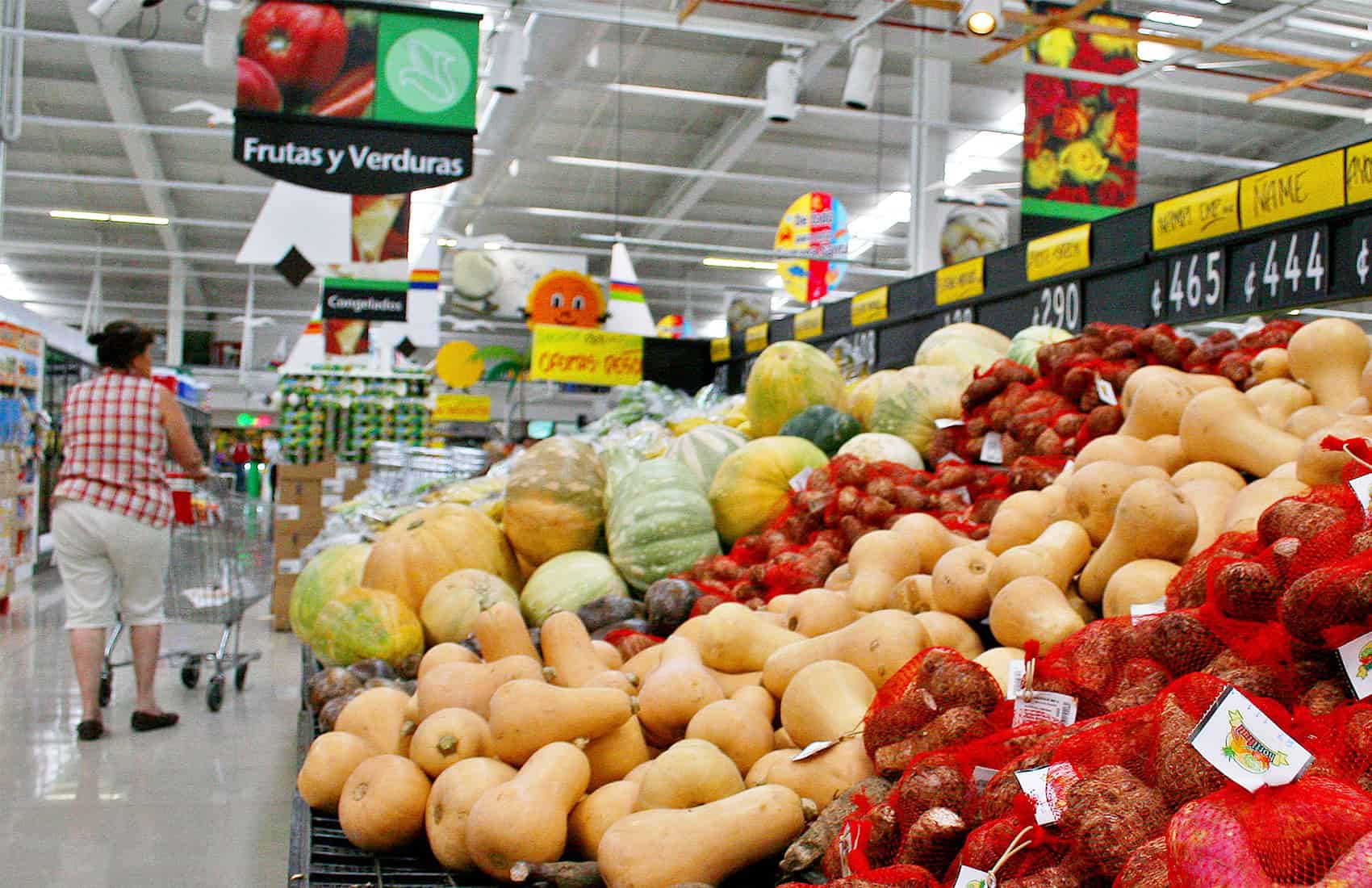
Among the risks it flagged as capable of altering its projections, the Central Bank identified the possibility that a very strong ENSO event could leave impacts greater than those recorded in previous episodes. The transmission channels are familiar ones for an economy that still draws the bulk of its electricity from reservoirs and grows a significant share of what it eats. Reduced inflows to hydroelectric reservoirs force greater reliance on thermal generation, which costs more, and dry conditions across the Pacific slope and Central Valley affect the agricultural calendar in regions already under water stress.
Electricity bills have not yet shown that pressure. Rates fell at the start of this year, with the Autoridad Reguladora de los Servicios Públicos approving reductions of between roughly 5% and 16% depending on the distributor, driven by a negative Variable Generation Cost of about ₡34.274 billion — close to US$75 million at the Central Bank’s reference selling rate of ₡454.44 on July 31 — the product of less thermal generation and higher electricity exports to the regional market.
The regulator has since signaled that the arithmetic reverses next year, with fuel costs for backup generation likely to push tariffs upward in 2027, and has said it will not be able to estimate the size of any increase until October. For households and businesses, that means the bill arrives with a lag, not an exemption. Grupo ICE has moved to rent additional thermal capacity and add solar generation to cover demand through the dry stretch.
On prices, the Central Bank expects inflation to run at averages above 2% in the coming months, still below its 3% target with a tolerance band of one percentage point on either side. That represents a normalization after an extended period of deflation, and it followed a decision by the bank’s board on July 23 to reduce the Monetary Policy Rate by 25 basis points to 3.00%. Madrigal noted that the rate remains out of step with levels in other countries, and the bank flagged as an internal risk that the pass-through from its rate cuts to market lending rates may be slower than historical evidence would suggest.
The external picture is the other half of the slowdown. Export momentum has faded sharply, with the contribution of exports to GDP growth falling from 3.1 percentage points in the final quarter of last year to 1.1 points in the second quarter of this one, according to figures presented with the report. Household consumption followed a similar path, dropping from a 2.7-point contribution to 1.7. Special-regime firms in the free trade zones have decelerated following the closure of the Intel and Qorvo plants in 2025, a gap the rest of the economy has not fully filled, though the definitive regime improved its pace from 2.3% to 3.3%.
Compounding that, the colón remains at its strongest levels in two decades. The Central Bank’s reference rate closed the week at ₡448.31 for purchase and ₡454.44 for sale, a level not seen since the modern exchange regime was established in 2006. Producers of coffee, bananas, pineapple and melon have spent much of the year warning that dollar revenues no longer cover colón-denominated costs, and the Central Bank has been explicit that its dollar purchases are intended to smooth volatility rather than defend any particular level.
Tourism sits at the intersection of both pressures. The Instituto Costarricense de Turismo reported 1,605,360 air arrivals between January and June, a 7.8% increase over the same period last year and a record for a first half. June broke the streak, falling 1.2% to 214,518 arrivals, which the institute attributed to the geopolitical context, higher jet fuel prices and the concentrating effect of the World Cup on North American travelers.
Executive president Marcos Borges said the institute projects between 2.7 and 2.9 million international arrivals for the full year, a forecast that depends on the colón not appreciating further and on new air routes holding their traffic. Tourism accounts for roughly 8.2% of GDP and close to a fifth of national employment, and it is exposed to water and electricity conditions in precisely the Pacific regions the forecast identifies as driest.
The labor and fiscal indicators in the report point in the same direction. Unemployment edged down from 6.9% in May of last year to 6.7% this May, but the improvement came alongside a fall in labor participation from 55.6% to 54.3% and in the employment rate from 51.8% to 50.7%, with a recent contraction in income levels. Central government debt rose from 57.3% of GDP to 61.1% over the same twelve months.
Not every sector is slowing. Construction grew 8.9%, financial and insurance activities rebounded 5.9%, and information and communications rose 4.4%. The Central Bank also noted that the country financed its current account deficit and accumulated reserve assets through external savings.
What happens next depends heavily on rainfall. ARESEP’s October tariff calculation will be the first hard number on what El Niño costs at the meter, IMN will continue updating its seasonal outlooks as ocean and atmospheric conditions evolve, and the Central Bank’s next Monetary Policy Report will show whether a 3.4% year holds or slips further.





