

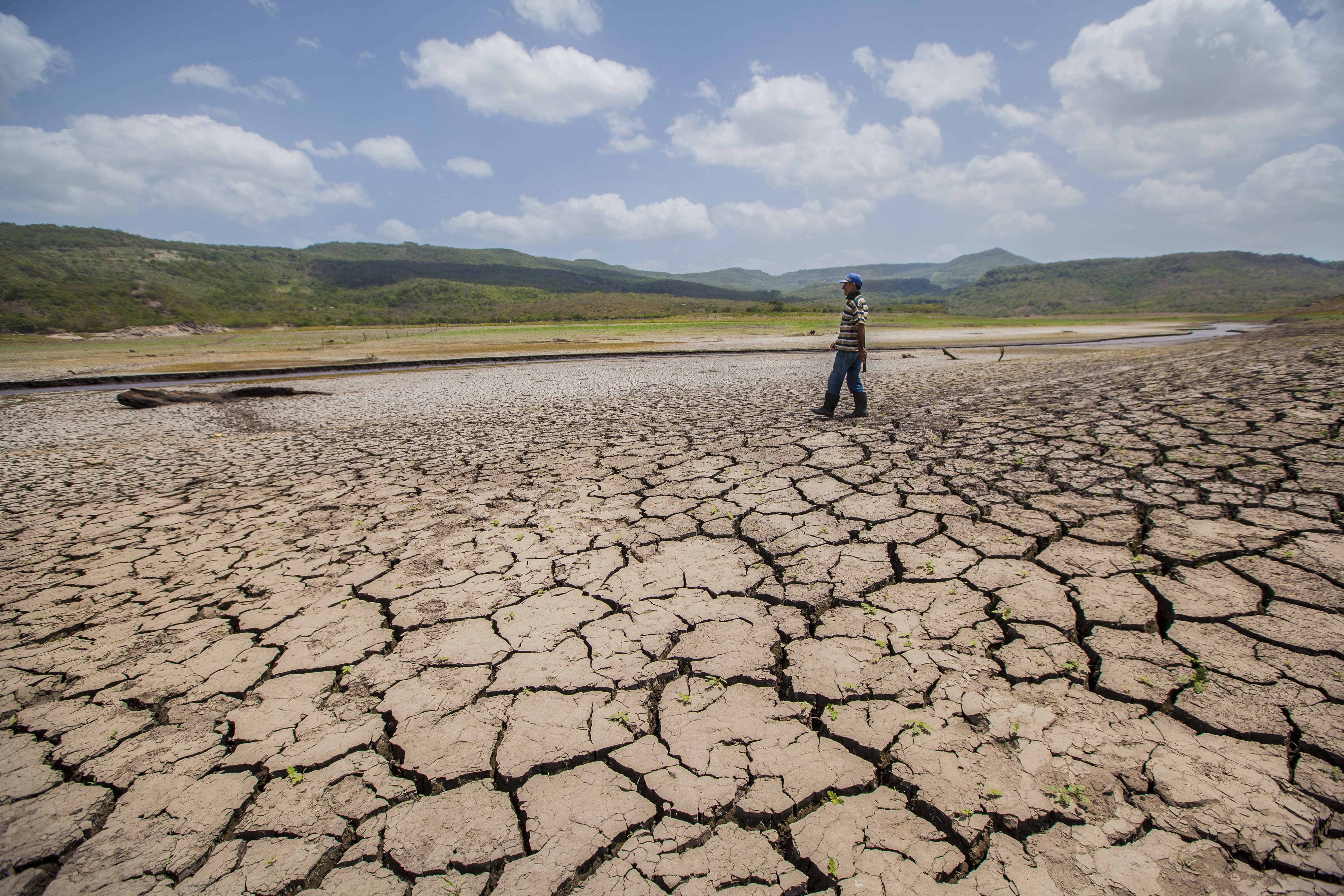
Guanacaste is facing one of its worst drought situations in years, even as much of Costa Rica deals with heavy rain, saturated soils and flood alerts. The contrast has become one of the clearest signs of our country’s uneven rainy season. In parts of the Central Valley and Pacific regions, emergency officials have warned of strong downpours and possible flooding. In Guanacaste, many communities are still waiting for the kind of steady rain that normally brings relief after the dry season.
The problem is already visible across farms, cattle pastures and local water systems. In communities such as San Antonio de Nicoya, residents counted only a couple of significant downpours during May. The Instituto Meteorológico Nacional has described the rainfall deficit in blunt terms: Guanacaste normally receives about 200 millimeters of rain during May, but this year the province recorded almost none in several areas.
For ranchers and farmers, the timing could hardly be worse. The dry season already forced many producers to buy hay, feed supplements and water support for livestock. By June, those reserves are running low or have become more expensive. Some cattle producers are moving animals to borrowed land, while others report weakened animals, poor pasture recovery and higher operating costs.
The concern now goes beyond agriculture. Guanacaste’s water shortage also affects households, tourism areas and long-term development in one of Costa Rica’s fastest-growing regions. Coastal communities in Carrillo, Santa Cruz and Nicoya have dealt for years with pressure on aquifers, seasonal water restrictions and disputes over how to balance residential, tourism and agricultural demand.
The outlook for the coming months is not encouraging. Forecasts tied to El Niño point to a hotter and drier period for Costa Rica’s Pacific side. The Pacífico Norte, which includes Guanacaste, could receive up to 50% less rain than normal during the June to August period. Temperatures in the province could also rise by as much as 2 degrees Celsius above normal levels.
That does not mean rain will disappear entirely. Weather officials have warned that Costa Rica can still experience strong downpours, even during a rainfall deficit. This is part of the problem. Short bursts of intense rain can cause flooding or landslides, but they do not always recharge aquifers, restore pastures or stabilize water supplies in the same way as regular seasonal rainfall.
The World Meteorological Organization has warned that El Niño has an 80% chance of developing between June and August 2026, with the probability rising to around 90% later in the year. Central America is among the regions expected to face warmer and drier conditions under the pattern.
Against that background, frustration is growing over the long-delayed Paacume water project, officially known as the Proyecto de Abastecimiento de Agua para la Cuenca Media del Río Tempisque y Comunidades Costeras.
The project is designed to move water from the Arenal reservoir and remaining flows from the Arenal Tempisque Irrigation District toward the Río Piedras reservoir, then distribute it along the right bank of the Tempisque River. The plan includes water for agriculture, tourism irrigation and public water systems in Carrillo, Santa Cruz and Nicoya.
Paacume has been promoted for more than a decade as a major answer to Guanacaste’s water shortages. It is expected to benefit hundreds of thousands of residents and support more than 18,000 hectares of agricultural land. But the project remains far from finished.
Government updates earlier this year placed the overall advance of Agua para la Bajura, the current name used for the project, at 18.6%. Local reporting now puts the broader Paacume advance at about 20%, with completion expected around 2030. That means the province is likely to face the current drought and possibly several more dry years before the project begins delivering the water promised to communities.
Authorities have announced contingency measures for El Niño, including actions tied to drinking water, energy and agricultural production. The government has said institutions are working on new water sources, support for producers, reservoir planning, irrigation improvements and measures to protect livestock feed.
But for many in Guanacaste, the rain has not arrived where it is needed most, and the largest water project meant to change the region’s future is still years away.
The drought is also a warning for the rest of our country. Costa Rica can be under heavy rain alerts and still have regions sliding deeper into water stress. Guanacaste is showing what that imbalance looks like on the ground: cracked pastures, expensive feed, strained aquifers and communities still waiting for infrastructure that has been promised for years.





